
When BTK inhibitors break through “cross-border” boundaries
January 6, 2026
Source: drugdu
 253
253
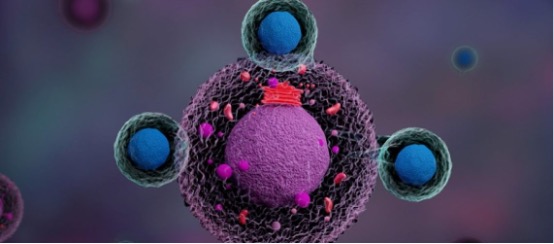 BTK inhibitors are transforming from a "darling" of hematological malignancies into a "rising star" in the autoimmune field. This star target, with its central role in B-cell and myeloid cell signaling pathways, has successfully broken down the boundaries of the therapeutic field, "crossing over" from oncology to the autoimmune field .
01
Star Target
BTK is a non-receptor tyrosine kinase that plays a central role in signal transduction of various cell surface receptors (mainly BCR). After B cell carcinogenesis, BTK becomes abnormally active. Activation of the BTK signaling pathway sends a signal to initiate the growth of B cell malignant tumor cells and plays an important role in growth and migration.
BTK inhibitors (BTKi) act on the BCR signaling pathway, specifically binding to BTK to inhibit BTK autophosphorylation, prevent BTK activation, thereby blocking signal transduction and inducing apoptosis, thus controlling the development of B-cell tumors.
Since the first covalent BTKi was approved, the field has rapidly evolved to the third generation of products.
The launch of the first-generation BTKi ibrutinib marked the beginning of a chemotherapy-free era in the treatment of B-cell tumors . By specifically inhibiting BTK autophosphorylation, it effectively blocked the abnormally active BCR signaling pathway, thereby controlling tumor cell growth and migration. However, its clinical application revealed significant selectivity limitations. Off-target inhibition of multiple kinases, such as EGFR and TEC, led to adverse events including rash, atrial fibrillation, and diarrhea, which to some extent limited its long-term safety window.
These unmet clinical needs directly spurred the rapid development of second-generation BTK inhibitors with higher selectivity. Second-generation drugs, such as acalabrutinib and zanubrutinib, significantly improved selectivity for BTK targets through structural optimization, significantly reduced off-target toxicity, and improved patient tolerability. The concentrated emergence of this generation of products created iterative pressure on first-generation products within just a few years, and rapidly expanded the status of BTK inhibitors as standard treatments in various indications, including chronic lymphocytic leukemia and mantle cell lymphoma.
However, with the widespread use of covalent BTKi, their inherent resistance mechanisms have gradually emerged, particularly mutations at the C481 site of the BTK protein, which prevent drugs from covalently binding to it, becoming a significant cause of clinical treatment failure. This challenge has driven the development of third-generation BTKi. Non-covalent, reversible BTKi, represented by pitutinib, do not rely on binding to C481, thus effectively overcoming the resistance problem caused by this site mutation and providing a new option for patients whose treatment has progressed after covalent inhibitor therapy.
Market data confirms the evolution of BTKi. Since ibrutinib was approved for marketing in the United States in 2013, global sales of BTKi have exceeded US$10 billion for four consecutive years. According to data from Business Research Insights, the global BTKi market is still growing, reaching US$19.19 billion in 2026 and is projected to climb to US$72.4 billion by 2035, with a CAGR of 15.9% during the forecast period from 2026 to 2035.
Ibrutinib remains the best-selling BTK inhibitor globally, but its sales have declined for two consecutive years. Second-generation BTK inhibitors acutinib and zanubrutinib are experiencing rapid sales growth, and the surge in sales driven by these two products could be an opportunity for orelabrutinib to break out of its current predicament.
02
Blood cancer "darling"
BTKi is undoubtedly a "darling" in the field of targeted therapy for hematological malignancies. According to incomplete statistics, as of now, there are more than 40 BTKi candidates in clinical stages worldwide for B-cell lymphoma, but the vast majority of them are still in the early research stages, with only a very few, such as Merck's non-covalent reversible inhibitor nestabrutinib, entering Phase III clinical trials.
Currently, third-generation BTKi has become the core battleground for competition, and Eli Lilly has gained an early advantage with its globally first-marketed third-generation drug, pirtobrutinib (Jaypirca). This drug was first approved in the United States in 2023 for the treatment of relapsed or refractory mantle cell lymphoma (MCL) previously treated with BTKi. Data from the Phase I/II BRUIN study, on which its approval was based, showed an objective response rate (ORR) of 50% and a median duration of response (DOR) of 8.3 months among 120 MCL patients who had previously received BTKi treatment, demonstrating its effectiveness and breakthrough potential after failure of covalently coupled BTKi therapy.
Subsequently, its indications rapidly expanded to chronic lymphocytic leukemia/small lymphocytic lymphoma (CLL/SLL). Eli Lilly is adopting an extremely aggressive clinical development strategy, proactively launching a series of head-to-head phase III trials to simultaneously challenge ibrutinib, acalabrutinib, and zanubrutinib in MCL; and directly targeting the first-generation benchmark ibrutinib in CLL/SLL. Even more strategically ambitious, its research is also evaluating the potential of pitutinib to challenge the first-line treatment status of CD20 monoclonal antibodies, attempting to fundamentally reshape the treatment standards for B-cell tumors.
Merck is a strong contender following Eli Lilly , with its third-generation candidate MK-1026 (nemtabrutinib) already in Phase III clinical trials, and its published Phase II data also demonstrating strong potential. In the BELLWAVE-001 study, CLL/SLL patients treated with MK-1026 achieved an objective response rate (ORR) of 56%; in the BELLWAVE-003 study, follicular lymphoma (FL) and marginal zone lymphoma (MZL) patients treated with MK-1026 achieved ORRs of 41% and 64%, respectively; and in the Waveline-006 study, MCL patients treated with MK-1026 in combination with Zilovertamab Vedotin achieved an ORR of 64%.
Meanwhile, a new generation of action modes, represented by proteolytic targeted chimeric (PROTAC) technology, has opened up a second front in the field of BTK targeting. These molecules recruit BTK proteins to E3 ubiquitin ligases through their bifunctional structures, inducing ubiquitination and degradation by the proteasome, thus eliminating the target protein at its source. Theoretically, this could more thoroughly solve the drug resistance problem caused by protein accumulation, including mutants.
Among them, BeiGene's Catadegbrutinib (BGB 16673) is at the forefront of global clinical development . Its Phase I study data presented at the 2024 ASH Annual Meeting attracted widespread attention: in 49 previously treated CLL patients, the overall objective response rate (ORR) reached 78%, especially in the 200 mg dose cohort, where the ORR soared to 94%; furthermore, ORRs of 90%, 50%, and 100% were observed in patients with Waldenström macroglobulinemia (WM), follicular lymphoma (FL), and marginal zone lymphoma (MZL), respectively, demonstrating broad-spectrum and highly effective antitumor activity.
Based on these positive early data, BeiGene initiated a global Phase III clinical trial in May 2025 to compare BGB-16673 head-to-head with Eli Lilly's pitubrutinib, directly targeting relapsed or refractory CLL/SLL patients who have previously received covalent BTKi therapy.
03
Opening up a new blue ocean of self-free
As competition in the hematologic malignancy field intensifies, BTKi's R&D focus is rapidly shifting towards the vast autoimmune market.
BTK kinase plays a central role in the B cell receptor (BCR) signaling pathway and Fc receptor (such as FcγR and FcεR) signaling. Its inhibitory effect can bidirectionally intervene in adaptive and innate immunity. On the one hand, it reduces the production of autoantibodies by inhibiting B cell activation and plasma cell differentiation;
On the other hand, BTKi inhibits the release of inflammatory mediators by regulating the function of myeloid cells such as macrophages, microglia, and mast cells. This dual mechanism enables BTKi to intervene in the pathological processes of various autoimmune diseases at both the peripheral immune system and central nervous system (CNS) levels, providing the brain-penetrating therapeutic advantages unique to small molecule drugs for diseases involving CNS inflammation and neurodegeneration.
Among these, BTKi has great potential in addressing the critical unmet need of slowing the accumulation of disability in multiple sclerosis (MS) and is expected to fill the gaps in current therapies.
Sanofi's tolebrutinib successfully reduced the risk of confirmed disability progression (CDP) by 31% in the Phase III HERCULES study for non-relapsing secondary progressive multiple sclerosis (nrSPMS), becoming the first BTKi to complete proof of concept in this indication . Its new drug application is currently undergoing priority review by the FDA.
Meanwhile, Roche's reversible BTKi fenebrutinib performed exceptionally well in the Phase II study, with its open-label extended data showing strong disease activity inhibition and good safety profile. It is currently undergoing a Phase III FENtrepid head-to-head challenge against the CD20 monoclonal antibody ozenafil, which has been approved for the treatment of primary progressive multiple sclerosis (PPMS).
InnoCare Pharma's orelabrutinib, with its excellent brain penetration and selectivity, has shown strong efficacy in the Phase II study of RMS and has initiated a global Phase III clinical trial for PPMS. Its Phase III study in nrSPMS is also planned to start in 2026.
In addition, BTKi has taken the lead in commercialization and continues to expand in other autoimmune diseases with prominent B-cell-driven characteristics.
Sanofi’s rilzabrutinib (Wayrilz) was approved by the FDA in August 2025 for the treatment of chronic/persistent ITP in adults. Its Phase III study showed that it significantly improved durable platelet response rate and improved patients’ quality of life compared to placebo.
Novartis' remibrutinib was approved by the FDA in September 2024 for the treatment of CSU. Two Phase III studies have confirmed that it can rapidly, significantly and persistently improve symptoms of itching and urticaria, with a good safety profile.
More notably, BTKi has also achieved significant breakthroughs in the field of systemic lupus erythematosus (SLE), a disease with a large patient base. Innovent Biologics' orelabrutinib for SLE met its primary endpoint in a Phase IIb study, becoming the world's first BTKi to demonstrate significant efficacy in a Phase II SLE trial. It has already received approval to conduct a Phase III registration clinical trial and is expected to become the first oral BTKi therapy in this field.
In conclusion , BTKi's iterative competition in the oncology field continues to catalyze the development of more precise weapons, while its expansion into the autoimmune arena injects long-term growth certainty into the entire sector. In the future, optimizing the strategy across these two areas and balancing efficacy and safety will be key to success in the competition.
https://news.yaozh.com/archive/46817.html
By editor
Copyright©2026 Ddu. All rights reserved.
Read more on
- CPHI Milan 2026 Recap | What Did Drugdu.com Bring Back from Milan? October 9, 2026
- Novo Nordisk and Nanexa Ink Up to €1.165B Long-Acting Delivery Deal for Obesity and Diabetes September 29, 2026
- siRNA Biotech ADARx Raises $446M in 2026’s Third-Largest Biotech IPO September 29, 2026
- Merck and Eisai’s Welireg Plus Lenvima Approved by FDA for Previously Treated Advanced Kidney Cancer September 29, 2026
- Mirum and Incyte’s Atebrioz Wins FDA Approval for Rare Bone Disorder FOP September 29, 2026
your submission has already been received.
OK
Subscribe
Please enter a valid Email address!
Submit
The most relevant industry news & insight will be sent to you every two weeks.