
Net profit surged by 1041%, marking a breakthrough for the self-exempt king
February 26, 2026
Source: drugdu
 351
351
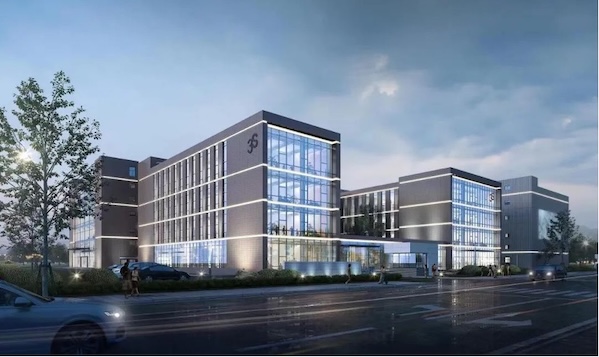 Today (February 25), 3SBio released its 2025 preliminary financial results: it expects to achieve revenue of RMB 4.199 billion, a year-on-year increase of 251.81%; net profit attributable to the parent company of RMB 2.939 billion, a year-on-year increase of 317.09%; and net profit attributable to the parent company excluding non-recurring items of RMB 2.805 billion, a year-on-year increase of 1041.01% .
However, the story behind the numbers is far more fascinating than the numbers themselves . From the growing pains of strategic transformation in 2022 to the explosive turnaround in performance in 2025, 3SBio has forged a highly representative growth path for innovative Chinese enterprises.
01
Behind the surge in net profit
In its preliminary earnings report, 3SBio disclosed that the significant increase in its revenue and net profit in 2025 was due to the important cooperation reached between the company and Pfizer during the reporting period . The company received the first payment from Pfizer for the authorization license of the 707 project and recognized the corresponding revenue of approximately RMB 2.89 billion .
Back in May 2025, when 3SBio and its affiliates announced a global licensing agreement with Pfizer for the PD-1/VEGF bispecific antibody SSGJ-707, the entire pharmaceutical industry was shaken. This was not only because the potential transaction value of $6 billion set a new record for the licensing of innovative Chinese drugs abroad , but also because the structure of the deal demonstrated the maturity and confidence of Chinese pharmaceutical companies at the global negotiating table.
The $1.25 billion down payment represents a significant 21% of the total transaction amount, far exceeding the industry average of 10%–15%. In innovative drug business development (BD) transactions, the value of the down payment often reflects the buyer's recognition of the asset's worth more than the total transaction amount.
Pfizer's willingness to pay such a high upfront payment stems from the clinical data demonstrated by SSGJ-707 in the treatment of non-small cell lung cancer . According to interim analysis data from the Phase II clinical trial disclosed by 3SBio at the 2025 JPM conference, the objective response rate for first-line monotherapy in PD-L1-positive patients reached 70.8%, with a disease control rate of 100%; the objective response rate for squamous NSCLC treated with combination chemotherapy further improved to 81.3%.
The technological advantages of SSGJ-707 are rooted in the CLF2 patented platform independently developed by 3SBio . Its mechanism is characterized by enhanced affinity for PD-1 in the presence of VEGF, leading to the formation of higher molecular weight immune complexes. Furthermore, according to a paper published by 3SBio in the international journal mAbs, this 2+2 symmetrical bispecific antibody structure, through its shared light chain design, effectively avoids the problem of mismatched heavy chains in traditional bispecific antibody production. It can also be directly expressed in CHO cells, has fewer impurities, and is easier to purify, offering significant advantages in production efficiency and cost.
At a deeper level, for 3SBio, the significance of this transaction goes far beyond the 2.89 billion yuan down payment income shown on the financial statements.
First, the transaction validates the international competitiveness of the company's technology platform . Pfizer, a global leader in immuno-oncology therapy, has made a strong signaling move, demonstrating that 3SBio's bispecific antibody technology has reached a high level. Second, the milestone payments and sales revenue sharing clauses in the transaction structure provide the company with a sustained cash flow expectation for the next 5-10 years . It is worth noting that Pfizer also simultaneously made a $100 million equity investment, deeply aligning the interests of both parties and laying the foundation for broader cooperation in the future.
02
Constructing a self-protective moat
To understand why 3SBio can achieve explosive growth in performance in 2025, we must look back at its strategic transformation trajectory since its listing .
In July 2020, 3SBio debuted on the STAR Market with an offering price of 28.18 yuan per share. Its stock price nearly doubled on its first day of trading, and its market capitalization briefly exceeded 30 billion yuan. However, the enthusiasm of the capital market was quickly dampened by the harsh realities. Its core product, Yisaipu , the first TNF-α inhibitor to be marketed in China, faced the impact of imported biosimilars such as Humira being included in the national medical insurance program in 2019, causing its sales revenue to plummet from 1.144 billion yuan to 616 million yuan.
Due to a combination of factors, including centralized procurement, product structure, and market environment, the company's revenue hovered between 600 million and 900 million yuan from 2020 to 2022, and even recorded a net loss of 218 million yuan in 2020.
In the face of adversity, 3SBio made a crucial decision: to reverse its diversified expansion strategy and focus its resources on the field of autoimmune diseases . This was the key turning point that enabled 3SBio to rise from the ashes.
Starting in 2023, the company spun off its non-core pipelines, such as oncology and ophthalmology, to its related party, Shenyang Sansheng, in three separate transactions, receiving upfront payments totaling over RMB 850 million. These transactions were not simple asset sales, but rather adopted a licensing + milestone + sales revenue sharing model, which both recouped cash to support the R&D of its self-exempt pipeline and retained the right to future revenue.
The rewards of this strategic focus began to show in 2024. Full-year revenue reached 1.194 billion yuan, a year-on-year increase of 17.70%; net profit attributable to the parent company was 705 million yuan, a year-on-year increase of 139.15%. This signifies that the company has emerged from its trough and entered a period of steady growth.
The surge in performance in 2025 is essentially the ultimate validation of this strategic path—while other pharmaceutical companies are still battling it out in the red ocean of oncology, 3SBio has already established an unparalleled competitive advantage in the autoimmune field .
Furthermore, from the perspective of 3SBio's overall pipeline, its existing products, pipelines under development, and early-stage pipelines all possess significant market potential, forming a complete tier covering short-term cash flow security, medium-term growth drivers, and long-term value reserves.
Regarding existing products, three marketed products contribute stable revenue . Yisaipu, as the first TNF-α inhibitor in China, generated 480 million yuan in revenue in the first three quarters of 2024. Although the average price declined due to centralized procurement, its core business remained stable thanks to a strategy of trading price for volume. Saiputin generated 260 million yuan in revenue during the same period, a year-on-year increase of 54%, with continued progress in hospital access. While Jiannipai's revenue was less than 100 million yuan, its rapid year-on-year growth (30%) and its continued advantage in the kidney transplant anti-rejection sub-segment are noteworthy. These three products are expected to provide cash flow support for the subsequent commercialization of the pipeline.
Regarding the pipeline, all three core products have entered late-stage clinical trials and are expected to be launched successively between 2026 and 2028. SSGJ-611 (IL-4Rα monoclonal antibody) for atopic dermatitis is expected to submit its NDA earlier this year, while its indications for chronic sinusitis with nasal polyps and COPD are both in Phase III trials. A research report from Guojin Securities predicts that peak sales for these three indications could exceed 2 billion yuan. SSGJ-613 (IL-1β monoclonal antibody) for acute gouty arthritis has submitted its NDA and is expected to be approved in 2026, with the research report predicting peak sales exceeding 1.5 billion yuan. SSGJ-610 (IL-5 monoclonal antibody) has the fastest domestic progress in the field of eosinophilic asthma, with an estimated peak sales of approximately 900 million yuan. The combined peak sales of these three products are expected to exceed 4.5 billion yuan.
In terms of early-stage pipeline drugs , SSGJ-626 (BDCA2 monoclonal antibody) and SSGJ-627 (TL1A monoclonal antibody) are both in Phase I clinical trials. The former targets systemic lupus erythematosus, while the latter targets the blue ocean market of inflammatory bowel disease. Both have been submitted for approval in both China and the United States. If the clinical data is excellent, they are expected to become next-generation potential drugs.
03
Conclusion
3SBio's performance in 2025 serves as an observational sample of the development of China's innovative drug industry. From its initial diversification efforts after listing to its recent strategic focus and major transactions with multinational pharmaceutical companies, 3SBio's experience reflects the exploration and adjustments of domestic biopharmaceutical companies at different stages of development.
The case of 3SBio demonstrates that realizing the value of technology through international cooperation is a viable path, but its universality still needs to be analyzed in light of the specific circumstances of each company. In the future, as more domestically developed innovative drugs enter late-stage clinical trials and commercialization, the competitive landscape of the industry may further evolve.
https://news.yaozh.com/archive/47274.html
By editor
Copyright©2026 Ddu. All rights reserved.
Read more on
- CPHI Milan 2026 Recap | What Did Drugdu.com Bring Back from Milan? October 9, 2026
- Novo Nordisk and Nanexa Ink Up to €1.165B Long-Acting Delivery Deal for Obesity and Diabetes September 29, 2026
- siRNA Biotech ADARx Raises $446M in 2026’s Third-Largest Biotech IPO September 29, 2026
- Merck and Eisai’s Welireg Plus Lenvima Approved by FDA for Previously Treated Advanced Kidney Cancer September 29, 2026
- Mirum and Incyte’s Atebrioz Wins FDA Approval for Rare Bone Disorder FOP September 29, 2026
your submission has already been received.
OK
Subscribe
Please enter a valid Email address!
Submit
The most relevant industry news & insight will be sent to you every two weeks.


