
This tech giant is spending a whopping 2 billion yuan to accelerate its “AI transformation.”
May 8, 2026
Source: drugdu
 186
186
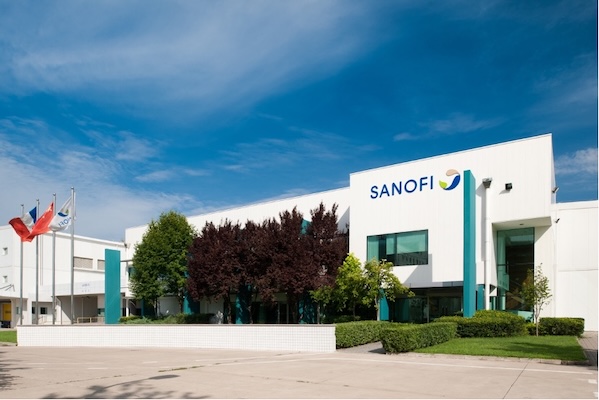 Recently, Sanofi officially announced that it will invest US$294 million (approximately RMB 2 billion) to expand its global AI Center of Excellence in Toronto.
According to the official announcement, this expansion also received a matching grant of up to $5 million from the Ontario Investment Fund . The project is expected to create 50 new high-end professional positions in artificial intelligence, machine learning, and data science by 2028.
Prior to this, the center already had more than 150 positions, covering multiple professional fields such as cloud computing, data engineering, software development, bioinformatics, and pharmaceutical data science .
The newly recruited talent will be responsible for designing and implementing various AI tools within Sanofi, applying them comprehensively to all aspects of the business, including drug development, manufacturing, and commercial operations.
Sanofi's Chief Digital Officer, Emmanuel Frenehard, publicly stated that artificial intelligence has been deeply integrated into the entire process of research, development, production, market launch, and subsequent support of Sanofi's innovative therapies.
The upgraded Toronto AI Centre is a key manifestation of Sanofi's AI strategy. The company aims to leverage artificial intelligence to halve the timeline from early-stage research and development to market launch for innovative therapies.
Just last month, Merck signed a $1 billion collaboration agreement with Google Cloud to build an agent AI ecosystem across the New Jersey pharmaceutical company’s R&D, manufacturing, commercial and corporate functions.
Last month, Novo Nordisk announced a partnership with OpenAI to integrate AI into the company’s “day-to-day operations.”
Eli Lilly also signed several AI-driven drug discovery collaboration agreements, including a partnership with Profluent Bio focused on kilobase-level DNA editing in gene therapy, and a potential $2.75 billion oral therapy collaboration with InSilicon.
In addition to its own AI-powered drug discovery protocol, Sanofi also uses AI to create "digital twins," or virtual patients, to assist in assessing the safety and efficacy of drug candidates. Digital twin data helped Sanofi obtain FDA pediatric labeling for its enzyme replacement therapy, Xenpozyme.
https://news.yaozh.com/archive/47996.html
By editor
Copyright©2026 Ddu. All rights reserved.
Read more on
- CPHI Milan 2026 Recap | What Did Drugdu.com Bring Back from Milan? October 9, 2026
- Novo Nordisk and Nanexa Ink Up to €1.165B Long-Acting Delivery Deal for Obesity and Diabetes September 29, 2026
- siRNA Biotech ADARx Raises $446M in 2026’s Third-Largest Biotech IPO September 29, 2026
- Merck and Eisai’s Welireg Plus Lenvima Approved by FDA for Previously Treated Advanced Kidney Cancer September 29, 2026
- Mirum and Incyte’s Atebrioz Wins FDA Approval for Rare Bone Disorder FOP September 29, 2026
your submission has already been received.
OK
Subscribe
Please enter a valid Email address!
Submit
The most relevant industry news & insight will be sent to you every two weeks.