
A $15.2 billion deal, the top player blows the show!
May 15, 2026
Source: drugdu
 226
226
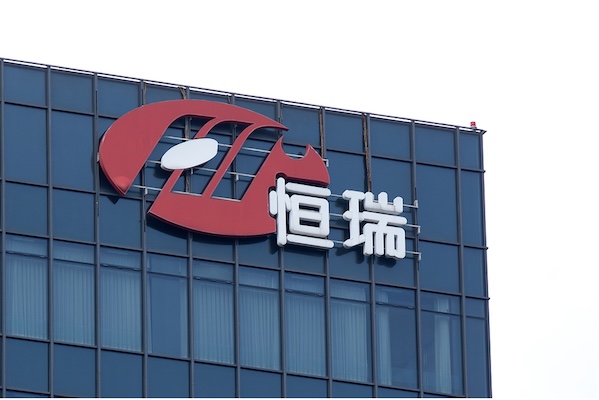 At a time when the industry is repeatedly plagued by anxiety about going global, Hengrui has made a stunning move with a deal worth tens of billions of US dollars!
On May 12, Hengrui Medicine and Bristol-Myers Squibb (BMS) announced that they have entered into a global strategic collaboration and licensing agreement to jointly advance 13 early-stage projects covering oncology, hematology and immunology, with a potential total transaction value of approximately US$15.2 billion.
The significance of this collaboration goes far beyond the monetary amount; the true core of this "deep-water bomb" lies in the dual innovations in the cooperation model and payment structure.
This agreement is not the typical one-off deal for a single pipeline in the industry, but rather it directly extends and broadens the scope of cooperation—Hengrui has the option to jointly develop specific projects and has the opportunity to jointly carry out specific commercialization activities with BMS on a global scale.
That afternoon, the market responded in the most direct way.
After the market opened in the afternoon, Hengrui Medicine's A-shares briefly hit the daily limit, with its market capitalization surging by over 34.1 billion yuan in just 8 minutes. The day's trading volume exceeded 10 billion yuan, a new high in nearly seven months. Its Hong Kong-listed shares also surged, with gains exceeding 16% at one point. Ultimately, by the close of trading, the gains for both Hengrui's A-shares and Hong Kong-listed shares had narrowed to 4.84%.
Stock price fluctuations will eventually pass, but the cooperation model deserves close examination. What exactly did Hengrui sell for $15.2 billion, and what did it retain?
01
$15.2 billion Blu-ray bombshell
This time, Hengrui did not choose to "go overseas with a single pipeline," but instead directly completed a strategic encirclement with BMS through a two-way licensing and joint R&D .
The foundation of the collaboration consists of 13 early-stage projects, all of which are in preclinical stages, spanning three major research tracks: oncology, hematology, and immunology.
Specifically, these include: 4 oncology and hematology projects led by Hengrui, 4 immunology projects led by BMS, and 5 innovative projects jointly developed based on Hengrui's R&D engine and diversified innovative technology platform.
This is not a simple asset combination, but a deep integration of the R&D capabilities of the two companies.
At an online investor conference held on the afternoon of December 12, Hengrui stated that the transaction involves a best-in-class/first-in-class product portfolio and "utilizes the Hengrui platform to jointly develop innovative projects." This includes not only clinical proof-of-concept for a single pipeline but also joint exploration of next-generation therapies.
According to the agreement, Hengrui will be fully responsible for the early clinical development of these 13 projects, accelerating the completion of clinical proof-of-concept (PoC). BMS, with its global clinical development capabilities, registration expertise, and commercial scale, will be responsible for the subsequent globalization.
Behind this division of labor lies a precise complementarity of the core capabilities of both parties: BMS values Hengrui's robust R&D engine and extremely high efficiency; while Hengrui needs BMS's vast global platform to monetize its early-stage pipeline . It can be said that this is a truly mutually beneficial and win-win situation.
Furthermore, and crucially, Hengrui retains the option to jointly develop specific projects and has the opportunity to conduct specific commercialization activities with BMS globally —this is precisely the "Co-Co opportunity" that Hengrui emphasized at the investor conference .
In traditional license-out schemes, Chinese pharmaceutical companies often lose control over the future of a drug after receiving initial payments and milestone payments. If clinical trials fail or the drug is returned due to MNC strategic adjustments, all previous efforts are wasted.
of the "commercialization option" means that Hengrui is no longer a licensee that "takes the initial payment and leaves ." If these early pipelines produce truly groundbreaking products, Hengrui is fully qualified to sit at the global commercialization table alongside BMS.
In order to accommodate the complex architecture of "two-way licensing + joint research and development", the payment structure of this transaction also breaks with convention.
The initial consideration was as high as $950 million, including a $600 million upfront payment, a $175 million first annual payment, and a $175 million conditional annual payment in 2028. Subsequent milestones for R&D, registration, and commercialization would bring the total potential amount to $15.2 billion, plus a share of overseas sales.
Unlike traditional business development (BD) transactions that typically employ a binary structure of "down payment + milestone payment," Hengrui and BMS have introduced an "anniversary payment" as a transitional payment mechanism .
The essence of "annual payments" is not merely to increase current cash reserves, but also to continuously price the long-term cooperative relationship. It sends a clear signal: BMS is willing to "vote" for Hengrui's R&D engine with real money, thereby establishing a deeper level of strategic mutual trust.
02
Hengrui BD's 2.0 phase
To view this transaction merely as a "highlight moment" for Hengrui would undoubtedly underestimate the profound evolution that has taken place in the company.
In fact, Hengrui's business development strategy has completed the leap from "1.0" to "2.0" - from single, passive product licensing to a new paradigm of "deep value creation" that includes joint R&D and equity cooperation , and strategic cooperation has accelerated the globalization process.
At the JPM conference in January this year, Jiang Ningjun, executive vice president and chief strategy officer of Hengrui Medicine, disclosed that since 2023, Hengrui has completed 12 innovative drug licensing transactions, with a total value of more than US$27 billion (approximately RMB180 billion).
With this strategic partnership with BMS, Hengrui's business development (BD) model has become more comprehensive, evolving into three clear paths:
Traditional License-out: Granting single-molecule or indication rights to companies like Merck, IDEAYA, and Merck to validate the clinical potential of R&D assets;
NewCo model: Package multiple products together with cash and equity and entrust them to international capital and professional teams for operation, so as to leverage global resources to accelerate high-investment clinical research and development;
Strategic alliance: Forming huge "early package" strategic alliances with MNCs such as GSK and BMS, deeply integrating into the global R&D and commercialization value chain, and moving from single licensing to long-term cooperation for continuous symbiosis.
These flexible business development models are not just on paper, but have already brought direct value realization.
Financial reports show that Hengrui Medicine's licensing revenue in 2025 was RMB 3.392 billion, accounting for approximately 10.7% of its operating revenue; and its licensing revenue in the first quarter of 2026 was RMB 787 million—BD overseas expansion is becoming an important and sustainable contributor to Hengrui's cash flow.
Not long ago, NewCo, a company in which Hengrui participated, also "went ashore".
In May 2024, Hengrui Medicine exclusively licensed the global development, production, and commercialization rights of four core GLP-1 drugs outside of Greater China to Kailera using the NewCo model, thus leading the NewCo trend of innovative drug business development in China.
According to the agreement, Hengrui will receive an initial payment of US$110 million, clinical development and regulatory milestone payments of up to US$200 million, and sales milestone payments of up to US$5.725 billion, while holding a 19.9% stake in Kailera (diluted to 13.6% after the IPO).
On April 16th of this year, Kailera successfully listed on Nasdaq, raising approximately $625 million. With this, the US biotech company, less than two years old, completed a $1 billion financing round and advanced its dual-target weight loss asset, Reptopeptide, to Phase III clinical trials globally.
Kailera's independent listing validates Hengrui's "NewCo model" complete value chain from asset licensing to capital exit .
Looking back at Hengrui's BD 2.0 phase, its essence is not about accumulating transaction volume, but rather an upgrade in cooperation models: from selling molecules to selling capabilities, from one-time licensing to co-creating value throughout the entire lifecycle. Hengrui is demonstrating through practice that Chinese innovative pharmaceutical companies can absolutely stand at a higher position in the global innovation chain.
03
A new ecosystem of "early research in China + global transformation"
Looking at the collaboration between Hengrui and BMS from a broader perspective, it becomes clear that this is not an isolated event—it is a microcosm of a rapidly evolving global industry trend: multinational pharmaceutical companies are shifting from the traditional "late-stage acquisition" model to a new logic of "locking in early-stage assets."
Over the past decade, MNC’s core strategy has been “late-stage acquisitions”—acquiring mature assets through mergers and acquisitions or licensing in late-stage clinical trials or commercialization stages to reduce R&D risks.
However, as competition in the global pipeline of research and development intensifies, "early entry and quick lock-in" has become the only way to compete for scarce innovative assets.
Securing early-stage projects in China and establishing long-term strategic partnerships with Chinese pharmaceutical companies possessing platform capabilities has become a rational choice for MNCs to optimize their R&D portfolios and improve innovation efficiency. Several major deals this year have confirmed this trend:
At the beginning of this year, based on multiple collaborations with CSPC on small molecule drugs, and leveraging CSPC's AI drug discovery platform and long-acting drug delivery technology platform, AstraZeneca offered a $1.2 billion down payment and a total amount of $18.5 billion, the "most expensive order in BD history," reaching an early-stage, multi-project AI discovery collaboration for long-acting peptide drugs.
For example, Eli Lilly entered into a strategic collaboration agreement with Innovent Biologics, with an initial payment of $350 million and milestone payments of up to $8.5 billion. The two companies are collaborating on early-stage targets in the field of autoimmune cancer, with Innovent Biologics leading drug discovery up to the Phase II clinical proof-of-concept stage in China, while Eli Lilly is leading global development and commercialization outside of Greater China.
Then there's the Hengrui & BMS deal—this collaboration breaks through the traditional licensing model, deeply integrating the early-stage development capabilities of Chinese companies with the global reach of MNCs, forming a highly efficient collaborative model for global drug development.
"early-stage binding, risk-sharing, and value co-creation" in a research report , pointing out that its core highlights are:
Early Collaboration Stage: MNCs are shifting from late-stage involvement to early-stage engagement, reflecting recognition of the early-stage research and development capabilities of Chinese innovative drug companies.
Deepening Cooperation: The cooperation model with MNC has shifted from single product licensing to collaborative development of multiple early pipelines using innovative technology platforms, achieving a long-term global strategic partnership.
Shift in collaborative division of labor: From MNCs leading the entire process to Chinese pharmaceutical companies taking full control of early-stage R&D, while MNCs undertake global late-stage development, registration, and commercialization, forming an industry ecosystem of "early-stage R&D in China + global transformation".
A clear signal has been sent: MNCs are no longer content with "waiting for the fruit to ripen before picking it," but are willing to "work side by side with Chinese pharmaceutical companies in the field" during the "sowing period."
The total amount is increasing, the cooperation period is lengthening, and the division of labor is deepening—this "early research in China + global transformation" model is evolving from an isolated case into an industry standard.
It is foreseeable that in the future, more Chinese innovative drug companies will enter a new era of platform-level strategic cooperation, deeply integrate with multinational MNCs, and write more "Chinese names" on the global innovative drug landscape, thanks to their differentiated target layout, efficient clinical translation capabilities, and solid clinical data.
https://news.yaozh.com/archive/48061.html
By editor
Copyright©2026 Ddu. All rights reserved.
Read more on
- CPHI Milan 2026 Recap | What Did Drugdu.com Bring Back from Milan? October 9, 2026
- Novo Nordisk and Nanexa Ink Up to €1.165B Long-Acting Delivery Deal for Obesity and Diabetes September 29, 2026
- siRNA Biotech ADARx Raises $446M in 2026’s Third-Largest Biotech IPO September 29, 2026
- Merck and Eisai’s Welireg Plus Lenvima Approved by FDA for Previously Treated Advanced Kidney Cancer September 29, 2026
- Mirum and Incyte’s Atebrioz Wins FDA Approval for Rare Bone Disorder FOP September 29, 2026
your submission has already been received.
OK
Subscribe
Please enter a valid Email address!
Submit
The most relevant industry news & insight will be sent to you every two weeks.


