
The generic version of this drug, developed by 35 pharmaceutical companies, has had its market launch delayed by 5 years.
June 5, 2026
Source: drugdu
 518
518
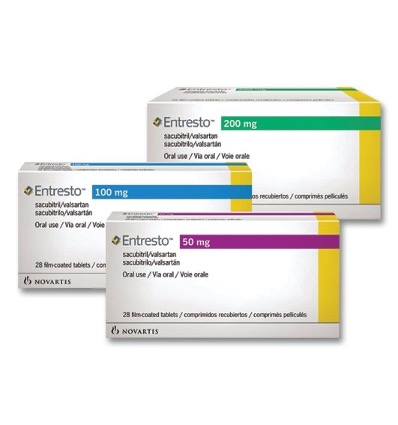 Just as the 12th batch of centralized procurement was launched, Noxinto (sacubitril/valsartan sodium tablets), the "king of drugs" in the cardiovascular field , was unexpectedly thrust into the spotlight. Just as the industry widely predicted that this blockbuster original drug, with annual sales reaching billions of yuan, would be included in the centralized procurement, a decision by the State Intellectual Property Office to extend its core patent for five years instantly changed market expectations.
Recently, the State Intellectual Property Office officially issued a decision on the patent term extension for Novartis' sacubitril/valsartan sodium tablets (Noxinto) patent 200680001733.0. After review, the decision was made to grant the patent a 1826-day extension period , extending the expiration date of one of its core crystal form patents, originally scheduled for November 8, 2026, to November 8, 2031.
35 domestic companies have obtained approval for generic versions of sacubitril/valsartan sodium tablets . Amid the interplay between patent barriers and the expectation of centralized procurement, this industry battle, which affects a market worth billions, has only just begun.
01
Why was it postponed?
This patent term extension is a benefit of the compliance system, not a special privilege for enterprises. According to Article 42, Paragraph 3 of the Patent Law of the People's Republic of China, to compensate for the time spent on the review and approval of new drugs for market approval, a patent term extension may be granted for invention patents related to new drugs that have obtained marketing authorization in China. The extension period shall not exceed 5 years, and the total effective patent term after extension shall not exceed 14 years. Novartis's 1826-day extension precisely meets the maximum policy benefit and is a typical benchmark case for domestic drug patent extensions.
From a product perspective, sacubitril/valsartan sodium tablets are Novartis' cornerstone blockbuster drug in the cardiovascular field. First approved in the US in 2015, it officially entered the Chinese market in 2017, securing approval for two core indications: heart failure with reduced ejection fraction and essential hypertension. With its superior cardiovascular protective mechanism compared to traditional sartans and ACE inhibitors, this product has quickly become a first-line clinical choice, with global sales projected to reach $7.748 billion by 2025, making it a truly global cardiovascular super-product . With this patent extension, Novartis will secure exclusive market access in China from 2026 to 2031, maximizing the commercial value throughout the product's lifecycle.
From a deeper industry perspective, this incident reflects the core tension between innovation incentives and drug accessibility in the global pharmaceutical industry. The underlying logic of the patent term extension system is to exchange temporary market exclusivity for continuous original innovation . By ensuring reasonable profit margins for original drug manufacturers, it incentivizes companies to continuously invest in new drug development, addressing the industry pain point of mismatched innovation investment and returns. However, in its implementation, this system has also sparked controversy: original drug manufacturers, relying on compliant patent tools to extend product lifecycles, are highly susceptible to creating "secondary patent barriers," delaying the availability of high-quality, low-priced generic drugs, sacrificing patient accessibility to some extent, and increasing the financial burden on medical insurance and patients.
Compared to mature international systems, China's drug patent compensation system shares the same underlying logic as the US Patent Term Extension (PTE) system, but its calculation rules are better suited to the domestic review system, making it highly attractive to multinational pharmaceutical companies. Compared to the short compensation cycles and ambiguous rules in some countries, China's system features clear rules, standardized approval processes, and the ability to implement maximum compensation . This aligns with international innovation protection standards and provides foreign pharmaceutical companies with stable institutional expectations for deepening their presence in the Chinese market . Finding a precise balance between protecting innovation, encouraging R&D, ensuring public welfare, and improving drug accessibility has become a core issue in optimizing the pharmaceutical patent system.
02
The Waiting of 35 Generic Drug Companies
Behind Novartis' patent extension lies the collective pressure on 35 domestic generic drug companies. According to data from PharmNet, as of May 27, 2026, 35 generic versions of sacubitril/valsartan sodium tablets have been approved for marketing in China (as shown in the figure below) , indicating an unprecedented surge in generic drug applications and market launches. Among them, the products from CSPC Pharmaceutical Group and Yixinhe Pharmaceutical were the first to be approved on August 22, 2023, becoming the first batch of generic drugs in China to pass the consistency evaluation; while Xinshanyuan Pharmaceutical's product was most recently approved on May 27, 2026, almost coinciding with the expiration of the original drug's patent, but ultimately faced patent extension, rendering all its previous strategic moves futile.
Currently, all approved generic drugs face the same predicament: technological breakthroughs, formulation and process optimization, consistency evaluation, production line construction, and clinical trial investment have all been completed, fulfilling all conditions for market launch. However, they cannot be commercialized due to patent barriers, and are ineligible to participate in national centralized procurement. Most companies, aiming to secure a foothold in blockbuster chronic disease drugs, have invested years in advance, continuously investing funds and R&D resources. Now, with the patent extension for five years, it means these companies will need to wait at least another five years to advance the commercialization process. This long waiting period will severely test their cash flow and sustainable operational capabilities, and some small and medium-sized generic drug companies may face financial pressure and difficulties in stopping project losses.
Faced with this predicament, domestic generic drug companies have gradually developed diversified strategies. First, they are challenging patent validity ; some leading companies may use patent invalidation declarations and early dispute resolution mechanisms to question the stability and innovativeness of the extended patents, striving for earlier market entry. Second, they are expanding into overseas markets , exporting mature generic drug technologies and production capacity to overseas markets not covered by patents or where patents have expired, thus revitalizing existing capacity. Third, they are pursuing differentiated iterative strategies , avoiding the core patent barriers of original drugs, developing new dosage forms, new compound formulations, and new indications, and creating differentiated products through technological fine-tuning to circumvent patent restrictions. Fourth, they are adopting a long-term reserve and wait-and-see approach; most companies choose to maintain production capacity reserves and wait for the patents to expire in 2031, aiming to quickly seize the market and achieve a breakthrough through increased sales volume.
This incident has thoroughly exposed the persistent problem of homogeneous competition within China's generic drug industry. Since the first generic drug was approved in 2023, in less than three years, 35 companies have received approval for the same product, reflecting the widespread problem of bandwagon applications and clustered deployments in the domestic generic drug market. Most companies focus on securing positions with established blockbuster products, neglecting patent cycle analysis and risk assessment, ultimately leading to a collective predicament of "approval followed by shelving." In the long run, the five-year patent vacuum may force a passive capacity clearing process in the generic drug industry . Small and medium-sized pharmaceutical companies lacking patent analysis capabilities and undifferentiated technological reserves will gradually be eliminated by the market, forcing the industry to shift from homogeneous competition to refined and forward-looking deployment.
03
The twelfth batch of nationally procured varieties, "Boyi"
Prior to the patent extension, sacubitril/valsartan sodium tablets were a popular candidate for the 12th batch of national centralized procurement due to their large market size, mature clinical application, and lack of centralized procurement record.
However, according to the core rules of the national centralized procurement, priority is given to mature products with expired patents, no effective patent barriers, and sufficient competition. Products with stable patent protection and monopolistic market dominance are usually temporarily postponed from being included in the centralized procurement catalog. With the implementation of this 5-year patent extension, the possibility of sacubitril/valsartan sodium tablets being included in the 12th batch of national centralized procurement in the short term is basically zero , and the product landscape of the cardiovascular and cerebrovascular industry is undergoing a major restructuring.
The current three-way game has taken shape, with each party having drastically different interests and strategies. At Novartis's level, leveraging the legal patent compensation system, it has successfully secured exclusive market rights for five years, maintaining stable high prices and high profits, and safeguarding the commercial value of its super-product. At the National Healthcare Security Administration's level, it faces a dual constraint of "innovation protection" and "healthcare cost control." On the one hand, it needs to comply with patent protection rules and respect innovative achievements; on the other hand, it needs to address the healthcare expenditure pressure brought by the product's long-term high price. It is possible that it will subsequently use healthcare negotiations and adjustments to payment standards to force the original drug manufacturer to moderately reduce prices, balancing cost control and innovation needs. At the generic drug company level, having lost the opportunity to increase volume in this round of centralized procurement, the industry's anticipated window for bulk access and price-for-volume transactions has closed. It is possible that industry organizations will unite to advocate for market access through patent disputes and policy recommendations.
With the elimination of core drugs, the 12th batch of centralized procurement for cardiovascular and cerebrovascular diseases will see a surge in the availability of alternative drugs. Traditional statins, ACE inhibitors, and ARBs (sartans) – mature drugs with expired patents, sufficient competition, and strong clinical demand – will become the core force in this round of procurement, filling the gaps left by blockbuster drugs. Meanwhile, sacubitril/valsartan sodium tablets will continue to maintain their market position of "exclusive original supply and high price," remaining a unique presence in the field of chronic cardiovascular and cerebrovascular diseases.
This incident provides an important industry example for the coordinated optimization of China's centralized procurement system and patent system. The industry urgently needs to discuss a core issue: for essential, blockbuster drugs within their patent compensation period, should a special centralized procurement access channel be established? This channel could involve limiting purchase volumes and mandating price negotiations to appropriately reduce inflated drug prices and improve drug accessibility without violating patent protection rules.
In the long run, the Novartis patent extension incident may force the national government to introduce special provisions for centralized procurement of patent-compensated drugs . This would establish dedicated access and cost control mechanisms for patent-extended drugs that are of extreme clinical necessity, have high patient dependence, and represent a large proportion of medical insurance expenditures, thus addressing the industry pain point of "imbalance between innovation protection and drug accessibility." The future policy logic of the pharmaceutical industry will no longer be a one-dimensional encouragement of innovation or simple cost control, but rather a multi-dimensional balance between patent protection, industrial development, patient rights, and sustainable medical insurance.
04
Conclusion
Novartis's five-year patent extension for sacubitril/valsartan sodium tablets, seemingly a policy benefit for a single company, actually involves the interests of multiple parties, including foreign original drug manufacturers, domestic generic drug companies, the medical insurance system, and patients. The collective waiting of 35 generic drug companies, the restructuring of the 12th batch of centralized procurement, and the deep interplay between innovation and accessibility collectively depict the complex ecosystem of China's pharmaceutical industry today. In the next five years, the market monopoly of this drug will continue to reshape the cardiovascular drug market, and will also drive the continuous optimization of domestic patent protection systems and centralized procurement policies, propelling the industry towards a new stage of more standardized, balanced, and high-quality development.
https://news.yaozh.com/archive/48236.html
By editor
Copyright©2026 Ddu. All rights reserved.
Read more on
- CPHI Milan 2026 Recap | What Did Drugdu.com Bring Back from Milan? October 9, 2026
- Novo Nordisk and Nanexa Ink Up to €1.165B Long-Acting Delivery Deal for Obesity and Diabetes September 29, 2026
- siRNA Biotech ADARx Raises $446M in 2026’s Third-Largest Biotech IPO September 29, 2026
- Merck and Eisai’s Welireg Plus Lenvima Approved by FDA for Previously Treated Advanced Kidney Cancer September 29, 2026
- Mirum and Incyte’s Atebrioz Wins FDA Approval for Rare Bone Disorder FOP September 29, 2026
your submission has already been received.
OK
Subscribe
Please enter a valid Email address!
Submit
The most relevant industry news & insight will be sent to you every two weeks.