The battle between Novo Nordisk and Eli Lilly for market dominance is spreading eastward
January 4, 2026
Source: drugdu
 285
285
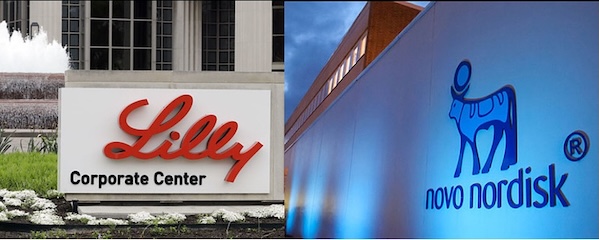 In recent years, the weight-loss drug market has been primarily focused on the United States and Europe , revolving around price, affordability, health insurance negotiations, and market penetration caps. However, with several GLP-1 drugs completing their initial market rollout in major global markets, competition is extending to new variables.
Against this backdrop, India has gradually come into focus . Competition surrounding the Indian market has become continuous and traceable, making Eli Lilly and Novo Nordisk's strategies in this market a key point to watch in the 2026 weight-loss drug competition.
01
Ozempic launches in India.
The pricing standards are intriguing.
Novo Nordisk recently launched Ozempic in India and announced the full dosage gradient and monthly pricing at the same time .
Specifically, Ozempic is available in India in three strengths: 0.25 mg, 0.5 mg, and 1 mg, all as pre-filled syringes; the monthly prices are 8,800 rupees ($98), 10,170 rupees ($114), and 11,175 rupees ($125), respectively. In a market primarily driven by out-of-pocket payments, price directly filters the patient population and provides a calculable cost framework for long-term prescriptions by physicians.
With prices and dosages disclosed simultaneously, semaglutide has entered the mainstream commercial system in India for the first time as a complete treatment tier, shifting the focus of discussion from "whether anyone uses it long-term" to "the long-term cost differences between different dosages and different products".
The timing dimension is equally crucial. Semaglutide's core patent in India is expected to expire in March 2026, and Ozempic's launch will be just months away. Every step surrounding pricing, prescription promotion, and channel coverage will be compressed into a highly defined window of opportunity. This time constraint gives the market a more concrete expectation for competition in 2026.
Ozempic's pricing aligns with Novo Nordisk's deployment strategy in India. In November 2025, Novo Nordisk proactively adjusted the price of Wegovy, which was launched earlier, in India, with monthly price reductions of over 30% for some doses. This included both Novo Nordisk's proactive reduction of the ex-factory price and the marginal impact of adjustments to India's national sales tax structure.
For example, the monthly price of the highest dose of 2.4 mg has been reduced from approximately 24,389 rupees (about 278 US dollars) to 16,400 rupees (about 187 US dollars); the monthly price of the lowest dose of 0.25 mg has been reduced from 16,260 rupees (about 185 US dollars) to 10,850 rupees (about 123 US dollars).
Intriguingly, this price adjustment occurred just months after Wegovy entered the Indian market in June 2025. Subsequently, Ozempic entered the market with a lower starting price, completing the price and dosage transition from weight loss products to basic diabetes treatments. This integrated price gradient creates a comparable cost framework in the market even before generic drugs enter.
The other end of the competition provides a real-world reference. Eli Lilly's Mountaro launched in India in March 2025, earlier than Wegovy and Ozempic. By October 2025, Mountaro achieved monthly sales of approximately 1 billion rupees, equivalent to about US$11.2 million, placing it among the leading sellers in India by sales volume that month. The speed of growth in the self-payment environment provides a quantifiable benchmark for subsequent comparisons.
Under this structure, Ozempic's launch has brought the competition of 2026 into market expectations ahead of time. Going forward, the differences will mainly lie in the extension of first-mover advantage, the efficiency of channel penetration, and the strategic layout of the brand structure.
02
Mounjaro's early launch and market expansion
In this round of competition in the Indian market, Eli Lilly had an earlier start. Mounjaro launched in India in March 2025, entering the physician prescription and distribution system earlier than Wegovy and Ozempic.
This time lag was translated into observable market results through subsequent volume expansion and coverage extension. By October 2025, Mounjaro achieved monthly sales of approximately 1 billion rupees (approximately US$11.2 million). Considering that weight loss and metabolic drugs in India are almost entirely paid for out-of-pocket by patients, this scale signifies that the product has successfully transitioned from early trial to regular use.
In terms of price structure, Mounjaro maintains a significantly higher price range in India.
The monthly price for a 2.5 mg dose is approximately 13,125 rupees (about US$147), while the maximum monthly price for a 15 mg dose is approximately 25,781 rupees (about US$288). This price range did not hinder sales volume; on the contrary, it helped Liren segment its patients to some extent: severely obese individuals, patients with higher expectations for treatment efficacy, and those with sustained purchasing power formed the core user base in the early stages. With the public announcement of Ozempic's pricing, the Indian market now has two clearly defined pricing and dosage systems simultaneously for the first time.
The patent timeline further reinforces this advantage. Tirzepatide's patent protection period is significantly longer than semaglutide's, limiting the direct structural pressure Eli Lilly faces in 2026. Under this premise, Eli Lilly is gradually shifting its resource allocation focus in India towards expanding coverage and deepening distribution channels, rather than responding to potential generic drug competition through aggressive pricing strategies in the short term.
03
Patent window and generic drug timeline:
How will the boundary conditions for competition be formed in 2026?
Time will be the key factor determining the intensity of competition in the Indian market in 2026. " Time waits for no one" is the primary issue facing semaglutide. The expiration date for semaglutide's core patents in India points to March 2026.
For Novo Nordisk, this timeline means two tasks need to be completed as much as possible before the patent window closes: first, to reduce the price range in the out-of-pocket market to a range that can be expanded, while keeping channels willing to continue to stock the product; second, to cultivate stable prescribing habits among doctors and build trust among patients in the brand and the stability of supply.
Preparations on the generic drug supply side are also driving this timeline towards reality. Public information shows that more than 20 pharmaceutical companies in India plan to launch cheaper generic versions of semaglutide after its patent expires, including leading companies such as Dr. Reddy's, Cipla, Sun Pharma, Zydus, and Lupin.
Analysts predict that generic drugs may be priced about 60% lower than original drugs, a pricing expectation that will rapidly change the demand structure in a highly self-funded, price-sensitive market. More importantly, generic drug companies will not need to go through a long ramp-up period after March 2026 to increase production capacity, as the supply side has the ability to release capacity rapidly once the patent window opens.
Under this supply model, for original research products to maintain their market share, the variables they rely on will be more inclined towards channel control, supply stability, brand trust, and service system, rather than simply relying on patent moats.
04
Novo Nordisk and Eli Lilly's second front in India
Another major highlight of the competition between Novo Nordisk and Eli Lilly in India is that their rivalry has transcended the traditional "Jin-Chu rivalry" between semaglutide and tirzepatide, and has expanded into a comprehensive contest encompassing "Chen, Cai, Song, and Wei" (referring to various political factions).
Eli Lilly's strategy in India has clearly moved beyond simply launching a single product. The company has partnered with Cipla, India's third-largest pharmaceutical company, to launch a second tirzepatide brand, Yurpeak, targeting smaller cities and more dispersed patient populations outside of major metropolitan areas. This move is not merely a brand extension; rather, it leverages Cipla's long-standing expertise in grassroots markets and regional distribution networks to accelerate tirzepatide's penetration in non-core cities, thereby amplifying the reach of its first-mover product to a wider population.
Meanwhile, Eli Lilly's collaboration with Apollo Hospitals focuses on disease awareness and standardized management of obesity and diabetes. In a market like India, where patient decisions heavily rely on physician advice, disease education through a large private hospital system helps embed medication decisions into a more systematic treatment pathway, rather than remaining at the level of individual prescriptions. Such collaborations may have limited short-term sales boosts, but they have a direct impact on long-term prescription stability and patient retention.
Novo Nordisk's strategy in India also revolves around distribution expansion and patient management. The company partnered with Indian pharmaceutical company Emcure Pharmaceuticals to launch a second semaglutide brand, Poviztra, targeting markets beyond first-tier cities. This arrangement leverages Emcure's regional distribution and grassroots channels to extend semaglutide's reach beyond large cities and high-end medical institutions, facilitating rapid channel expansion before price and patent restrictions tighten.
At the patient management level, Novo Nordisk has partnered with digital health startup Healthify to provide users with health coaching services related to diet, exercise, and lifestyle. These services do not directly replace medication decisions, but in long-term treatment scenarios, they help improve patient adherence and willingness to continue using the medication. Simultaneously, Novo Nordisk continues its collaboration with Apollo Hospitals to strengthen physician education and disease awareness through the hospital system, enabling obesity treatment to be more comprehensively integrated into standardized management pathways.
In terms of communication methods, India's restrictions on prescription drug advertising prevent companies from reaching patients directly through product promotion. In this regulatory environment, Novo Nordisk launched the "WeGoWithYou" obesity awareness project, connecting patients and doctors to guide the public in understanding the medical nature of obesity and its management. Eli Lilly also launched a similar "WeKnowNow" project, focusing on public communication regarding obesity management. Both companies utilize newspapers, outdoor advertising, airport displays, and promotional materials within health management institutions to raise awareness of obesity as a chronic disease.
These initiatives share a common characteristic: they do not directly revolve around the product itself, but rather serve to build a longer-term usage environment . In a market where out-of-pocket payments are prevalent and patient decisions heavily rely on physician advice, the cognitive foundation built through disease education, patient support, and channel partnerships will directly impact the actual retention potential of original research products in the face of intensified competition.
Over the next year, the evolution of the Indian market will primarily manifest in three aspects: whether price ranges can achieve stable expectations in a self-pay environment, whether channel coverage can continue to expand into second-tier and lower-tier cities, and the actual usage space for original drugs after the entry of generic drugs. The outcomes surrounding these changes will directly determine the competitive landscape of the Indian market in 2026 and will also influence how emerging markets subsequently assess the pricing and market positioning of weight-loss drugs.
https://news.yaozh.com/archive/46796.html
By editor
Copyright©2026 Ddu. All rights reserved.
Read more on
- CPHI Milan 2026 Recap | What Did Drugdu.com Bring Back from Milan? October 9, 2026
- Novo Nordisk and Nanexa Ink Up to €1.165B Long-Acting Delivery Deal for Obesity and Diabetes September 29, 2026
- siRNA Biotech ADARx Raises $446M in 2026’s Third-Largest Biotech IPO September 29, 2026
- Merck and Eisai’s Welireg Plus Lenvima Approved by FDA for Previously Treated Advanced Kidney Cancer September 29, 2026
- Mirum and Incyte’s Atebrioz Wins FDA Approval for Rare Bone Disorder FOP September 29, 2026
your submission has already been received.
OK
Subscribe
Please enter a valid Email address!
Submit
The most relevant industry news & insight will be sent to you every two weeks.