
Smegglutide begins to fight back
April 27, 2026
Source: drugdu
 129
129
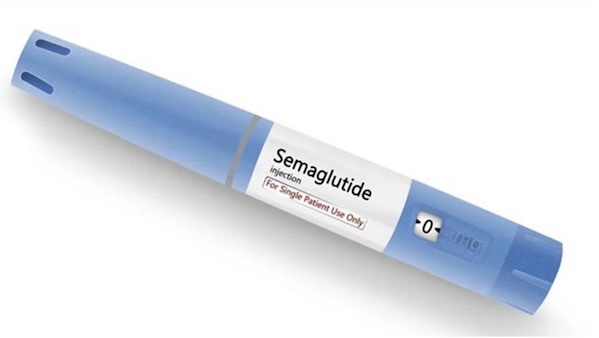
GLP-1 drugs have rapidly become a core segment of the global pharmaceutical market in the past two years. For a long time, the competitive logic of these drugs was highly simplified to a single indicator: the rate of weight loss . Temerpotide, with its higher average weight loss rate demonstrated in clinical trials, has gained a significant cognitive advantage, while its pioneering drug, semaglutide, has gradually been surpassed in this dimension, allowing temerpotide to benefit from its late-mover advantage.
This weight-centric assessment method has a natural advantage in terms of dissemination. Weight loss is an intuitive, quantifiable, and quickly comparable indicator, and it is also easier for patients and non-professionals to understand. However, the problem is that this indicator itself cannot distinguish the components of weight loss . Fat loss and lean body mass loss are presented together in weight data, but the two have completely different values in a medical sense.
Weight loss should not only focus on the decrease in body weight, but also on preventing the simultaneous loss of lean body mass . With the iterative upgrades of weight loss drugs, this refined requirement for fat reduction is becoming increasingly critical, and it also provides important evidence for establishing clinical endpoints in subsequent new drug development.
01
Real-world data,
Revealing the weight loss advantages of smegglutinin
Recent real-world data analysis is beginning to revise this logic. This study, conducted by the US data analytics company Nference, retrospectively analyzed changes in body composition in patients receiving GLP-1 inhibitors, based on its integrated database of medical imaging and electronic health records. Unlike traditional randomized controlled trials, this study is a real-world cohort study , including patients in a typical clinical setting, reflecting actual treatment outcomes under the combined influence of complex factors such as different dosages, adherence, and comorbidities.
This study included approximately 1,800 users of telpotrebate and 6,200 users of smegglutide, dynamically tracking patients' body composition using low-radiation scanning and a smart body fat analyzer. Results showed that telpotrebate was associated with a more significant reduction in lean body mass at all time points . At 3 months of treatment, the telpotrebate group lost an average of 1.1% more lean body mass than the smegglutide group, and the difference widened to approximately 2% at 12 months.
Further stratified analysis revealed that among patients who achieved a total weight loss of more than 20%, approximately 10% of patients in the telpotrebide group experienced a lean body mass loss exceeding 5%, while the corresponding proportion in the smegglutide group was less than 7% . This result suggests that the differences in body composition are more pronounced in patients with greater weight loss.
The significance of this discovery lies in its shift from the past ranking logic that solely relied on the magnitude of weight loss. The proportion of fat and muscle lost in the weight loss is now becoming a new evaluation variable. Clinically, this change means the efficacy of weight-loss drugs needs to be redefined. Weight loss also requires a degree of vigilance and careful management.
Lean body mass is not simply "non-fat tissue"; skeletal muscle is its most clinically significant component. Skeletal muscle plays a central role in maintaining basal metabolism, regulating glucose utilization, supporting motor function, and preventing falls and disability. Long-term muscle loss is closely associated with increased insulin resistance, progression of metabolic syndrome, and functional decline in old age.
The study further indicated a significant association between decreased lean body mass and reduced exercise tolerance. This association was present in both classes of drugs, but was more pronounced in the telpolide group. Decreased exercise tolerance means that patients have more difficulty maintaining their daily activity levels, and reduced exercise further exacerbates muscle loss.
This process exhibits a clear self-reinforcing characteristic. Initial lean body mass loss reduces exercise capacity, which in turn weakens muscles, ultimately leading to a sustained decline in function. This process is more easily triggered in patients with underlying musculoskeletal disorders. The study also found that high-dose use, longer treatment duration, and a history of musculoskeletal pain were all associated with more significant lean body mass loss.
These observations suggest that the effects of weight-loss drugs extend beyond weight changes, involving systemic alterations in bodily functions. Simply pursuing greater weight loss may come with hidden costs for some individuals.
Under the new dimension of weight loss quality, the performance of smegglutinin is beginning to be re-evaluated. Although its average weight loss is lower than that of telpolide, it is more stable in terms of lean body mass retention , giving it a different risk-benefit structure in long-term use scenarios.
Novo Nordisk noted that in previous clinical trials, the change in muscle mass in the semaglutide group was not significantly different from that in the placebo group, while patients' physical function was maintained. This result suggests that the weight loss induced by semaglutide is more likely due to fat reduction than overall tissue loss.
As clinical practice places increasing emphasis on long-term outcomes, the quality of weight loss is gradually becoming a key indicator. For patients requiring long-term medication, maintaining muscle mass and functional status is just as important as weight loss itself. In this context, semaglutide's advantage lies not in enhanced weight loss, but in its stable performance in controlling body composition.
This change means that drug selection is no longer a simple matter of prioritization, but rather a trade-off between different characteristics. Weight loss, changes in body composition, functional maintenance, and safety collectively form the new decision-making basis.
02
A renewed understanding of liver mechanisms
Besides differences in body composition, the mechanism of action of semaglutide at the organ level is also being continuously revealed. A recent study published in Cell Metabolism shows that the effects of GLP-1 drugs on the liver are not entirely dependent on weight loss .
Studies in a mouse model of fatty liver have found that approximately 3% of liver cells—sinusoidal endothelial cells—express GLP-1-related receptors. These cells, located on the inner walls of liver microvessels, are responsible for substance exchange and microenvironment regulation. Smegglutinin can alter their gene expression, inducing the release of anti-inflammatory molecules, thereby reducing inflammation levels throughout the liver.
This mechanism explains a long-standing clinical phenomenon: some patients, despite limited weight loss, still show improvements in liver inflammation, fibrosis, and enzyme levels. Researchers point out that the efficacy of semaglutide cannot be measured solely by weight changes; its direct effects on organs are equally important.
This discovery has direct implications for disease areas such as MASH, where the core pathology is inflammation and fibrosis, rather than simply obesity. If the drug can act directly on liver cells, expanding its role from a weight-loss tool to a disease treatment, its clinical value will be significantly enhanced.
03
Evaluation system restructuring and market impact
The anticipated recovery in semaglutide's market value (i.e., the market's previously low evaluation of semaglutide is now being revised upwards) essentially stems from a change in the evaluation system. When the market shifts its focus from maximum weight loss to overall health outcomes, the criteria for judging product value change.
In the new evaluation framework, the magnitude of weight loss has become a basic indicator, body composition structure has become a key indicator, and organ preservation has become a newly added indicator. This change has gradually revealed previously overlooked advantages.
For clinicians, this means more complex prescription decisions, requiring comprehensive consideration of the patient's baseline condition, treatment goals, and long-term risks. For payment systems, multidimensional efficacy will influence drug value assessment and pricing logic. For capital markets, product valuation will no longer rely solely on a single data point, but rather on its performance across multiple areas.
This change will not be completed in the short term, but its direction is clear. The weight loss drug market is shifting from competition based on a single indicator to competition based on comprehensive efficacy.
The anticipated improvement in semaglutide's effectiveness does not stem from a new breakthrough in weight loss data, but rather from a shift in our understanding of the nature of weight loss. As body composition, functional status, and organ effects are increasingly incorporated into evaluation systems, comparisons between drugs are no longer limited to weight figures.
This shift signifies a new phase in the competition among weight-loss drugs. Ranking based on single metrics is becoming less effective, and multi-dimensional efficacy is taking center stage. Evidence regarding semaglutide's effects on body composition retention and organ protection supports its place within this new framework.
As more long-term data and real-world evidence accumulate, the value assessment of weight-loss drugs will further align with clinical realities. In this process, the status of semaglutide is being re-examined, and its growth logic is changing accordingly.
https://news.yaozh.com/archive/47893.html
By editor
Copyright©2026 Ddu. All rights reserved.
Read more on
- CPHI Milan 2026 Recap | What Did Drugdu.com Bring Back from Milan? October 9, 2026
- Novo Nordisk and Nanexa Ink Up to €1.165B Long-Acting Delivery Deal for Obesity and Diabetes September 29, 2026
- siRNA Biotech ADARx Raises $446M in 2026’s Third-Largest Biotech IPO September 29, 2026
- Merck and Eisai’s Welireg Plus Lenvima Approved by FDA for Previously Treated Advanced Kidney Cancer September 29, 2026
- Mirum and Incyte’s Atebrioz Wins FDA Approval for Rare Bone Disorder FOP September 29, 2026
your submission has already been received.
OK
Subscribe
Please enter a valid Email address!
Submit
The most relevant industry news & insight will be sent to you every two weeks.


