
PD-1 + ADC, securing a major indication
November 25, 2025
Source: drugdu
 201
201
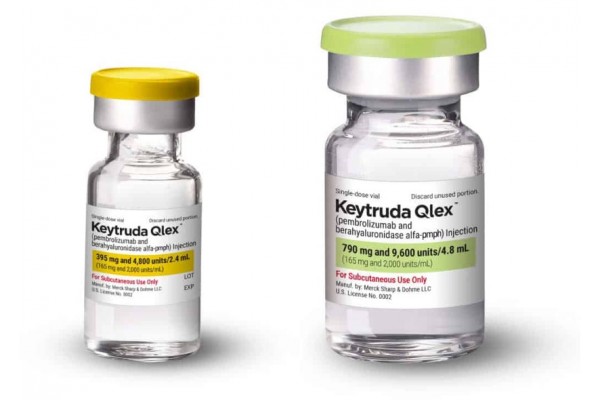
Recently, Pfizer's Padcev and Merck's Keytruda (including the intravenous infusion version of Keytruda and the subcutaneous injection version of Keytruda Qlex) received early approval from the U.S. FDA for the perioperative treatment of adult patients with muscle invasive bladder cancer (MIBC).
This regimen is suitable for MIBC patients who are ineligible for cisplatin-based chemotherapy, specifically consisting of neoadjuvant therapy (3 cycles) followed by adjuvant therapy (14 or 7 cycles). This is the first and only approved complete perioperative treatment regimen for MIBC patients who are ineligible for cisplatin.
This approval is based on the results of the pivotal Keynote-905/EV-303 study. This study enrolled adult MIBC patients who were unsuitable for or actively refused cisplatin therapy and aimed to compare the efficacy of PD-1 inhibitor/ADC combination therapy plus surgery versus surgery alone.
Merck presented the results of this study at this year's ESCO annual meeting.
After a median follow-up of 25.6 months, compared with surgery alone (radical cystectomy), this combination therapy as perioperative treatment reduced the risk of EFS events by 60% (HR=0.40, p<0.0001) and the risk of death by 50% (HR=0.50, p=0.0002).
Meanwhile, adverse events were consistent with previous monotherapy studies, and no new safety signals were found.
Muscle-invasive bladder cancer (MIBC) is a highly aggressive disease, and the standard treatment is radical cystectomy following neoadjuvant chemotherapy with cisplatin. However, after cystectomy, about half of MIBC patients may experience recurrence, and many are ineligible for cisplatin treatment.
The results of KEYNOTE-905 demonstrate for the first time that perioperative use of Keytruda + Padcev significantly improves survival in MIBC patients who are not suitable for cisplatin, and is currently the only systemic regimen that has shown clear benefit.
Keytruda (pembrolizumab) is Merck's most important asset and one of the most successful drugs in the field of oncology treatment, with current annual sales of nearly $30 billion.
However, as an immunotherapy, Keytruda (pembrolizumab) also has obvious limitations, with a relatively high response rate only in certain types of cancer. In recent years, Merck has been continuously exploring combination therapies for Keytruda to expand its application scenarios. Among them, PD-1 + ADC is highly anticipated.
ADCs significantly expand the therapeutic window of cytotoxic drugs in tumor tissue and can effectively reduce the toxic side effects caused by systemic chemotherapy. Combining pembrolizumab (K drug) with ADCs is expected to achieve better results than combining them with chemotherapy or targeted therapy.
Padcev (enfortumab vediotin) is the world's first approved Nectin-4 ADC, jointly developed by Pfizer and Astellas. It uses a fully human IgG1 monoclonal antibody targeting nectin-4 and MMAE linked by a cleavable dipeptide linker.
In December 2023, the U.S. FDA approved PADCEV in combination with the PD-1 monoclonal antibody Keytruda as first-line treatment for locally advanced or metastatic urothelial carcinoma, becoming the world's first approved "PD-1 + ADC" combination therapy. Data shows that the overall survival (OS) of patients receiving the combination therapy was nearly twice that of patients in the chemotherapy group, and it reduced the risk of death by 53%.
This combination therapy has once again received FDA approval, successfully expanding its indication to perioperative treatment of muscle-invasive bladder cancer (MIBC).
In addition, Merck is exploring the combined therapeutic effects of various ADC drugs with Keytruda, leading the IO+ADC wave.
https://news.yaozh.com/archive/46346.html
By editor
Copyright©2026 Ddu. All rights reserved.
Read more on
- CPHI Milan 2026 Recap | What Did Drugdu.com Bring Back from Milan? October 9, 2026
- Novo Nordisk and Nanexa Ink Up to €1.165B Long-Acting Delivery Deal for Obesity and Diabetes September 29, 2026
- siRNA Biotech ADARx Raises $446M in 2026’s Third-Largest Biotech IPO September 29, 2026
- Merck and Eisai’s Welireg Plus Lenvima Approved by FDA for Previously Treated Advanced Kidney Cancer September 29, 2026
- Mirum and Incyte’s Atebrioz Wins FDA Approval for Rare Bone Disorder FOP September 29, 2026
your submission has already been received.
OK
Subscribe
Please enter a valid Email address!
Submit
The most relevant industry news & insight will be sent to you every two weeks.