
the global setbacks of FIC
April 24, 2026
Source: drugdu
 205
205
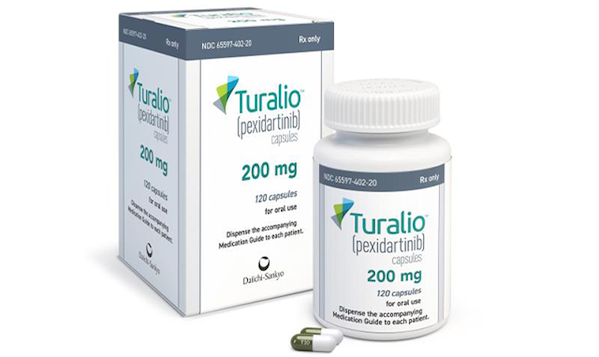
Once a global FIC drug, it has suffered a major setback in the domestic market.
According to the NMPA website, Daiichi Sankyo's Pexidartinib received a "drug notification." While the specific reason has not been disclosed, this means the drug has not been approved.
Of course, this result is not entirely unexpected. After all, while pexidartinib does offer improved patient benefits, its risks cannot be ignored; it had previously been rejected by the EMA in Europe. Meanwhile, in China, pimitinib, with its superior efficacy and safety profile, has already been approved for marketing.
To some extent, the failure of Pexidartinib is not just a failure of a single drug, but also reflects a change in the times.
With the continuous rise of domestically developed innovative drugs, offering patients better options, domestic regulatory authorities are imposing increasingly higher requirements on drug review and approval. This is especially true for drugs treating non-fatal diseases, which need to demonstrate significant overall clinical benefits.
Of course, this is not just a challenge that multinational pharmaceutical companies need to face, but a new rule that all pharmaceutical companies must adapt to.
01
FIC in a Special Era
Pexidartinib had already received FDA approval before applying for listing in China.
On August 2, 2019, the FDA approved pexidartinib as the first and only drug for the treatment of symptomatic adult patients with TGCT.
However, its FDA approval was largely due to its time advantage.
While giant cell tumors of the tendon sheath are not fatal, they can severely impact a patient's quality of life. Giant cell tumors of the tendon sheath are rare, locally aggressive tumors primarily driven by CSF-1 gene overexpression. TGCT involves the synovial lining of joints, bursae, and tendon sheaths, leading to decreased mobility in the affected joints or limbs.
Before its approval, there were no other treatment options for TGCT. The standard treatment for TGCT is surgical resection, but recurrence is common after surgery. Tumors in patients with recurrent, refractory, or diffuse TGCT may surround bones, tendons, ligaments, and other joint structures, making them difficult to remove or unsuitable for improvement through surgery.
Performing multiple surgeries on patients with more severe conditions can lead to serious joint damage, severe functional impairment and decreased quality of life, and may even require amputation.
It was precisely because of this urgent clinical need that pexidartinib emerged as the first treatment drug, providing patients with new options and ultimately gaining FDA approval.
02
It's not enough domestically.
But in fact, Pexidartinib is not perfect.
Pexidartinib faced obstacles in Europe before being rejected in China. In 2020, the EMA rejected Pexidartinib's application for market approval.
The rationale is that, although tumor shrinkage was observed in the study, the improvement in symptoms such as pain and joint function was limited and its sustainability was unclear. In addition, there was an unpredictable and potentially life-threatening risk of hepatotoxicity. Therefore, it was believed that the benefits did not outweigh the risks.
That's true. Although Pexidartinib received FDA approval, it has been the subject of considerable controversy.
First, regarding efficacy, Pexidartinib had an ORR of 39% in a Phase III clinical trial, but it did not achieve a statistically significant difference in pain improvement compared to placebo.
Secondly, there is the safety concern. Pexidartinib carries a risk of causing severe and potentially fatal liver damage. Among the 768 patients participating in the TURALIO clinical trial, two cases of irreversible cholestatic liver injury occurred: one patient died due to advanced cancer complicated by persistent hepatotoxicity, and the other required a liver transplant.
Therefore, although Pexidartinib has been approved for marketing, it has been given a black box warning in the United States due to serious liver toxicity issues.
From the perspective of matching clinical value with patient needs, the patients with giant cell tumors of the tendon sheath require drugs that not only shrink the tumor, but also improve their quality of life, such as pain relief and joint function improvement. Pexidartinib's shortcomings in improving core symptoms result in a significant shortcoming in its overall clinical benefit.
Furthermore, given that products like Heyu's pixidartinib, which offer superior efficacy and safety compared to other drugs targeting similar targets or indications, have already been approved, it is understandable that pixidartinib was rejected in China.
03
The logic of survival has changed
For Pexidartinib, the failure to list in China has undoubtedly come at a heavy price.
Compared to overseas markets, the clinical need in China is more urgent. TGCT cases are around 14,000 per year in the United States, while in China, the number reaches as high as 60,000 per year, making it a market with greater potential for development.
Of course, more noteworthy than the failure of Pexidartinib is the change in the industry environment it reflects: the survival logic of innovative drugs in China has been completely altered.
In earlier years, due to the shortage of medical resources and medicines in China, and the imperfect policies related to innovative drugs, the industry urgently needed to solve the problem of getting drugs from scratch. As a result, some "me too" and even "me worse" drugs also gained the opportunity to be launched on the market.
However, at present, China's innovative drug industry has completed a phased transformation from few to many, and from small to large. Domestic innovative drugs are emerging at an accelerated pace, and their impact on reshaping the industry landscape is far exceeding expectations.
This has forced domestic pharmaceutical companies to demand more stringent clinical trial standards from the very beginning of research and development, so that they can gain more room for development in the fierce competition.
At the same time, the room for some companies to attempt to quickly bring their products to market through "opportunistic" clinical trial designs is being continuously squeezed. The oral insulin ORMD-0801, which was rejected for approval at the end of last year, precisely reflects this trend.
Today, both overseas and domestic pharmaceutical companies must adapt to the new era of the Chinese market.
https://news.yaozh.com/archive/47865.html
By editor
Copyright©2026 Ddu. All rights reserved.
Read more on
- CPHI Milan 2026 Recap | What Did Drugdu.com Bring Back from Milan? October 9, 2026
- Novo Nordisk and Nanexa Ink Up to €1.165B Long-Acting Delivery Deal for Obesity and Diabetes September 29, 2026
- siRNA Biotech ADARx Raises $446M in 2026’s Third-Largest Biotech IPO September 29, 2026
- Merck and Eisai’s Welireg Plus Lenvima Approved by FDA for Previously Treated Advanced Kidney Cancer September 29, 2026
- Mirum and Incyte’s Atebrioz Wins FDA Approval for Rare Bone Disorder FOP September 29, 2026
your submission has already been received.
OK
Subscribe
Please enter a valid Email address!
Submit
The most relevant industry news & insight will be sent to you every two weeks.