
Another “disaster” for pre-antibody technology
December 12, 2025
Source: drugdu
 321
321
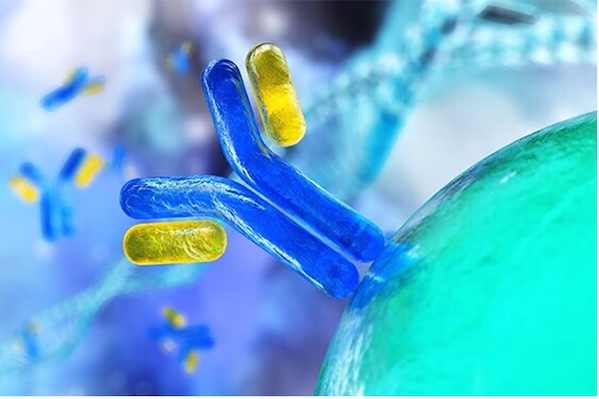 Recently, Janux Therapeutics, which focuses on proantibody technology, saw its stock price plummet by 53.34% after releasing the latest clinical data for its core product JANX007.
This bispecific antibody prodrug targeting PSMA/CD3 initially impressed the market with its 50% ORR (Objective Response Rate) data released in December 2024, causing the company's stock price to surge by nearly 50% in a single day and its market capitalization to once exceed $3.5 billion. It was seen as the hope for a breakthrough in proantibody technology. However, a year later, as the sample size expanded from 16 to 104 cases, the ORR plummeted from 50% to 30%, the PSA90 response rate shrank from 63% to 26%, and the safety performance also fell short of expectations.
More noteworthy is that this is not the first time the antibody field has encountered a major setback. Back in 2022, CytomX Therapeutics, a pioneer in antibody technology, suffered a series of clinical failures for multiple drug candidates, causing its stock price to plummet and its market value to evaporate by 98%, at one point teetering on the brink of delisting.
It wasn't until the first half of 2025 that CytomX's stock price surged 129.5% in a single day, thanks to the excellent preliminary data shown by its EpCAM ADC drug CX-2051 in the treatment of advanced colorectal cancer. In addition, Janux and Vir Bio's pro-antibody drugs also showed excellent efficacy data in early clinical trials, reigniting market enthusiasm for pro-antibody technology.
Currently, the sharp decline in clinical data for JANX007 has cast a shadow over the recently recovering proantibody field. Along with the plunge in JANX's stock price, CytomX and Vir Bio's shares were also affected, falling by 11% and 7% respectively.
Is this highly anticipated technology just an isolated setback, or has it still not escaped the predicament of "idealistic but unrealistic"?
01
Clinical data plummeted
Janux's stock price plunge is essentially a strong market reaction to the gap between expectations and reality.
Back in December 2024, Janux released impressive early data for JANX007: in 16 prostate cancer patients who had received four lines of treatment, the PSA (prostate-specific antigen) 50 response rate was 100%, the PSA90 response rate was 63%, and the ORR was 50%, even outperforming competitors such as Novartis' radiopharmaceutical Pluvicto.
It's important to understand that mCRPC patients often experience decreased tolerance and low treatment response rates after multiple lines of therapy. The performance of JANX007 at the time highlighted the potential of pro-antibody technology. As a result, Janux's stock price surged nearly 50% in a single day, briefly pushing its market capitalization above $3.5 billion.
At that time, the market's optimistic expectations for JANX007 and proantibodies were not unfounded. A proantibody is also a type of antibody, but it requires activation by proteolytic enzymes to function. In 2013, industry pioneer Cytomx proposed the concept of Probody based on prodrugs and antibodies. The core concept is that the drug consists of a masking peptide, a protease-cleavable linker, and the antibody itself. The masking peptide prevents the antibody from going off-target in normal tissues, and after entering the tumor microenvironment, it is cleaved and activated by proteases. Furthermore, this technology is adaptable to various drug forms such as monoclonal antibodies, ADCs, and bispecific antibodies.
Janux designed JANX007 using its TRACTr proantibody technology platform. This drug possesses PSMA and CD3 binding domains, a peptide masking domain that inhibits CD3 binding on T cells, an HSA binding domain linked to the masking domain to prolong circulating half-life, and a tumor protease-cleavable linker. This restricts CD3 binding and subsequent T cell activation to PSMA-expressing prostate cancer cells within the tumor microenvironment.
Furthermore, it incorporates a rapid clearance mechanism after activation, ensuring that even if a small amount of active drug re-enters the bloodstream, it is quickly metabolized, thus maximizing the balance between safety and efficacy. This has led the industry to believe that JANX007 has the potential to solve the serious side effects of traditional TCE drugs, such as cytokine release syndrome (CRS) caused by systemic activation of T cells.
However, a year later, as the sample size increased, JANX007 failed to maintain its excellent performance in the small sample. The latest clinical data shows that in the group of 85 patients taking doses of 2 mg or higher, PSA50 was 73%, PSA90 was 26%, and ORR was 30%.
Compared to previously released data, there has been a significant decline. At the same time, the safety advantage of JANX007 failed to materialize. Although CRS was controlled at grade 1-2, 85% of patients experienced treatment-related adverse events, concentrated in the first cycle. This means that the benefits of the shielding peptide were not fully realized.
As clinical trials progress, it's not uncommon for promising data from small samples to turn into disappointment. However, given that JANX007 had previously fueled high expectations across the entire proantibody field, the current situation presents a stark contrast, leading to a sharp market reaction to this discrepancy and a subsequent plunge in prices.
02
Behind the failure to meet expectations
From a technical perspective, the decline in clinical data for JANX007 may be related to multiple factors.
For example, there are limitations in its drug design. According to clinical pharmacokinetic data published by Janux, the active TCE fragment released after JANX007 cleavage has an extremely short systemic half-life, and its concentration in the blood is far below the clinical activity threshold.
This means that although local T cell activation can drive a significant decrease in PSA (73% of 85 evaluable patients had PSA50 and 26% had PSA90), the active TCE fragments were cleared too quickly in vivo, making it difficult to generate a similar tumor shrinkage effect in all measurable target lesions, ultimately resulting in an ORR that was much lower than the PSA response.
The unclear relationship between the decline in PSA and tumor shrinkage has also raised concerns in the market about the challenge of balancing local activation and systemic efficacy coverage of pro-antibody drugs.
In addition, some market analysts believe that the heterogeneity of target expression is also a contributing factor. PSMA (prostate-specific membrane antigen) expression is not entirely consistent in mCRPC patients, especially in advanced-stage patients, which may make it difficult to guarantee the stability of drug efficacy.
Despite Janux's CEO's attempts to defend its prospects, emphasizing that JANX007's safety profile is "superior to approved and investigational therapies in the mCRPC field" and that the once-every-two-week dosing regimen offers convenience, the company has also changed its clinical strategy. On the one hand, it plans to promote the combination therapy of JANX007 with Bayer Nubeqa, and on the other hand, it no longer focuses on later-line treatments but instead prioritizes expanding into earlier-line treatments.
However, the market is more concerned about whether the previously disclosed impressive data was selectively chosen, and whether this setback exposes flaws in Probody technology, or even raises concerns about the feasibility of the masked peptide technology approach. While Janux plummeted, CytomX and Vir Bio shares also fell by 11% and 7%, respectively.
Pressure is mounting on Vir Bio, which plans to release data on VIR5500 treatment of prostate cancer patients in the first quarter of 2026.
03
Pioneers' Rise and Fall: A Revelation
Clearly, JANX007's clinical performance fell short of expectations, once again bringing the predicament of pro-antibody technology to the forefront, especially the controversial "activation efficiency".
The activation of proantibody drugs depends on proteases in the tumor microenvironment. However, the expression levels of proteases vary among different patients, different tumor types, and even different regions of the same tumor. This may result in the drug failing to be activated in certain tumor areas, thus reducing its efficacy. Furthermore, there is the challenge of the affinity between masking peptides and antibodies; if the affinity is too strong, it may lead to a decrease in drug efficacy.
In summary, this uncontrollability has led to market concerns about the significant uncertainty surrounding the clinical efficacy of pro-antibody drugs. Compared to TCE, the biggest problem at present is not safety, but efficacy.
Despite the numerous challenges, it is still not rational to condemn pre-antibody technology.
The development of science and technology has always been a spiral process. The development of ADC drugs demonstrates this; it took nearly a century of iteration to overcome multiple bottlenecks related to toxicity, stability, and efficacy. Proantibody technology, proposed in 2013, has only been around for a little over a decade and is still in a period of technological iteration, destined to be a long-term battle.
Janux's current predicament bears some resemblance to the experience of industry pioneer CytomX. CytomX was once highly favored by major pharmaceutical companies, with Pfizer, Bristol-Myers Squibb, Amgen, and others having collaborated with it.
However, the development of cutting-edge technologies is always fraught with setbacks and failures. CytomX's initial success was short-lived. First, major pharmaceutical companies terminated their collaborations. More critically, it failed to prove itself in clinical trials: in 2021, CX-2029 achieved only 18.8% and 4% ORR in lung and head and neck cancer, respectively, with 100% of dose groups experiencing grade 3 or higher adverse events; in 2022, CX-2009 failed in clinical trials for triple-negative breast cancer, and the ORR for monotherapy with the CTLA-4 pro-antibody monoclonal antibody was 0%.
A series of failures completely devastated Cytomx, with its stock price plummeting from a high of $35 per share to $0.4 per share, teetering on the brink of delisting.
In order to survive, Cytomx had to take drastic measures, terminating the development of multiple pipelines and laying off 40% of its staff, focusing on the two core projects, CX-2051 and CX-801.
The turning point came in the first half of 2025 when Cytomx released Phase I clinical data for its new EpCAM ADC drug CX-2051 in the treatment of advanced colorectal cancer: the ORR was 28%, the DCR was 94%, and the ORR in the 10 mg/kg dose group was 43%, with a preliminary progression-free survival (PFS) of 5.8 months; at the same time, it was well tolerated with no grade 4-5 adverse events.
Such clinical data preliminarily pinpoints the optimal efficacy for third-line and subsequent colorectal cancer treatment. As a result, market confidence has been restored, with CytomX's stock price surging 50% in a single day. The company also successfully completed a $100 million financing round in the second quarter, providing cash reserves sufficient to sustain it until the second quarter of 2027, thus pulling it back from the brink of delisting.
This is undoubtedly the result of Cytomx's persistence, and it also proves the resilience of pro-antibody technology and the long and arduous process of clinical validation.
For all participants, from Cytomx's market value "going to zero" to its dramatic rebound, and Janux's amazing data to its fading glory, every "failure" has been a stepping stone for technological iteration. We need a more rational understanding of the future, to learn from failures, to address existing shortcomings through technological iteration, and to further validate our findings through more clinical trials.
https://news.yaozh.com/archive/46456.html
By editor
Copyright©2026 Ddu. All rights reserved.
Read more on
- FDA Approves Revolution Medicines’ Oral RAS Inhibitor Rasonque (daraxonrasib) for Metastatic Pancreatic Cancer October 20, 2026
- Hansoh Pharma Enters Strategic ADC Collaboration with Roche Worth Over US$15.5 Billion October 20, 2026
- New cough medicine launched October 20, 2026
- Shining on the top stage! The world’s first three-target agonist DR10624 MASLD/MASH Phase II results were selected for the latest breakthrough abstract of AASLD. October 20, 2026
- The world’s first long-acting anti-RSV monoclonal antibody has been commercially launched October 20, 2026
your submission has already been received.
OK
Subscribe
Please enter a valid Email address!
Submit
The most relevant industry news & insight will be sent to you every two weeks.