
A well-known generic drug company recalls 10 types of eye drops.
August 13, 2026
Source: drugdu
 142
142
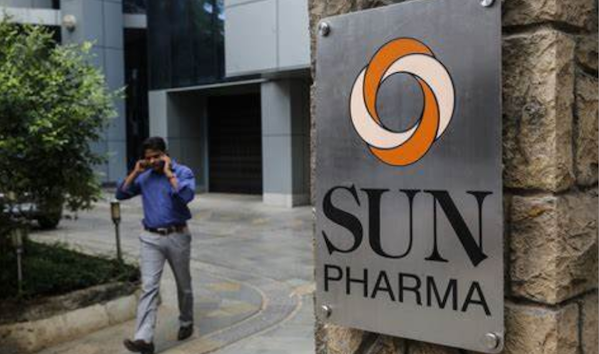
10 eye drops from Indian generic drug company Sun Pharma (see table below) were recalled "precautionarily" due to contamination risks, covering treatment areas such as glaucoma and postoperative inflammation.
This marks the second time in three years that an Indian pharmaceutical company has been involved in a quality incident related to the sterility control of eye drops. In 2023, EzriCare artificial tears produced by the Indian pharmaceutical company Global Pharma Healthcare were contaminated with Pseudomonas aeruginosa, resulting in 81 infections, 4 deaths, and 14 cases of blindness in the United States .
01
"Precautionary" recall
Recently, Sun Pharma officially issued a notice to its distributors across India, announcing a complete halt to sales, inventory reporting, and channel recalls of 10 of its eye drop products. These products involve multiple mainstream brands, including Depopred, Brinolar, Lotepred, and Nepalact , covering core clinical indications such as glaucoma treatment, postoperative anti-inflammatory treatment, chronic conjunctivitis, and ocular allergies.
These products are mostly essential medications for chronic eye diseases and post-operative rehabilitation, primarily targeting patients with chronic illnesses requiring long-term medication and vulnerable individuals after surgery. Interruption of medication use or use of contaminated products can pose a serious threat to patients' eye health. Currently, the company has not disclosed the specific contaminating bacteria species or excessive parameters, and has only initiated a preventative recall due to " potential microbial contamination risk ." Goods in major core markets in India have been completely sealed and returned.
This is not the first fatal quality incident in India's eye drop industry; the painful lessons of three years ago still serve as a powerful warning. In 2023, EzriCare preservative-free artificial tears, produced by the Indian pharmaceutical company Global Pharma Healthcare, caused a major multi-state medical safety incident in the United States due to severe Pseudomonas aeruginosa contamination during the production process. The US CDC ultimately confirmed that the contamination resulted in 4 deaths, 14 permanent blindnesses, 4 eye removals, and 81 severe eye infections , making it one of the most serious safety incidents involving sterile pharmaceutical products globally in the past decade. Within just three years, the same industrial environment and the same sterile production standards have led to two quality breaches, shattering the market perception of Indian generic drugs as "high-quality, cost-effective, and compliant."
From an industry fundamentals perspective, India is the world's largest exporter of generic drugs, with ophthalmic preparations being one of its important export categories. It supplies more than half of the world's low- to mid-range sterile ophthalmic preparations, and the vulnerability of its quality system poses a global risk of transmission. For a long time, Indian pharmaceutical companies have frequently received warning letters and import bans from the FDA and EMA. Defects in sterile processes, substandard production environments, and falsification of data integrity are the core problems, highlighting the structural weaknesses in its overall quality system.
From an industry-wide perspective, SunPharma's voluntary recall, while seemingly a sign of improved compliance, is actually a reactive measure to address a breach in its quality control. The core statement, "potential contamination risks were discovered during production," implies that microbial contamination existed before the product left the factory. The company failed to mitigate these risks in production design, process control, and finished product inspection, only discovering the problem in a post-incident investigation. While a voluntary recall is a passable crisis management measure, minimizing harm to end-patients and alleviating regulatory pressure, it is not proof of a sound aseptic quality system. Instead, it reveals loopholes in its entire production process control.
02
The "cost account" of sterile preparations
The recurring quality incidents in the field of sterile preparations are not caused by insufficient technical capabilities alone, but more often by the real tension between commercial costs, production efficiency and compliance investment .
Ophthalmic pharmaceutical companies generally understand the standards and requirements for aseptic control, but in actual operation, the continuous investment required for aseptic compliance accounts for a high proportion of the cost structure, and in some cases, they face pressure to be prioritized for adjustment.
Compliance measures such as aseptic process validation, environmental monitoring, personnel training, and equipment calibration all require long-term investment of funds, time, and manpower, and these investments are unlikely to translate into direct economic benefits in the short term. In corporate financial models, these compliance investments are considered ongoing expenditures, while the risk of microbial contamination often appears as a low-probability event before an incident occurs. This asymmetry between cost and risk leads some companies to prioritize quantifiable production capacity and profit indicators in resource allocation, while placing relatively lower priority on quality compliance investments.
For a long time, a noteworthy phenomenon in the industry has been that some companies, when faced with minor process deviations, fluctuations in environmental indicators, or non-standard operations, tend to resolve these issues internally rather than proactively disclosing them if they are not directly investigated by regulators or if they do not trigger adverse events at the end-user level. This drug recall provides a window into this phenomenon— the company initiated the recall only after discovering the abnormality through internal testing. This reflects that the quality control of some companies still relies heavily on post-event remediation, and proactive prevention mechanisms need to be further strengthened.
From a regulatory perspective, given limited regulatory resources, there is still room for improvement in the coordination between drug recalls and process supervision. Both the US FDA and the Indian CDSCO face the practical challenges of limited regulatory resources and the difficulty of conducting comprehensive inspections. Unannounced inspections and special audits cannot achieve complete coverage of every company, every production line, and every batch of products.
Warning letters, product recalls, and short-term bans have limited practical binding force. Companies can mitigate the impact of incidents by adjusting production lines, transferring batches, and switching markets. Given this reality, some companies tend to prioritize reactive quality control over proactive prevention.
to balance post-event accountability with process control in improving the drug regulatory system . Upgrading the regulatory process from "end-point sampling" to "process penetration" through information-based full-process traceability, real-time big data monitoring, routine unannounced inspections, and comprehensive extended inspections will help guide companies to establish more robust pre-emptive quality control systems.
03
From the "Indian Lesson" to the "Chinese Lesson"
The aseptic quality incident at an Indian pharmaceutical company serves as a wake-up call for China's aseptic pharmaceutical industry . China has a large number of ophthalmic preparations and aseptic injectable drug manufacturers, forming a massive market. Currently, leading domestic pharmaceutical companies have fully aligned themselves with FDA and EU GMP international standards and established comprehensive aseptic production and quality control systems. However, some small and medium-sized pharmaceutical companies are still at the stage of "documentary compliance and formal compliance," with well-developed SOPs but inadequate implementation. Environmental monitoring, process validation, and personnel management are merely formalities, harboring numerous hidden aseptic safety risks.
As the internationalization of domestic pharmaceutical companies accelerates, compliance with aseptic systems has become a core hurdle for companies expanding overseas. Currently, many domestic pharmaceutical companies undertake aseptic manufacturing for overseas CMOs and CDMOs, while also independently exporting aseptic products such as ophthalmic preparations and injectables. It is important to note that global regulatory agencies have significantly increased their scrutiny of aseptic preparations in emerging markets due to frequent scandals involving Indian pharmaceutical companies.
Domestic regulators have already accelerated the upgrade of aseptic preparation compliance. The 2023 edition of the "Pharmaceutical GMP Guidelines (2nd Edition)" further refined core requirements for aseptic preparation production, including clean environment grading and monitoring, aseptic process simulation and validation, personnel operating procedures, and material flow control, with regulatory standards fully aligned with international standards. Simultaneously, the NMPA (National Medical Products Administration) has continuously strengthened its unannounced inspections, extended inspections, and intelligent supervision, establishing a traceability system across the entire production, testing, and distribution chain, significantly reducing compliance gray areas in the industry. Ultimately, the core barrier to aseptic compliance is never equipment or documentation, but rather a quality culture deeply ingrained in the company's DNA.
Aseptic control is not a rigid SOP dogma, but an instinctive consensus from senior management to frontline operators. It requires companies to abandon short-sighted thinking that prioritizes cost and profit, placing patient safety and quality bottom lines before commercial interests. It requires frontline staff to eliminate arbitrary operations, making aseptic procedures, environmental control, and data accuracy routine habits. Equipment can be upgraded quickly, and documents can be improved rapidly, but reshaping a quality culture requires long-term commitment and company-wide implementation.
https://news.yaozh.com/archive/48856.html
By editor
Copyright©2026 Ddu. All rights reserved.
Read more on
- CPHI Milan 2026 Recap | What Did Drugdu.com Bring Back from Milan? October 9, 2026
- Novo Nordisk and Nanexa Ink Up to €1.165B Long-Acting Delivery Deal for Obesity and Diabetes September 29, 2026
- siRNA Biotech ADARx Raises $446M in 2026’s Third-Largest Biotech IPO September 29, 2026
- Merck and Eisai’s Welireg Plus Lenvima Approved by FDA for Previously Treated Advanced Kidney Cancer September 29, 2026
- Mirum and Incyte’s Atebrioz Wins FDA Approval for Rare Bone Disorder FOP September 29, 2026
your submission has already been received.
OK
Subscribe
Please enter a valid Email address!
Submit
The most relevant industry news & insight will be sent to you every two weeks.