
A multi-billion dollar market is fiercely competitive, with Huadong Medicine applying for marketing approval of its megglutinin weight loss product.
April 16, 2026
Source: drugdu
 205
205
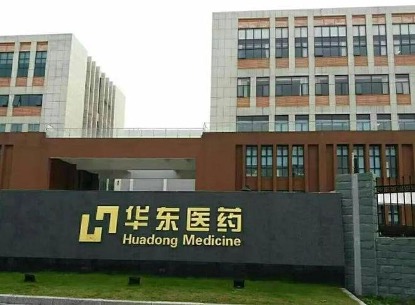 On the evening of April 14, Huadong Medicine (000963) issued an announcement stating that its wholly-owned subsidiary, Hangzhou Sino-American Huadong Pharmaceutical Jiangdong Co., Ltd., received an "Acceptance Notice" issued by the National Medical Products Administration (NMPA) for the acceptance of its application for marketing authorization of Smegglutide injection, which is applicable to long-term weight management in adult patients based on diet control and increased physical activity.
Previously, Huadong Medicine's application for marketing authorization of its semaglutide injection for the hypoglycemic indication had been formally accepted by the National Medical Products Administration (NMPA). The acceptance of its application for the weight loss indication signifies that the product is poised to further expand its clinical application scenarios, meeting diverse market demands while gradually unlocking its long-term growth potential in chronic disease management and weight control.
Smegglutide injection is a long-acting glucagon-like peptide-1 (GLP-1) receptor agonist with 94% sequence homology to human GLP-1. Clinically, it is mainly used for glycemic control in patients with type 2 diabetes and for long-term weight management in obese or overweight patients. Smegglutide lowers blood glucose by stimulating insulin secretion and reducing glucagon secretion. Furthermore, the mechanism of smegglutide's blood glucose-lowering effect also involves a slight delay in early postprandial gastric emptying. Simultaneously, smegglutide can reduce appetite and food intake, induce weight loss, and significantly reduce the risk of major adverse cardiovascular events (MACE) in obese patients.
The weight loss market has been expanding rapidly in recent years. Bloomberg industry research indicates that global sales of weight loss drugs are expected to reach at least $100 billion by 2030. Morgan Stanley, in a research report, points out that GLP-1 drugs will be one of the core drivers in the global obesity and metabolic drug market by 2030. IQVIA predicts that by around 2028, GLP-1 may become the second largest drug market globally, second only to oncology treatments.
As the world's most prominent GLP-1 receptor agonist, Novo Nordisk, the original developer of the drug, has significantly driven the rapid growth of the GLP-1 drug market penetration and scale thanks to its outstanding efficacy. According to Novo Nordisk's 2025 financial report, Wegovy®, a weight-loss version of semaglutide, achieved global sales of approximately RMB 84.129 billion, with sales in mainland China, Hong Kong, and Taiwan reaching approximately RMB 847 million, demonstrating its significant market influence.
Obesity among Chinese adults has become a growing public health challenge, highlighting the need for its prevention and control. A nationwide cross-sectional study published in 2023 showed that the prevalence of obesity among adult men in China reached 18.2%, and among women, it was 9.4%, with the overall prevalence increasing more than fourfold in twenty years (from 3.1% to 14.1%). Obesity is closely associated with an increased risk of various comorbidities, including hypertension, type 2 diabetes, hyperlipidemia, obstructive sleep apnea, cardiovascular disease, and some cancers, while effective weight loss can significantly improve health and quality of life.
Currently, the main methods for weight loss include lifestyle interventions, drug therapy, and surgical treatment. Among these, lifestyle interventions, primarily involving diet control and increased exercise, are the preferred treatment for obesity. However, only about 20% of patients achieve their weight loss goals through this approach. As obesity is a chronic metabolic disease, lifestyle interventions require extremely high patient adherence, making it difficult to meet the long-term management needs of patients with moderate to severe obesity. Meanwhile, the acceptance rate of bariatric surgery in China remains low, with the high economic burden being a significant factor limiting its widespread adoption. Weight loss drugs have become a key tool for filling clinical needs. Huadong Medicine's Simeglutide injection has been approved for weight management indications, potentially providing a valuable treatment option that combines efficacy and accessibility.
Huadong Medicine stated that its Smegglutide injection completed a Phase III clinical trial for weight management in January 2026. This study evaluated the safety and efficacy of Smegglutide injection compared to the original Smegglutide injection in obese subjects in China. The results of the percentage weight loss relative to baseline after 44 weeks of treatment in obese patients showed that the efficacy of Huadong Medicine's Smegglutide injection was comparable to that of the original Smegglutide injection, achieving equivalence and good safety.
https://www.stcn.com/article/detail/3749199.html
By editor
Copyright©2026 Ddu. All rights reserved.
Read more on
- CPHI Milan 2026 Recap | What Did Drugdu.com Bring Back from Milan? October 9, 2026
- Novo Nordisk and Nanexa Ink Up to €1.165B Long-Acting Delivery Deal for Obesity and Diabetes September 29, 2026
- siRNA Biotech ADARx Raises $446M in 2026’s Third-Largest Biotech IPO September 29, 2026
- Merck and Eisai’s Welireg Plus Lenvima Approved by FDA for Previously Treated Advanced Kidney Cancer September 29, 2026
- Mirum and Incyte’s Atebrioz Wins FDA Approval for Rare Bone Disorder FOP September 29, 2026
your submission has already been received.
OK
Subscribe
Please enter a valid Email address!
Submit
The most relevant industry news & insight will be sent to you every two weeks.


