
Gilead’s new HIV drug “exceeds expectations”
May 15, 2026
Source: drugdu
 182
182
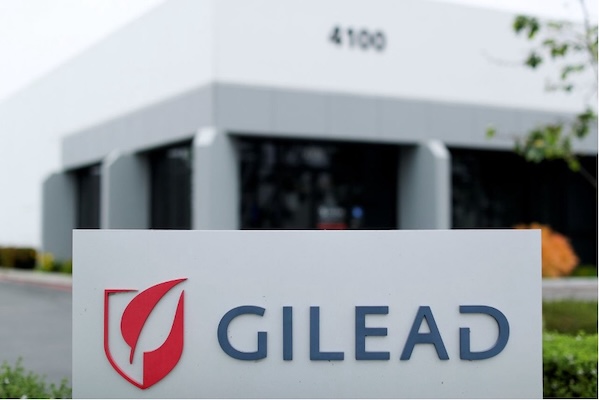 Gilead Sciences recently released its first-quarter financial results: total revenue increased by 4% year-over-year to $7 billion. Sales of its HIV product portfolio reached $5 billion, a 10% year-over-year increase.
Among them, the long-acting PrEP injection Yeztugo (lenapavir), administered every six months, was the biggest highlight. Its quarterly revenue reached $166 million, a nearly 73% increase quarter-over-quarter, far exceeding market expectations. Gilead's Chief Commercial Officer, Johanna Mercier, described the long-acting injection's opening performance as an "unprecedented launch trajectory" and significantly raised its first full-year sales forecast from $800 million to $1 billion.
Mercier further pointed out that the drug will see "steady and continuous sales growth" in the coming years, and the company is committed to expanding its use to all people who need HIV prevention.
01
Yeztugo sales "exceeded expectations"
Yeztugo's active ingredient, lenacapavir, is a first-in-class HIV capsid inhibitor. Its mechanism of action differs from traditional nucleoside reverse transcriptase inhibitors—it blocks viral replication by interfering with the assembly and disassembly of the HIV viral capsid, and it does not exhibit cross-resistance with existing antiretroviral drugs.
In 2022, lenacapavir was approved in the EU and US markets for the treatment of HIV-infected individuals who have experienced multiple treatment failures and have multidrug resistance (MDR), under the brand name Sunlenca.
More importantly, in June 2025, Lenacapavir received formal FDA approval in the United States for HIV pre-exposure prophylaxis (PrEP) in adolescents and adults weighing 35 kg or more, under the brand name Yeztugo. This is the first and only PrEP regimen approved by the FDA that requires only two doses per year . Two Phase 3 studies showed that its preventive efficacy is close to 100%.
Prior to this, most PrEP regimens familiar to the public were oral medications that required strict daily adherence. In the real world, the biggest challenge with PrEP is often not its insufficient efficacy, but rather the extreme difficulty patients face in long-term adherence. Therefore, long-acting PrEP regimens have become a market expectation.
In the long-acting injectable market, Yeztugo's main competitor is GlaxoSmithKline's (GSK) Apretude (carteiravir). Apretude was the world's first approved long-acting injectable prophylaxis regimen, approved in December 2021, and administered every two months. Although Apretude was launched earlier, Gilead's Yeztugo has an advantage in dosing frequency—once every six months—and has already begun to capture market share from GSK's product .
In the broader PrEP field, Yeztugo, despite its significantly higher price compared to oral medications, has a particularly strong value proposition among specific populations: high-risk individuals with poor medication adherence, irregular lifestyles, or concerns about privacy regarding daily medication use. Mercier points out that in rural areas of the southern United States where PrEP penetration is low, "treatment-first prescriptions" are increasing , meaning that Yeztugo is not only competing for market share in the existing market but also activating the growing population that was previously unwilling or unable to adhere to daily medication.
Regarding continued use, Yeztugo has been on the market for 11 months. Gilead stated that the follow-up rate for the second dose among the first batch of patients using the drug was "very good," and expects its continued use rate to be the best in the entire HIV market , providing solid support for the long-term stable growth of the drug's sales.
Meanwhile, Gilead made large-scale investments in production capacity before Yeztugo was launched, avoiding the supply bottlenecks common to similar long-acting formulations.
Driven by a variety of factors, Yeztugo generated $150 million in revenue within a short sales window of approximately six months in 2025, with $96 million coming from the fourth quarter. In the first quarter of 2026, sales reached $166 million, representing a quarter-over-quarter increase of over 70%, prompting the company to raise its annual forecast to $1 billion. Based on this, Yeztugo is poised to achieve blockbuster status (annual sales exceeding $1 billion) in its first year on the market.
Of course, challenges also exist: the acceptance level by health insurance payers, accessibility for low-income groups, and the accumulation of long-term safety data will all affect Yeztugo's ultimate market ceiling. But at least in this quarter, Gilead has provided convincing evidence that the HIV prevention market has entered the "six-month injection" era.
02
The HIV treatment business has a solid foundation.
In 1987, Gilead started as a small startup focused on nucleoside/nucleotide chemistry and entered the HIV market with Tenofovir (approved in 2001). Currently, Gilead's HIV product portfolio is virtually unmatched in the global HIV field.
The company’s HIV product portfolio generated $5 billion in revenue in the first quarter, a 10% increase from the first quarter of 2025, representing 72% of total revenue.
On the preventative side, in addition to Yeztugo, its oral preventative product Descovy generated $807 million in revenue in the first quarter, a 38% year-over-year increase, primarily driven by increased demand. For the full year 2025, Descovy sales are projected to grow 31% to $2.8 billion. This growth, despite Yeztugo diverting some patients, reflects the overall expansion of the US PrEP market.
On the treatment side, Biktarvy continues to play the role of a "cash flow engine." In 2025, sales reached $14.3 billion, a 7% year-on-year increase, making it the world's best-selling HIV treatment. In the first quarter of 2026, global sales reached $3.4 billion, a 7% year-on-year increase, capturing 52% of the US treatment market share and remaining the first-line prescription drug for treatment-naïve patients and those changing treatment regimens. Gilead expects Biktarvy to maintain its standard-of-care therapy status until the patent cliff in the mid-2030s.
Before the patent for Biktarv expired, Gilead had already been actively building its next-generation HIV treatment pipeline.
Most notably, the marketing application for the dual-combination formulation BIC/LEN (bicitellavir + lenapavir) was accepted by the FDA in April 2026 and granted priority review status, with a target decision date set for the end of August 2026.
BIC/LEN removes emtricitabine and tenofovir alafenamide from Bictal, retaining the core ingredient bicretiravir and adding lenapavir, which has a unique mechanism of action. This adjustment and optimization of the composition theoretically reduces the potential impact of the drug on the kidneys and bones, providing a safer treatment option for patients requiring long-term medication.
This product targets patients with complex treatment regimens requiring multiple daily pills. The BIC/LEN single-pill combination therapy offers a simpler option for these HIV-infected individuals.
Another key target group for BIC/LEN is patients switching from Baptiste . If patients eventually need to switch medications, they can theoretically transition from Baptiste to this new combination therapy. This means that BIC/LEN doesn't necessarily cannibalize Baptiste's market share, but rather intercepts the switching needs of other competitors, providing Gilead with an opportunity to participate in the switching market.
Overall, Gilead has raised its 2026 growth forecast for its HIV business from 6% to 8%, and its total product sales forecast has also been increased to $30-30.4 billion.
03
Highlights of Liver Disease and Tumor Pain
Aside from the HIV business, the liver disease business performed well. In the first quarter of 2026, this segment generated revenue of $767 million, a year-over-year increase of 1%.
The most notable product is Livdelzi (seladelpar), a treatment for primary biliary cholangitis (PBC). Originally developed by CymaBay, Gilead Sciences acquired CymaBay for $4.3 billion in February 2024, thus acquiring Seladelpar. In August 2024, Seladelpar received FDA approval in the United States.
Livdelzi's sales surged 230% year-over-year to $133 million in the first quarter of 2026. This growth was partly driven by a "switching wave" triggered by the withdrawal of competitor Intercept's Ocaliva from the market in the fourth quarter of 2025. However, the 11% sequential decline suggests that this switching dividend may be fading, and the actual patient retention rate needs to be monitored going forward.
In the oncology field, Trodelvy (goxatozumab) achieved sales of $402 million in the first quarter, a year-on-year increase of 37% , continuing to carry the banner of oncology revenue.
In April of this year, Gilead acquired Tubulis GmbH, a next-generation ADC company, for $3.15 billion in cash and $1.85 billion in conditional milestone payments, demonstrating the company's heavy investment in the field of antibody-drug conjugates.
In contrast, the cell therapy business continues to face challenges. In the first quarter, combined sales of Yescarta and Tecartus totaled $407 million, a 12% year-over-year decrease , which the company again attributed to competitive market pressures.
In February 2026, Gilead completed its acquisition of partner Arcellx for $7.8 billion, gaining full control of anito-cel, a potential BIC CAR-T candidate for multiple myeloma, thus strengthening its CAR-T pipeline.
In conclusion , Gilead's narrative currently remains focused on its HIV business—which accounts for over 70% of total revenue and is expected to continue providing stable cash flow for Gilead for a considerable period. Meanwhile, significant investments in acquisitions and breakthrough products in liver disease and oncology are expected to provide diversified support for the company.
https://news.yaozh.com/archive/48060.html
By editor
Copyright©2026 Ddu. All rights reserved.
Read more on
- Eli Lilly’s new acquisition September 2, 2026
- World’s First Oral IL-23R Peptide Drug! Janssen’s Icotrokinra (艾特雅®) Approved in China for Psoriasis | Approval Alert September 2, 2026
- First Domestic FGFR1/2/3 Inhibitor! HUTCHMED’s ATLED® (Fanregratinib) Receives Conditional NMPA Approval | Approval Alert September 2, 2026
- Simcere Zaiming Signs Exclusive Licensing Agreement with Roche for Global Development of Tri-Specific Antibody SIM0660 | Partnership News September 2, 2026
- FDA Approves First RAS-Targeted Therapy Rasonque for Pancreatic Cancer, Nearly Doubling Survival | Industry News September 2, 2026
your submission has already been received.
OK
Subscribe
Please enter a valid Email address!
Submit
The most relevant industry news & insight will be sent to you every two weeks.