
Zhengda Tianqing targets 9.2 billion yuan drug
September 18, 2025
Source: drugdu
 668
668
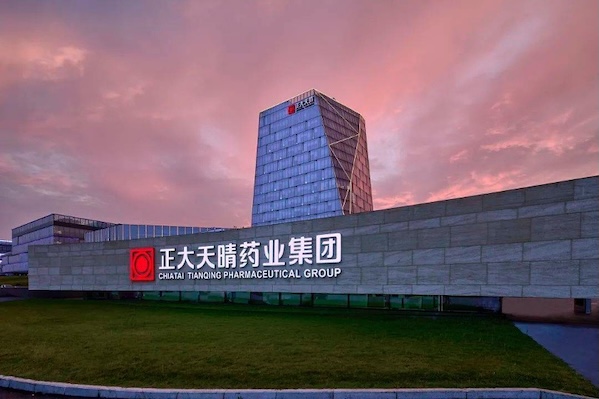 On September 15, the injectable degarelix acetate (Qinglishu) independently developed by Zhengda Tianqing obtained the drug registration certificate issued by the National Medical Products Administration (NMPA) for use in prostate cancer patients who require androgen deprivation therapy.
As the original drug in this category, degarelix acetate (fermonger)'s global sales exceeded US$1.3 billion (approximately RMB 9.2 billion) in 2024.
Is Zhengda Tianqing, the “pioneer in anti-tumor innovation”, brewing a blockbuster drug?
01 Approved for listing in three locations
The original developer of Degarelix Acetate for Injection is Ferring Pharmaceuticals. As a selective gonadotropin-releasing hormone receptor (GnRHR) antagonist, the clinical value of Degarelix Acetate in the treatment of prostate cancer has long been recognized worldwide.
This drug can effectively reduce the release of gonadotropin and testosterone by reversibly binding to the GnRH receptors in the pituitary gland, thereby inhibiting the growth and spread of prostate cancer cells from the root. Especially in the treatment of advanced prostate cancer, it can significantly control the progression of the disease and improve the quality of life of patients, becoming one of the core drugs in the androgen deprivation therapy (ADT) program.
This original research product officially entered the Chinese market in 2018 and was successfully included in the National Medical Reimbursement Catalogue (NRDL) in early 2023, filling the gap in the GnRH antagonist category in domestic medical insurance at the time. This original research product will continue to be included in the 2024 NRDL.
Degarelix acetate is a complex injectable drug with high technical barriers. For a long time, only the original drug was marketed domestically and internationally. Zhengda Tianqing overcame numerous technical bottlenecks throughout the entire supply chain, from raw materials to formulation, including key links such as customized formulation systems, in vitro dissolution equipment, and a multi-method orthogonal evaluation system. Simultaneously, the company established a drug-device combination R&D and GMP production management system that meets European and American standards. Ultimately, the product received approval in the EU, the US, and China, becoming the world's only first-to-market generic drug.
Zhengda Tianqing's degarelix was approved for marketing by the European Medicines Agency (EMA) in September 2023, and received temporary approval from the US FDA in August this year. This time it was approved for marketing again by the NMPA.
The launch of this product will break the long-term monopoly of original drugs in the field of prostate cancer treatment in China and provide patients with more high-quality and accessible drug options.
02 Obtained 12-month exclusivity period
The successful launch of Qinglishu, in addition to its technological breakthrough as the world's first generic drug, also highlights its combination strategy of "first generic drug + patent challenge", making it another drug to obtain a "12-month market exclusivity period" since the implementation of my country's early resolution mechanism for drug patent disputes (i.e., the "drug patent linkage system").
The first product to receive this qualification also came from Zhengda Tianqing. In December 2023, Everolimus tablets, developed by Zhengda Tianqing, became the first product to receive "market exclusivity" and was approved for marketing.
The drug patent linkage system has been officially implemented in China since the amendment to the Patent Law of the People's Republic of China came into effect in June 2021. The core logic of the drug patent linkage system is to "link" the marketing approval of generic drugs with the patent protection of originator drugs, and to move the resolution of patent disputes between originator and generic drug companies to the drug approval stage.
This system is essentially designed to balance the interests of innovative and generic drug companies. On the one hand, by resolving patent disputes in advance, it proactively prevents generic drugs from infringing on the commercial interests of patented original drugs after they are marketed. On the other hand, it also provides generic drug companies with a channel to challenge expired or invalidated patents. This encourages generic drug companies to conduct research and development before the expiration of the original drug's patent, promoting the early launch of generic drugs and reducing medication costs for patients.
While protecting pharmaceutical innovation, the drug patent linkage system encourages generic drug companies to initiate patent challenges. China's drug patent linkage system stipulates that the first successful 4.1 category drug to be successfully challenged and launched will be granted a "market exclusivity period." Within 12 months of the drug's approval, no generic drug of the same type will be approved for marketing, unless a joint patent challenge is successful.
According to public information, the patent application number for degarelix's formulation composition in China is ZL201380028448.8, filed on May 31, 2013, with an estimated expiration date of May 31, 2033. Another patent, patent number ZL200980104713.X, covers the use of degarelix in the treatment of metastatic prostate cancer. Zhengda Tianqing filed invalidation requests with the State Intellectual Property Office in 2023 and 2024. Ultimately, on July 3, 2024, the degarelix pharmaceutical use patent was declared invalid in its entirety; in August 2024, the formulation composition patent was partially invalidated.
At the same time, Zhengda Tianqing also made progress in drug registration applications. In 2019, the company submitted its first Category 4 generic marketing application for degarelix acetate injection and received clinical approval. In January 2024, it submitted another Category 4 generic marketing application. With the invalidation of two core patents, Zhengda Tianqing officially met the "first successful patent challenge" requirement and ultimately secured 12 months of market exclusivity upon approval.
Qinglishu was approved 8 years ahead of the expiration date of the patent for the original drug preparation composition. These 8 years will not only bring considerable commercial benefits to the company, but also allow tens of millions of prostate cancer patients to use more cost-effective drugs in advance.
03 Hundreds of billions of market demand
Prostate cancer is one of the most common malignant tumors in men, with its incidence closely correlated with age. Over 80% of patients are over the age of 65. According to the World Health Organization's Cancer Today, the number of new cases of prostate cancer in men worldwide reached 1.4143 million in 2020, accounting for 14.1% of all malignant tumors, second only to lung cancer. In China, the incidence of prostate cancer is increasing even more significantly. According to Frost & Sullivan, the number of prostate cancer patients in China increased from 170,000 in 2016 to 440,000 in 2020, with an average annual growth rate of over 25%. It is expected to further increase to 1.08 million by 2025.
From a global perspective, the global prostate cancer drug market reached US$12.6 billion in 2019, with a projected compound annual growth rate of approximately 13.0% from 2019 to 2024, reaching over US$23.3 billion in 2024. In China, rising domestic incidence rates and increased penetration of new drugs are driving market expansion. The Chinese prostate cancer drug market, valued at only RMB 2.2 billion in 2015, grew to RMB 5.3 billion in 2019, is projected to reach RMB 15.5 billion in 2024, and is expected to exceed RMB 50.6 billion in 2030.
Currently, the commonly used first-line treatment for prostate cancer in clinical practice is androgen deprivation therapy (ADT), and GnRH regulators are the core drugs in the ADT regimen.
GnRH modulators are primarily divided into two categories: GnRH agonists and GnRH antagonists. As a GnRH antagonist, Qinglishu offers significant clinical advantages over traditional GnRH agonists (such as goserelin).
GnRH agonists briefly stimulate GnRH receptors during initial use, leading to a transient increase in testosterone levels (known as the "rebound phenomenon"). This can lead to risks such as increased bone pain and spinal cord compression, necessitating the use of anti-androgenic medications as a preventative measure. Degarelix, however, directly and competitively binds to GnRH receptors, preventing the rebound effect. Patients do not need to take anti-androgenic medications, reducing the risk of adverse reactions from combined drug use and lowering treatment costs.
Furthermore, degarelix's structural advantages contribute to its improved tolerability. As a synthetic peptide modeled after the body's own GnRH, degarelix's structural improvements extend its duration of action while avoiding adverse reactions such as histamine release and systemic allergies, leading to higher patient compliance.
Since degarelix acetate was first launched in the United States in 2008, it has been recommended as an endocrine therapy for prostate cancer by multiple authoritative domestic and international guidelines, and its clinical application value has been further affirmed.
In addition to Zhengda Tianqing, Jianxiang Biopharma is also developing a generic version of this product, which is still in the R&D stage. Zhengda Tianqing's early approval will further consolidate its leading position in the Chinese prostate cancer treatment market.
04 Conclusion
The approval of Qinglishu, the world's first generic drug in China, is of far-reaching significance. From a market perspective, it will directly disrupt the monopoly of brand-name drugs in the treatment of prostate cancer in China. In the future, through appropriate pricing strategies and potential integration with medical insurance policies, it will provide patients with more affordable and accessible medication options. From an industry perspective, this achievement sets a benchmark for domestic pharmaceutical companies in the field of generic development of complex injectables.
https://news.yaozh.com/archive/46059.html
By editor
Copyright©2026 Ddu. All rights reserved.
Read more on
- Five innovative drugs approved for marketing September 11, 2026
- Subsidiary’s novel coronavirus mRNA vaccine receives drug registration certificate September 11, 2026
- Lincomycin Hydrochloride Injection passes generic drug consistency evaluation September 11, 2026
- CSPC Pharmaceutical Group’s innovative chemical drug SYH2083 eye drops approved for clinical trials in China September 11, 2026
- Novel influenza virus mRNA vaccine approved for clinical trials September 11, 2026
your submission has already been received.
OK
Subscribe
Please enter a valid Email address!
Submit
The most relevant industry news & insight will be sent to you every two weeks.