
The birth of the youngest pharmaceutical company worth hundreds of billions of yuan
September 16, 2025
Source: drugdu
 441
441
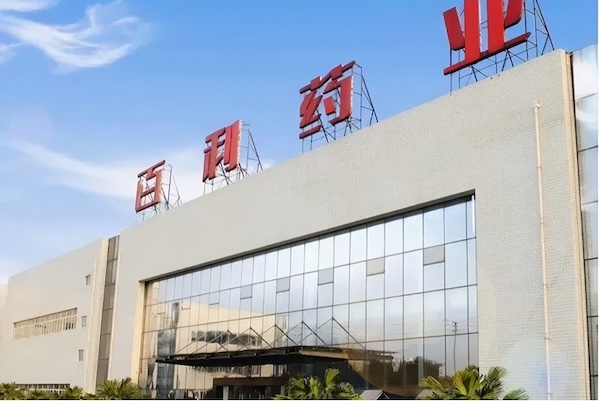 The World Lung Cancer Conference (WCLC), a leading global conference in the field of lung cancer treatment, has always been a central arena for innovative pharmaceutical companies to compete. At this year's WCLC, several innovative Chinese pharmaceutical companies made their mark, with Baili Tianheng undoubtedly the most prominent.
Its core product, the world's first EGFR×HER3 bispecific ADC drug BL-B01D1 (Iza-bren) combined with osimertinib in the treatment of EGFR-mutated non-small cell lung cancer, has achieved an objective response rate (ORR) of 100%, with far-leading efficacy data. It has also achieved a historic breakthrough of a median progression-free survival (mPFS) of over 12 months in monotherapy.
As of the close of September 12, the share price of Baili Tianheng's A shares closed at 349.79 yuan per share, and the company's total market value exceeded 140 billion yuan, making it the third innovative pharmaceutical company in the A-share market to join the "100 billion market value club" after Hengrui Medicine and BeiGene.
01 The stock price soared more than 13 times
In January 2023, when Baili Tianheng listed on the Science and Technology Innovation Board (STAR Market) with an IPO price of 24.70 yuan per share, it was still a rising star in the innovative drug market. Just over two years later, in September 2025, its share price briefly surpassed 410 yuan per share. Although it had fallen back to 349.79 yuan per share by the close of trading on September 12, its market capitalization remained stable at over 140 billion yuan.
This market capitalization not only allows Baili Tianheng to join the "100 billion club" of A-share innovative drug companies, but also makes it the "youngest" member of the club, second only to the leading Hengrui Medicine and BeiGene, which has a deep international layout.
The strong performance of Baili Tianheng's stock price has directly led to a significant increase in the personal wealth of its actual controller, Zhu Yi. According to the "2025 Hurun Global Rich List" released in March 2025, Zhu Yi's personal wealth was estimated to be 95 billion yuan. Meanwhile, the previously richest people in Sichuan, Liu Hanyuan and Guan Yamei, as well as the Liu Yonghao family, each had a wealth of 73 billion yuan during the same period. Zhu Yi officially became the new richest person in Sichuan.
Since March 2025, Baili Tianheng's share price and market capitalization have continued to rise. Zhu Yi currently holds 74.35% of the company's shares, which, based on the company's latest market capitalization, is worth approximately 104.313 billion yuan, further solidifying his position as Sichuan's richest man.
From the "tens of billions market value" at the beginning of its listing to the current "hundreds of billions scale", as of now, Baili Tianheng's stock price has increased by more than 13 times. Such a strong trend is rare in the A-share innovative drug field.
You should know that it took Hengrui Medicine many years to achieve a market value of 100 billion yuan, and BeiGene also relied on years of international R&D investment to maintain a scale of 100 billion yuan. However, Baili Tianheng achieved "overtaking on the curve" with only one core pipeline. The reason behind this is the market's high recognition of its innovative capabilities.
02 Clinical Data Analysis
If the stock price is the "barometer" of market sentiment, then the clinical data of BL-B01D1 is the "cornerstone" supporting this sentiment.
Iza-bren (BL-B01D1) is the world's first and only EGFR×HER3 dual-antibody ADC in Phase III clinical trials. It uses a dual mechanism of action to block signals transmitted by EGFR and HER3 to tumor cells, thereby inhibiting their proliferation and survival signals. Furthermore, through antibody-mediated endocytosis, the therapeutic payload released by Iza-bren triggers genotoxic stress, ultimately leading to tumor cell death.
As of September 2025, this drug has been undergoing nearly 40 clinical trials in China and the United States, covering multiple cancer types, including lung cancer, breast cancer, and urothelial carcinoma. In the United States, the company is collaborating with its strategic partner, Bristol-Myers Squibb, on Phase II/III clinical trials for first-line advanced triple-negative breast cancer, Phase II/III clinical trials for advanced non-small cell lung cancer (NSCLC) resistant to EGFR-TKIs, and Phase II/III clinical trials for previously treated advanced metastatic urothelial carcinoma. In addition, the company is conducting multiple Phase I/II clinical trials for NSCLC, advanced solid tumors, and other cancers. In China, 10 Phase III registration studies are underway for various cancer types (six of which have been designated Breakthrough Therapies by the CDE). On September 5, 2025, Iza-bren was officially granted priority review by the CDE for patients with previously treated recurrent or metastatic nasopharyngeal carcinoma.
The two research data released at the 2025 WCLC made BL-B01D1 a hot topic.
Study 1 explored the combination of BL-B01D1 and osimertinib for the first-line treatment of advanced NSCLC with EGFR mutations.
As of March 10, 2025, 154 patients were enrolled, of whom 40 received first-line treatment with BL-B01D1 2.5 mg/kg D1D8 Q3W combined with osimertinib. The results showed that the ORR reached 100%, the target lesion reduction rate was also 100%, the 12-month PFS rate was 92.1%, and the 12-month OS rate was 94.8%.
In the first-line treatment of advanced NSCLC, compared with some mainstream therapies (not head-to-head, but roughly estimated), whether it is osimertinib alone, osimertinib combined with chemotherapy, or Johnson & Johnson's ervantumab combined with lanzapine, the clinical data of BL-B01D1 combined with osimertinib are very explosive, and the 100% ORR directly raises the first-line treatment efficacy of EGFR-mutated NSCLC to a new ceiling.
Osimertinib has become AstraZeneca's flagship product, with global sales reaching $6.58 billion in 2024. According to Johnson & Johnson's 2025 semi-annual report, combined sales of ervantumab and lanzatinib reached $320 million.
If the BL-B01D1 combined with osimertinib therapy is ultimately accepted as a first-line treatment for EGFR-mutant NSCLC, it will undoubtedly be a significant milestone for Baili Tianheng. The commercial value of this breakthrough will far exceed market expectations.
Study 2 evaluated the efficacy of Iza-bren monotherapy in locally advanced or metastatic EGFR-mutated NSCLC.
As of December 5, 2024, a total of 171 patients with EGFRmt NSCLC were enrolled; 121 of these patients received Iza-bren at a dose of 2.5 mg/kg. Fifty of these patients had previously received an EGFR-TKI but no chemotherapy. Results showed a median progression-free survival (MPFS) of 12.5 months across patients with diverse EGFR mutation subtypes, a target lesion reduction rate of 94%, and an 18-month overall survival rate of 69.2%. This demonstrates significant efficacy even as a single agent.
03 Long-standing fame
Baili Tianheng’s “out of the circle” originated from the large-scale BD transaction at the end of 2023 that caused great shock in the industry.
In December 2023, Baili Tianheng and BMS reached a licensing agreement for BL-B01D1. Under the agreement, the two parties will collaborate on the development and commercialization of BL-B01D1 in the United States. Baili Tianheng will be responsible for development, commercialization, and production in mainland China, with partial supply outside mainland China; BMS will be responsible for development and commercialization in other regions worldwide. The potential total transaction value of this collaboration is as high as US$8.4 billion, including an upfront payment of US$800 million, which once set a new record for the largest outbound licensing of ADCs worldwide.
Why is BMS willing to pay such a high price for an ADC that has not yet been launched?
BL-B01D1 is a bispecific topoisomerase inhibitor-based ADC that simultaneously targets epidermal growth factor receptor and human epidermal growth factor receptor 3 (EGFR×HER3). BL-B01D1 maximizes efficacy through a differentiated design tailored to different antigen expression levels, offering the unique advantage of overcoming tumor heterogeneity. The drug exhibits sustained retention and stable release within tumor tissues. Its high membrane permeability contributes to a bystander effect and superior antitumor efficacy compared to DXd.
For BMS, which was developing its ADC pipeline at the time, BL-B01D1 perfectly complemented its cancer treatment strategy, and Baili Tianheng secured ample R&D funding through the deal. By 2024, Baili Tianheng, with its $800 million down payment, would have achieved revenue of 5.823 billion yuan, a 936.31% year-on-year increase. This would have significantly boosted Baili Tianheng's profitability and provided a boost to subsequent clinical trials for BL-B01D1.
ADC drugs, vividly hailed by the industry as the "magic bullet" in the fight against cancer, have gradually surpassed the limitations of traditional chemotherapy and previous-generation targeted therapies with their unique therapeutic advantages of "precise navigation + targeted killing", becoming a key core drug in reshaping the cancer treatment landscape.
As ADC technology continues to demonstrate its value in pan-oncology and first-line treatment options through clinical data, the global ADC market is experiencing explosive growth. According to industry statistics, the global ADC market exceeded US$10.1 billion in 2023 and is projected to soar to US$151.9 billion by 2033. ADC's share of the global oncology market is projected to increase significantly from 4.5% in 2023 to 26.4% in 2033.
The ADC drug candidate BL-B01D1 is still in the research and development stage and has not yet been officially launched. Once it is successfully approved and commercialized in the future, BL-B01D1 will lay a key competitive foundation for Baili Tianheng's layout in the ADC track.
According to Baili Tianheng's 2025 financial report, the company has 15 drug candidates in the clinical stage and 2 drug candidates in the IND acceptance stage, and is conducting nearly 90 clinical trials worldwide, including 15 Phase III clinical studies conducted in China and 10 clinical studies conducted in the United States.
04 Conclusion
Iza-bren's excellent clinical data demonstrates that Chinese pharmaceutical companies are no longer limited to fast-following strategies but are now capable of developing outstanding products in cutting-edge fields. While the road ahead remains fraught with challenges, including high R&D risks, fierce market competition, and the challenges of commercialization, Baili Tianheng has already demonstrated its potential through data.
Perhaps, a market value of hundreds of billions is just a new starting point.
https://news.yaozh.com/archive/46041.html
By editor
Copyright©2026 Ddu. All rights reserved.
Read more on
- Novo Nordisk and Nanexa Ink Up to €1.165B Long-Acting Delivery Deal for Obesity and Diabetes September 29, 2026
- siRNA Biotech ADARx Raises $446M in 2026’s Third-Largest Biotech IPO September 29, 2026
- Merck and Eisai’s Welireg Plus Lenvima Approved by FDA for Previously Treated Advanced Kidney Cancer September 29, 2026
- Mirum and Incyte’s Atebrioz Wins FDA Approval for Rare Bone Disorder FOP September 29, 2026
- J&J in Talks to Sell DePuy Synthes to Apollo September 29, 2026
your submission has already been received.
OK
Subscribe
Please enter a valid Email address!
Submit
The most relevant industry news & insight will be sent to you every two weeks.