
After the impact of centralized procurement, this old pharmaceutical company gambled heavily on research and development
August 20, 2025
Source: drugdu
 396
396
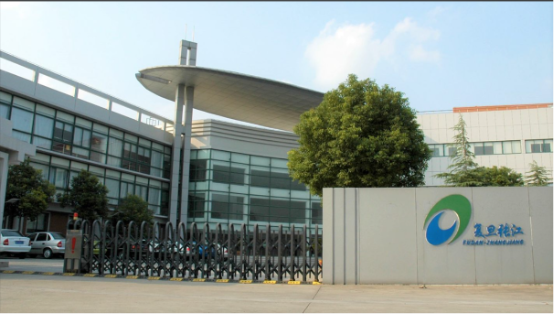 When the heavy hammer of national centralized procurement hit the core products, Fudan Zhangjiang's revenue and net profit were both under pressure. Recently, Fudan Zhangjiang released its 2025 semi-annual report: achieving revenue of 390 million yuan, a year-on-year decrease of 4.42%; The net profit attributable to the parent was 5.7151 million yuan, a year-on-year decrease of 91.89%.
However, the company still maintains high R&D investment, focusing on the two major technical fields of photodynamic drugs and ADC, and preparing chips for future comebacks. The financial report shows that Fudan Zhangjiang invested a total of 178 million yuan in R&D in the first half of 2025, a year-on-year increase of 14.58%, accounting for 45.63% of revenue, a year-on-year increase of 7.57 percentage points.
Impact of centralized procurement: 35% price reduction of main products
According to public information, Shanghai Fudan Zhangjiang was founded in Zhangjiang High-tech Park, Pudong, Shanghai in November 1996. At present, the company has 4 industrialized products: the anticancer drug Libaoduo, the photodynamic drugs Formeida and Ella, and the postoperative analgesic drug Onneda, the first three of which are the main products.
Its financial report shows that the obvious decline in net profit in the first half of the year was mainly due to the increase in research and development expenses compared with the same period last year, and the company confirmed corresponding compensation and liquidated damages after the termination of cooperation with Shanghai Huizheng, a promotion service provider of Libaoduo, in the same period last year.
Libaoduo (doxorubicin hydrochloride liposome injection) was launched in China in August 2009. It is the first domestic generic drug of Doxil and the first generic drug of nanomedicine at home and abroad.
Doxorubicin, also known as doxorubicin, is an anthracycline antibiotic that can inhibit DNA synthesis and interfere with RNA transcription process to kill or inhibit tumor cells. It is widely used to treat a variety of cancers. However, the drug has many adverse reactions, and because its affinity with myocardium is significantly higher than that of other tissues, and it can damage myocardial cells through semiquinone metabolites, thus bringing severe dose-dependent cardiotoxicity, which makes its clinical application greatly limited.
In November 1995, the US FDA approved the first anti-tumor nano-drug doxorubicin hydrochloride liposome injection, trade name: Doxil. Compared with ordinary doxorubicin, Doxil has a longer half-life, lower toxicity, and passive targeting of tumor tissues, which can greatly reduce cardiac toxicity. The drug was introduced into the domestic market in 2003 by Xi'an Janssen, a subsidiary of Johnson & Johnson, under the trade name: Kailai.
Since then, a number of generic drugs of doxorubicin hydrochloride liposome injection in China have been approved for listing one after another, with Fudan Zhangjiang's "Libaoduo" as the first imitation. In addition, eight domestic companies have been approved for listing one after another, including CSPC Ouyi, Jinyuan Pharmaceutical, Zhida Pharmaceutical, Shengzhao Pharmaceutical, Wuhe Bio, Qilu Pharmaceutical, Nuoqiao Pharmaceutical, and Dawn Pharmaceutical.
According to Yaozhi data, the sales of doxorubicin hydrochloride liposome injection will reach 4.9 billion yuan in 2023. From the perspective of enterprises, CSPC Ouyi, Jinyuan Pharmaceutical and Fudan Zhangjiang ranked the top three and occupied the majority of the share. The original research Kailai withdrew from the Chinese market in 2015.
In 2024, doxorubicin hydrochloride liposome injection was included in the national centralized procurement catalog for the first time, rapidly changing the market competition landscape of the drug.
According to Fudan Zhangjiang's announcement, Libaoduo failed to win the national centralized procurement, and the market retail price will be reduced by no less than 35% since May 2025. Affected by this, in the first half of this year, Libaoduo's sales revenue decreased by 16% compared with the same period last year. And it is expected to continue to have adverse effects in the future.
In addition to the anticancer drug Libaoduo, the performance of the other two photodynamic drugs in Fudan Zhangjiang was not satisfactory. In the first half of this year, the sales revenue of Formeida (Hemporfin Injection) decreased by 7% year-on-year, and the sales revenue of Ella (Aminone hydrochloride) Powder) increased by 2% year-on-year.
R&D gamble: 45% of revenue bets on innovation pipeline
Although its performance is facing difficulties, Fudan Zhangjiang is not stingy in R&D. In recent years, the proportion of R&D investment has increased year by year. In the first half of 2025, R&D investment totaled 177 million yuan, an increase of about 15% over the same period last year. R&D investment accounted for revenue. The proportion soared to 45.6%.
Among them, antibody-conjugated drugs (ADCs) and photodynamic drugs are the two major areas that Fudan Zhangjiang focuses on. Of its 177 million yuan in R&D investment in the first half of this year, 100 million yuan was used for ADC-related projects, which shows that it has high hopes for ADC projects.
At present, the company has 4 ADC drug candidates entering the clinical stage:
FDA018 (anti-Trop2 antibody conjugated SN38 project) is the fastest growing ADC candidate molecule in Fudan Zhangjiang. Phase III clinical research for the treatment of triple-negative breast cancer is currently underway.
Currently, for the Trop2 target, there are Gilead's Gosatuzumab (Trodelvy), Daiichi Sankyo/AstraZeneca United's Dato-DXd/DS-1062 and Kelunbotai's three ADC drugs, Luconsatuzumab, have been approved for marketing. Moreover, among the drugs under development, there are many Trop2 ADC drugs in China that have entered clinical phase III. Although FDA018 ranks high, its load is SN38. Compared with DXd, which has stronger anti-tumor activity, its competitive advantage is limited.
For the next generation of conjugated drugs, Fudan Zhangjiang has built a new linker-drug platform ("BB05 platform") at the small molecule end, and developed a new generation of Trop2 ADC (FZ-AD004) based on this platform. The drug is currently undergoing phase I clinical studies for dose expansion and indication exploration, and is intended to be used to treat advanced solid tumors, including lung cancer, breast cancer, gastric cancer, etc.
Based on the BB05 platform, Fudan Zhangjiang also developed the HER2 ADC drug FDA022 and the DLL3 ADC drug FZ-AD005.
FDA022 is undergoing phase I/phase II clinical studies and is intended to be used to treat a variety of solid tumors such as breast cancer and gastric cancer. At present, the results of the phase I clinical study data of the drug based on the treatment of breast cancer patients with high HER2 expression have been published in 2024 ESMO Asia; At the same time, the enrollment of the phase II clinical study for the indication cohort of breast cancer with low HER2 expression has been completed, and preliminary data results have been obtained.
FZ-AD005 is a brand-new compound that is undergoing phase I clinical research and is intended to be used to treat advanced solid tumors such as small cell lung cancer. The drug showed strong anti-tumor activity in animals, and no interstitial pneumonia was observed after repeated administration in monkeys. The highest non-severe toxic dose was as high as 30mg/kg, with good safety and best-in-class potential.
In terms of production, the antibody conjugated drug workshop of Taizhou production base in Zhangjiang, Fudan has been completed, with commercial-scale mass production capabilities, laying the foundation for the steady advancement of the company's ADC drug development strategy.
Another key investment area of Fudan Zhangjiang-photodynamic drugs, which is also its advantageous area.
At present, the company has two photodynamic products on the market, Ella (aminovaleric acid hydrochloride powder) and Formeida (heimporfin injection). Ella is the world's first photodynamic drug for condyloma acuminatum and the first photodynamic drug in China. Formeida is the world's first photodynamic drug for erythema nevus. It is a new drug integrating new drug targets, new compounds and new indications. These two products contribute the main sales revenue of Fudan Zhangjiang.
On the one hand, Fudan Zhangjiang is constantly expanding the application of new indications for these two marketed drugs, and on the other hand, it is researching and developing new photosensitizers to enhance competitiveness.
Breakthroughs have been made in the expansion of multiple new indications of aminovulinic acid hydrochloride: (1) The cervical precancerous lesions project for the treatment of HPV infection has completed phase II clinical trials; (2) Phase II clinical trials have been completed for the treatment of moderate to severe acne; (3) The enrollment of the phase II clinical trial for the treatment of photokeratosis project is completed; (4) The enrollment of the confirmatory clinical trial for the intraoperative visualization project of high-grade glioma is completed, and a marketing application will be submitted to the State Food and Drug Administration as soon as possible; (5) The confirmatory clinical trial for the auxiliary program of surgical resection of non-muscular invasive bladder cancer has completed the first subject enrollment in conjunction with the newly developed equipment.
The Phase II clinical trial of heimporfin in the United States is progressing smoothly, pointing to the global market.
At the same time, Fudan Zhangjiang has also developed an innovative photosensitizer-FZ-P001 sodium for injection. Its active ingredient is a molecule coupled with a small folate receptor targeting molecule and a cyanine photosensitizer, which can target malignant tumor tissues with high expression of folate receptor α (FRα) and fluorescence development in the near infrared range. At present, a clinical trial application has been submitted for the visualization project of malignant lesions during cancer surgery.
epilogue
When centralized procurement reshapes the competitive landscape of the industry, Fudan Zhangjiang chooses to bet heavily on innovative drugs. On the one hand, it deeply cultivates the world's leading photodynamic technology platform and builds a moat with breakthroughs in niche fields; On the other hand, it will open up a new battlefield for ADC, create a differentiated growth engine in popular tracks, and lay the foundation for long-term value.
https://news.yaozh.com/archive/45919.html
By editor
Copyright©2026 Ddu. All rights reserved.
Read more on
- Fosun Pharma’s FXS5626 Tablets Approved for Phase II/III Trial, TYK2/JAK1 Dual-Target Inhibitor for Vitiligo | Clinical Progress September 9, 2026
- InnoCare’s First Bispecific ADC ICP-B381 Approved for Clinical Trials, Targeting PSMA/STEAP1 for Prostate Cancer | Clinical Progress September 9, 2026
- another blockbuster imported drug approved for marketing in China September 9, 2026
- A New Battlefield for China’s Innovative Drugs September 9, 2026
- New lung cancer drug launched September 9, 2026
your submission has already been received.
OK
Subscribe
Please enter a valid Email address!
Submit
The most relevant industry news & insight will be sent to you every two weeks.