Samsung Biotech “Soars”
February 1, 2026
Source: https://news.yaozh.com/archive/47020.html
 321
321
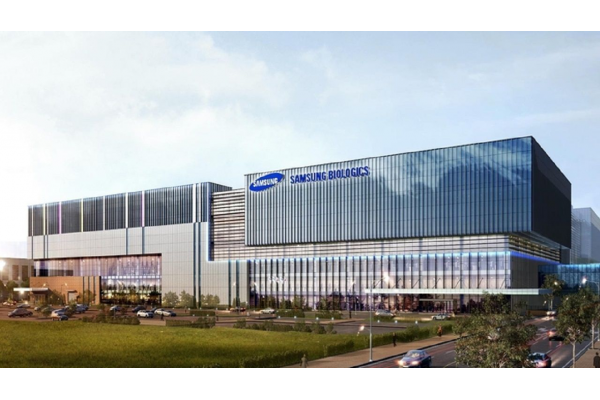
Samsung Bio has been inundated with orders over the past year.
Samsung Biologics recently announced its latest financial results for the full year 2025: revenue of 4.557 trillion won (approximately US$3.1 billion), up 30.3% year-on-year, and revenue profit up 56.6% year-on-year.
Furthermore, according to the company's forecast, even without taking into account the potential revenue contribution from the acquisition of the US factory, revenue in 2026 can still grow by 15-20%.
Samsung Biologics' confidence stems not only from its continued investment in production capacity, but also from the fact that, against the backdrop of rising geopolitical uncertainty, the "safer" Samsung Biologics is being chosen by more and more MNCs.
In December of last year, Samsung Biologics acquired 100% of GSK’s biopharmaceutical manufacturing facility in Rockville for $280 million, expanding its production base in the United States and further “consolidating” its partnership with MNC.
Despite the continued high demand for innovative drug production, does Samsung Biologics' aggressive expansion signal a new round of reshuffling in the global CDMO industry?
01 Orders are chasing production capacity
To sum up Samsung Bio's performance over the past year in one sentence: it was driven by massive orders. Fourth-quarter revenue reached $870 million, and full-year revenue was approximately $3.1 billion, representing a 30.3% year-over-year increase.
The revenue growth did not come from a single large order, but was built on a foundation of continuously expanding orders.
By 2025, Samsung Biologics has established partnerships with 17 major global pharmaceutical companies, adding 8 CMO projects and 31 CDO projects. In the fourth quarter, Samsung Biologics signed a long-term manufacturing agreement worth approximately 1.1 trillion won with a European pharmaceutical company, bringing its total contract value to over US$21 billion, including 107 contract manufacturing contracts and 164 contract development contracts.
The continuous influx of orders has directly boosted capacity utilization. Financial reports show that factories 1-3 operated at full capacity throughout the year, factory 4 also achieved full production in the fourth quarter, and factory 5, which was put into operation last April, has also begun to ramp up production. The entire company has entered a stage where orders drive capacity release.
Clearly, the CRL incident that previously attracted market attention did not have a substantial impact on the fundamentals of Samsung Biologics' business, and the speed of order recovery after the regulatory rectification was completed obviously exceeded market expectations.
As orders began to "chase after production capacity," Samsung Biologics no longer relied on a single large customer or short-term volume increases, but instead entered a positive feedback loop driven by long-term supply and economies of scale. Samsung Biologics expects its revenue to continue growing by 15-20% in 2026, and this growth is built on the support of long-term, stable orders.
This is also what distinguishes CDMOs from innovative drug development. Whether it's commercial manufacturing or late-stage clinical projects, once a stable supply period is reached, changing suppliers means re-validation and re-application, which carries extremely high costs and risks. Therefore, multinational pharmaceutical companies usually don't easily change partners. Currently, it seems that Samsung Biologics has met the needs of MNCs.
02 "Forced" to withdraw from diversification
Breaking it down, Samsung Biologics' fourth-quarter performance peaked as a result of its proactive "downsizing" strategy.
In November 2025, Samsung Biologics completed the spin-off of its biosimilar business, Samsung Bioepis, officially transforming into a pure CDMO company and clearly anchoring three strategic directions: continuously expanding production capacity, promoting the diversification of platform businesses, and strengthening global layout.
This decision was not without controversy. After all, Samsung Biologics started as a biosimilar company and only transformed into a CDMO after expanding its production capacity.
From a financial perspective, the biosimilar business is not a "side business" for Samsung Biologics. This segment generated approximately $1 billion in revenue in 2024, accounting for about 30% of the company's total revenue. The interim report this year shows that biosimilars contributed approximately 802 billion won ($547 million), representing nearly 40% of total revenue.
While other companies are still pursuing revenue growth through multiple business lines, Samsung Biologics has chosen to completely divest its stable biosimilar business . The core reason is that as project complexity increases, regulatory requirements become stricter, and supply chain security is repeatedly emphasized, customers have higher expectations for the professionalism of CDMOs. The clearer the business boundaries, the easier it is to build trust.
Samsung Biologics had previously stated that although the company had established a "firewall," some customers still expressed concerns about the potential conflicts of interest associated with its generic drugs. This spin-off aims to completely eliminate these concerns.
By spinning off Bioepis, Samsung Biologics not only completed its transformation into a CDMO, but also gained valuable space and resources for reallocation.
Previously, the company had already completed its capability deployment on novel platforms such as mRNA, ADC, and organoids. The regions that have been spun off this time will be allocated to resources for CGT, antibody vaccines, and peptide drug production, the former two of which are at the core of global industry competition.
Of course, this round of profitability is also closely related to the current accelerated commercialization of ADCs. As many ADCs enter the later stages of commercialization, the demand for ADC production from enterprises is showing structural growth, and Samsung Biologics has been continuously increasing its investment in ADC-related production line construction and technology platform upgrades since 2024, gradually reaping the rewards.
According to Samsung Biologics' publicly disclosed plans, its total future production capacity will increase to 1.324 million liters, a scale that is expected to make it one of the world's largest single-region biopharmaceutical production bases. This implies that Samsung Biologics' growth is continuing.
03 Gifts of the times
An individual's destiny depends not only on their own efforts but also on the course of history. The same applies to the development of a company, including Samsung Biologics. Its remarkable achievements amidst turbulence are inseparable from the "gifts" of the times.
In 2025, the shadow of geopolitics will continue to loom over the entire industry, making pharmaceutical companies' demand for "supply chain stability" unprecedentedly strong. It is precisely under the influence of these geopolitical factors that Samsung Biologics has achieved tremendous success.
North America, Europe, and the Asia-Pacific region are forming the core of the global CDMO market. Among them, North America occupies a dominant position in the global market due to its well-developed CGT industry ecosystem, high R&D investment, and mature regulatory system.
Against the backdrop of biosafety laws, supply chain localization, and increasingly stringent regulations, the global biopharmaceutical industry chain is facing reshaping, and Japanese and South Korean CXO companies are seizing the opportunity to enter the market during this reshaping process.
Samsung Biologics, leveraging its own production capacity and deep alignment with local regulatory systems, successfully secured and established close partnerships with MNCs. By 2025, Samsung Biologics anticipates new orders from the United States totaling approximately $1.3-1.8 billion, increasing its market share to 42%.
Furthermore, Samsung Biologics is also increasing its investment in the US market. On December 21, 2025, it reached an agreement with GSK to acquire one of the latter's production facilities, further expanding its US production capacity. This facility has a total raw material capacity of 60,000 liters. While not the highest capacity currently available, it will help Samsung Biologics better connect with US biopharmaceutical companies, especially given the current US strategy of promoting the return of pharmaceutical manufacturing to the US and building a domestic supply chain.
With sufficient production capacity and a sufficiently globalized and US-based presence, Samsung Biologics successfully secured a deal with a large pharmaceutical company. This also reminds us that, driven by the pursuit of efficiency and global specialization, the market demand for CDMOs will continue to grow. However, this is destined to be a feast for the strong, with growth concentrating on a few leading companies with advantages in scale, platform, and trust.
By editor
Copyright©2026 Ddu. All rights reserved.
Read more on
- Novo Nordisk and Nanexa Ink Up to €1.165B Long-Acting Delivery Deal for Obesity and Diabetes September 29, 2026
- siRNA Biotech ADARx Raises $446M in 2026’s Third-Largest Biotech IPO September 29, 2026
- Merck and Eisai’s Welireg Plus Lenvima Approved by FDA for Previously Treated Advanced Kidney Cancer September 29, 2026
- Mirum and Incyte’s Atebrioz Wins FDA Approval for Rare Bone Disorder FOP September 29, 2026
- J&J in Talks to Sell DePuy Synthes to Apollo September 29, 2026
your submission has already been received.
OK
Subscribe
Please enter a valid Email address!
Submit
The most relevant industry news & insight will be sent to you every two weeks.