
Within a single day, Hisun Pharmaceuticals received FDA approval for its cyclopropanol product and subsequently signed a global research and development agreement with Eli Lilly.
June 2, 2026
Source: drugdu
 231
231
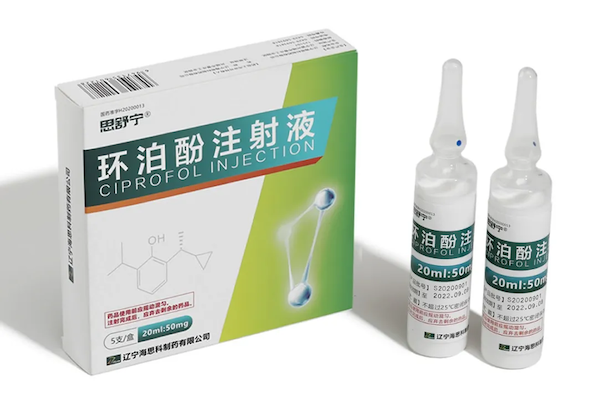
 On June 1, 2026, Hisun Pharmaceutical Group Co., Ltd. (hereinafter referred to as " Hisco ") issued two announcements that are significant enough to be recorded in the annals of Chinese innovative drug exports. The first announcement stated that Hisun Pharmaceutical Technology (Lhasa) Co., Ltd., a wholly-owned subsidiary of the company, officially signed a "Licensing and R&D Cooperation Agreement" with Eli Lilly and Company on May 29, 2026. The two parties will conduct strategic cooperation in the research and development of innovative drugs in multiple disease areas . The second announcement stated that Hisun's independently developed Class 1 intravenous anesthetic innovative drug— Cipepofol Injection (Chinese trade name: 思舒宁®, English trade name: CYPSEDO)—officially received marketing approval from the U.S. Food and Drug Administration ( FDA ) for the induction of general anesthesia in adults. Cippofol thus became the first original innovative intravenous anesthetic drug from China to enter the international market.
 On the same day, Hisun Pharmaceutical announced a multi-domain R&D strategic collaboration with global pharmaceutical giant Eli Lilly, and also received FDA approval for a core innovative drug. Even in 2026, a year already rife with narratives of overseas expansion, such a density of announcements is remarkable. More importantly, these two announcements are not simply a matter of "double happiness"—they form a tightly woven causal chain. It was precisely because Hisun Pharmaceutical delivered a complete clinical trial result with propofol to the world's most stringent drug regulatory system that Eli Lilly was willing to formally include this Chinese pharmaceutical company in its global R&D collaboration portfolio.
To truly understand the significance of this FDA approval, we must trace the story of propofol back to its scientific origins. Intravenous anesthetics are one of the cornerstones of modern surgery, yet this category has seen almost no truly new molecules emerge in the past thirty years—the global market has long been monopolized by propofol. Propofol is a sharp double-edged sword: it has a rapid onset and provides quick and complete recovery, but its therapeutic window is extremely narrow; even slightly higher doses can lead to respiratory depression and severe hypotension, making it particularly unfriendly to elderly, obese, and patients with poor cardiovascular reserve. Hisun Pharmaceuticals' independently developed propofol, however, introduces a chiral cyclopropyl structure into the propofol molecular skeleton, transforming the racemic mixture into a single optical enantiomer. This seemingly minor chemical modification has decisive pharmacological consequences— cyclopropofol has a significantly stronger affinity for GABA_A receptors than propofol; its equivalent dose to achieve the same depth of anesthesia is only 1/2 to 2/3 of propofol's, while the incidence of respiratory depression and injection pain is significantly lower. In a global multicenter phase III clinical trial required by the FDA, cyclopropofol successfully demonstrated its superiority with propofol as a positive control, becoming the world's first innovative intravenous anesthetic to outperform propofol head-to-head in a pivotal registration study.
The indication for piroxifen approved in the US this time is "induction of general anesthesia in adults." This is its nth regulatory approval globally, but undoubtedly the most important one. Prior to this, piroxifen had already been approved for marketing in China and included in the National Reimbursement Drug List, with annual sales exceeding 1.5 billion RMB, accounting for nearly 30% of the domestic intravenous anesthetic market. However, the difference between success in the Chinese market and formal FDA approval is not just a difference in the registration process, but a comprehensive test of a complete clinical evidence system, manufacturing quality system, and international multi-center operational capabilities. Hisun Pharmaceutical chose to use its self-owned global rights and a head-to-head superiority trial as the hard endpoint to directly knock on the FDA's door—something unprecedented in the history of Chinese pharmaceuticals.
On the same day that the approval announcement was released, a global R&D strategic collaboration agreement between Hisun Pharmaceuticals and Eli Lilly surfaced, and the timing of these two events is intriguing. The announcement indicated that the collaboration would cover "multiple disease areas," and the form of cooperation would encompass a hybrid "licensing and R&D" model. While specific target and molecular information was not disclosed, Eli Lilly's choice to sign a multi-field strategic R&D agreement with Hisun Pharmaceuticals at this time—the same window as the FDA approval of piroximate—is itself a strong signal: the approval of piroximate in the United States was not the trigger for Eli Lilly's decision to collaborate, but rather a final "final exam" for Eli Lilly to verify Hisun Pharmaceuticals' global clinical development capabilities. In this exam, Hisun Pharmaceuticals used the FDA approval letter to demonstrate its ability to independently complete the entire process—from molecular design and global multi-center clinical trials to ensuring the production quality system complies with FDA on-site inspections—on the crowded target of GABA_A receptors. Once this capability is proven replicable in other therapeutic areas, the value of this strategic collaboration will far exceed the sales revenue sharing of an anesthetic drug.
From Hisun's strategic perspective, these two announcements together outline a clear "dual circulation" overseas expansion path. Propofol represents "going global with proprietary products and brands"—establishing brand recognition for original Chinese formulations in the US, the world's largest innovative drug market, through globally exclusive rights, head-to-head efficacy data, and a fully independent commercialization team. Meanwhile, the global R&D collaboration with Eli Lilly represents "going global with early-stage pipeline platforms"—embedding Hisun's early discovery capabilities on specific targets or technology platforms into the R&D pipeline of the world's largest pharmaceutical company, realizing continuous value realization through upfront payments, milestone payments, and sales revenue sharing. The former is "selling products," and the latter is "selling platforms." These two business models coexist within the same company, signifying that the globalization of Chinese innovative pharmaceutical companies has evolved from "one-off transactions" to a stage of "system capability output."
https://mp.weixin.qq.com/s/p_988R8seGlplRsZpJIFdw
By editor
Copyright©2026 Ddu. All rights reserved.
Read more on
- FDA Approves Revolution Medicines’ Oral RAS Inhibitor Rasonque (daraxonrasib) for Metastatic Pancreatic Cancer October 20, 2026
- Hansoh Pharma Enters Strategic ADC Collaboration with Roche Worth Over US$15.5 Billion October 20, 2026
- New cough medicine launched October 20, 2026
- Shining on the top stage! The world’s first three-target agonist DR10624 MASLD/MASH Phase II results were selected for the latest breakthrough abstract of AASLD. October 20, 2026
- The world’s first long-acting anti-RSV monoclonal antibody has been commercially launched October 20, 2026
your submission has already been received.
OK
Subscribe
Please enter a valid Email address!
Submit
The most relevant industry news & insight will be sent to you every two weeks.