
New lung cancer drug launched
September 9, 2026
Source: drugdu
 113
113
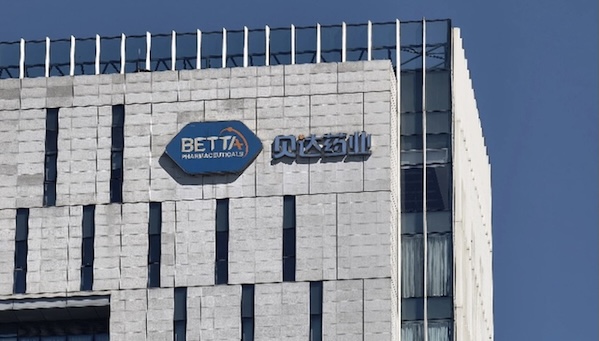 Recently, Betta Pharmaceuticals' ensartinib hydrochloride capsules were approved by the National Medical Products Administration for adjuvant therapy after surgery in patients with anaplastic lymphoma kinase (ALK)-positive stage IB to IIIB non-small cell lung cancer (NSCLC) . According to the approved indication, patients must have previously undergone surgical resection, and their choice to receive adjuvant chemotherapy can be determined by their physician.
the third indication approved for ensartinib , making it the first domestically produced ALK inhibitor to be approved for this indication. Previously, the only drug approved for this indication globally was Roche's alectinib.
The approval of this indication targets a long-standing unmet clinical need. Lung cancer is a malignant tumor with high incidence and mortality rates globally and in China . According to the "Analysis of the Epidemiology of Malignant Tumors in China in 2022" released by the National Cancer Center, there were 1.06 million new cases of lung cancer and 730,000 deaths in China in 2022. Among lung cancer patients, NSCLC accounts for as much as 85%, with ALK fusion mutations occurring in 5%-7% of cases, which are rare driver gene mutations.
Although some NSCLC patients are in the early to mid-stages of surgical resection at initial diagnosis, they still face a high risk of recurrence and death, and the clinical value of traditional postoperative adjuvant chemotherapy is limited.
It is understood that the core evidence supporting the approval of ensartinib comes from the ELEVATE registration clinical study. This study, co-led by Professor Wang Changli of Tianjin Medical University Cancer Hospital and Professor Lu You of West China Hospital of Sichuan University, involved 56 medical centers across China and enrolled 274 patients. It is a multicenter, randomized, double-blind, placebo-controlled phase III registration study in the field of ALK-TKI adjuvant therapy for ALK-positive lung cancer.
The study included patients with ALK-positive NSCLC who had undergone complete resection and were pathologically confirmed to be stage IB to IIIB (T3N2M0 only). They were randomized 1:1 to receive ensartinib 225 mg once daily or placebo for 24 months.
Results showed that in stage II-IIIB patients, the 2-year disease-free survival rate was 86.4% in the ensartinib group and 53.5% in the placebo group, with a hazard ratio (HR) of 0.20 for disease recurrence or death. In the overall intention-to-treat (ITT) population, the 2-year disease-free survival (DFS) rate was 87.3% in the ensartinib group and 57.2% in the placebo group, with the same HR of 0.20. Ensartinib significantly prolonged DFS in patients with stage II-IIIB and IB-IIIB non-small cell lung cancer compared to placebo, demonstrating a statistically significant and clinically meaningful DFS benefit.
In terms of safety, most adverse reactions were grade 1-2 and clinically manageable. The overall adverse reaction spectrum was basically consistent with the data from previous advanced NSCLC studies, and no new safety signals were observed.
In conclusion , the approval of ensartinib for its new indication provides a new treatment option for controlling the risk of postoperative recurrence in patients with ALK-positive early-stage non-small cell lung cancer, and is also an important step forward for domestically developed innovative drugs in this specific treatment area.
https://news.yaozh.com/archive/48980.html
By editor
Copyright©2026 Ddu. All rights reserved.
Read more on
- FDA Approves Revolution Medicines’ Oral RAS Inhibitor Rasonque (daraxonrasib) for Metastatic Pancreatic Cancer October 20, 2026
- Hansoh Pharma Enters Strategic ADC Collaboration with Roche Worth Over US$15.5 Billion October 20, 2026
- New cough medicine launched October 20, 2026
- Shining on the top stage! The world’s first three-target agonist DR10624 MASLD/MASH Phase II results were selected for the latest breakthrough abstract of AASLD. October 20, 2026
- The world’s first long-acting anti-RSV monoclonal antibody has been commercially launched October 20, 2026
your submission has already been received.
OK
Subscribe
Please enter a valid Email address!
Submit
The most relevant industry news & insight will be sent to you every two weeks.


