
Eli Lilly’s “miracle weight-loss drug” targets a new trillion-dollar market; is it about to revolutionize the liver disease treatment landscape?
January 26, 2026
Source: drugdu
 357
357
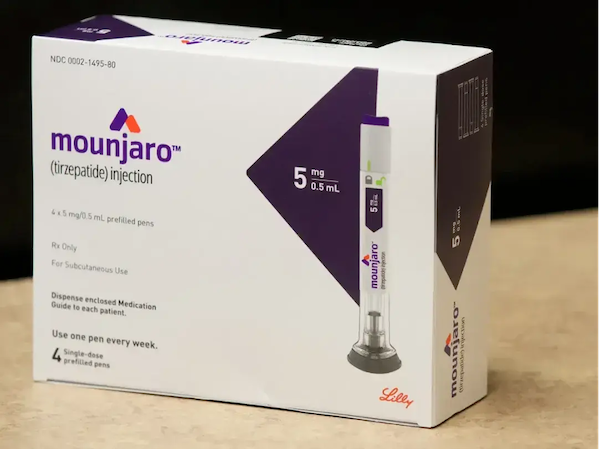 Recently, according to the CDE (Center for Drug Evaluation) website, Eli Lilly's GIP/GLP-1 dual receptor agonist, "Telborpeptide Injection," is proposed for inclusion in the Breakthrough Therapy designation for the treatment of metabolic-associated fatty liver disease (MASH). This marks the fourth major market for Telborpeptide in China. Previously, it has been approved in China for the treatment of type 2 diabetes, weight loss, and obstructive sleep apnea. This proposed inclusion in the Breakthrough Therapy designation signifies its significant advantages in treating MASH, and its market launch is expected to be significantly accelerated.
MASH is a serious chronic liver disease caused by excessive fat accumulation in the liver, leading to inflammation and fibrosis. Approximately one-third of overweight or obese individuals may have MASH. However, the path to drug development for MASH has been exceptionally arduous, with a complex pathogenesis that has caused numerous pharmaceutical giants to fail over the past few decades, resulting in a research failure rate exceeding 90%, earning it the moniker of a "research black hole." A turning point began in March 2024 when Madrigal's drug resmetirom received FDA approval, becoming the world's first treatment for MASH. Following this, in August 2025, Novo Nordisk's blockbuster product semaglutide was also approved for non-cirrhotic MASH patients. This field, dormant for forty years, was finally broken through one after another. The addition of telpotetide has rapidly intensified the competition. The potential of telpotetide in treating MASH has already been evident. A Phase II clinical trial presented at the 2024 European Association for the Study of the Liver (EASL) Annual Meeting was particularly noteworthy:
• The primary endpoint (complete MASH remission and no worsening of fibrosis) was achieved in 51.85%, 62.8% and 73.3% of the three dose groups of telpolide (5 mg/10 mg/15 mg), respectively, which was significantly higher than the 13.2% in the placebo group.
• The key secondary endpoint (improvement of liver fibrosis ≥1 stage and no worsening of MASH) was achieved in 59.1%, 53.3% and 54.2% of the three dose groups, respectively, compared with 32.8% in the placebo group.
Based on such positive data, Eli Lilly has launched a large-scale Phase III clinical trial (SYNERGY-Outcomes), with plans to enroll 275 participants domestically and 4,500 internationally, to further validate its efficacy.
Telpoeptide is the world's first and currently only GIP/GLP-1 dual-target hypoglycemic drug. This dual mechanism of action not only effectively controls blood sugar and promotes weight loss, but also demonstrates unique advantages in improving liver health.
• For MASH patients who are often obese or have type 2 diabetes, telpolide offers a multi-faceted solution: it can target liver inflammation and fibrosis while simultaneously managing weight and blood sugar, achieving a comprehensive improvement in overall metabolic health .
• Its convenient once-weekly administration method also greatly improves patient compliance .
Currently, telpotetide's indication for type 2 diabetes has been included in the 2025 National Reimbursement Drug List. This multi-indication synergistic approach will create a strong competitive barrier in the market. According to Sullivan's forecast, by 2030, the global MASH patient population will climb to 486 million, and the drug market size is expected to reach $32.2 billion. Currently, there are no clearly approved MASH treatments in China , making the market a vast blue ocean. Currently, nearly 200 new MASH drugs are under development globally. Besides GLP-1 drugs, the FGF21 target has also become a highly sought-after target, with multinational pharmaceutical companies investing over $10.7 billion in this area by 2025. Domestic pharmaceutical companies tend to develop multi-target fusion drugs combining FGF21 and GLP-1, aiming to improve efficacy through synergistic mechanisms.
For Eli Lilly, telpotetide's entry into the MASH market is not only a market expansion but also a crucial step in consolidating its leading position in the field of metabolic diseases. It is expected to become a core drug for comprehensive metabolic management, encompassing blood sugar, weight, and liver health. With the emergence of more drugs with new mechanisms of action, MASH treatment is transitioning from a period of no cure to a diversified era of fierce competition. This battle for a trillion-dollar blue ocean market has just begun. With its outstanding clinical data and comprehensive management advantages, telpotetide is undoubtedly a formidable competitor. Whether it can achieve further success in the field of liver disease treatment remains to be seen.
https://news.yaozh.com/archive/46985.html
By editor
Copyright©2026 Ddu. All rights reserved.
Read more on
- CPHI Milan 2026 Recap | What Did Drugdu.com Bring Back from Milan? October 9, 2026
- Novo Nordisk and Nanexa Ink Up to €1.165B Long-Acting Delivery Deal for Obesity and Diabetes September 29, 2026
- siRNA Biotech ADARx Raises $446M in 2026’s Third-Largest Biotech IPO September 29, 2026
- Merck and Eisai’s Welireg Plus Lenvima Approved by FDA for Previously Treated Advanced Kidney Cancer September 29, 2026
- Mirum and Incyte’s Atebrioz Wins FDA Approval for Rare Bone Disorder FOP September 29, 2026
your submission has already been received.
OK
Subscribe
Please enter a valid Email address!
Submit
The most relevant industry news & insight will be sent to you every two weeks.


