The “King of Medicine” in Guangdong sold for 56.6 billion yuan.
September 8, 2026
Source: drugdu
 29
29
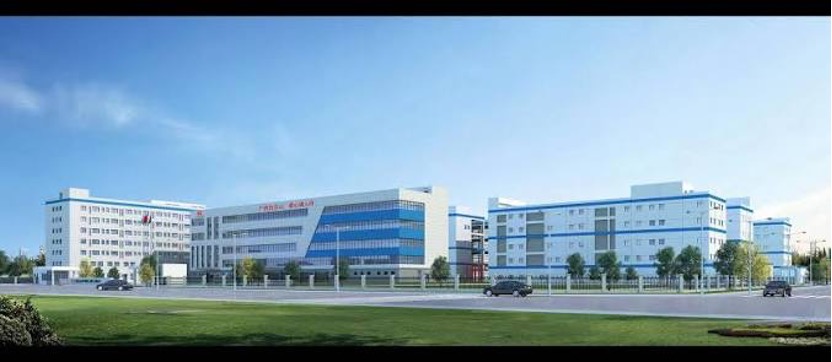 The period from 2016 to 2025 marks a decade of continuous reform in China's pharmaceutical industry. Centralized procurement policies are reshaping the industry's logic, and a wave of innovative drugs is surging forward. In this profound industrial transformation, Guangdong's pharmaceutical companies have delivered a remarkable performance .
the rise of Guangdong's "King of Medicines" from the perspectives of enterprise and brand dimensions, based on the terminal sales data of Guangdong pharmaceutical companies and drug brands from 2016 to 2025, using data from Yaozhi Data .
Note: The drugs mentioned in this article cover various types of drugs, including innovative drugs, generic drugs, and traditional Chinese medicines; sales data comes from Yaozhi Data; the sales figures are based on the sales performance of pharmaceutical companies registered in Guangdong (including 21 prefecture-level cities) across the country in terms of terminal sales (hospitals + retail + e-commerce channels).
01
The King of Pharmaceutical Companies:
Amidst fierce competition, who will ultimately prevail?
Looking at the cumulative sales figures from 2016 to 2025, Guangzhou Baiyunshan Pharmaceutical Group Co., Ltd.'s Baiyunshan Pharmaceutical Factory ranks first among Guangdong pharmaceutical companies with a total sales volume of 56.639 billion yuan. Furthermore, sales remained above 3.8 billion yuan in nine of these ten years, peaking at 7.809 billion yuan in 2017.
What is even more noteworthy is the overall strength of the Baiyunshan Group. Apart from the main pharmaceutical factory, all six member companies—Baiyunshan Chen Liji Pharmaceutical Factory (17.979 billion yuan), Baiyunshan Hutchison Whampoa Chinese Medicine (25.835 billion yuan), Baiyunshan Mingxing Pharmaceutical (15.442 billion yuan), Baiyunshan Zhongyi Pharmaceutical (14.959 billion yuan), Baiyunshan Tianxin Pharmaceutical (12.579 billion yuan), and Baiyunshan Pangao Shou Pharmaceutical (10.875 billion yuan)—are in the top 20, with total sales exceeding 150 billion yuan.
Livzon Pharmaceutical Factory, a subsidiary of Livzon Group, ranked second with 50.205 billion yuan in sales, becoming the second company on the list to surpass the 50 billion yuan mark. Livzon has core products in the fields of digestive systems, anti-infectives, and traditional Chinese medicine, with the continued strong sales growth of its esomeprazole series providing a powerful driving force for the company's growth. Livzon Pharmaceutical Factory's annual sales are projected to grow steadily from 3.45 billion yuan in 2016 to 5.384 billion yuan in 2025, demonstrating a strong product portfolio and R&D transformation capabilities.
China Resources Sanjiu Pharmaceutical Co., Ltd. ranked third with 42.777 billion yuan . Its annual sales increased from 3.195 billion yuan in 2016 to 5.178 billion yuan in 2025, a growth of more than 60% in ten years. China Resources Sanjiu's trump card is the national brand, Ganmaoling Granules , which has accumulated 25.719 billion yuan in sales over the past ten years .
Shenzhen Salubris Pharmaceuticals Co., Ltd. ranked fourth with 42.128 billion yuan . Salubris is a representative of innovation and transformation among the Guangdong pharmaceutical companies. Its clopidogrel bisulfate tablets have accumulated 21.841 billion yuan in sales over the past ten years, witnessing the glory of the peak period of domestic antiplatelet drugs.
Companies with cumulative sales between 20 billion and 40 billion yuan include Zhuhai Federal Pharmaceutical Co., Ltd. Zhongshan Branch (36.524 billion yuan), Guangzhou Wanyite Medical Supplies Co., Ltd. (27.659 billion yuan), Guangzhou Baiyunshan Hutchison Whampoa Chinese Medicine Co., Ltd. (25.835 billion yuan), Sinopharm Group Zhijun (Shenzhen) Pharmaceutical Co., Ltd. (21.707 billion yuan), and Shenzhen CR Jiuxin Pharmaceutical Co., Ltd. (20.376 billion yuan) . These companies have developed unique advantages in their respective niche markets.
For example, Guangzhou Wanyite Medical Supplies Co., Ltd. is a unique medical device and pharmaceutical company on the list, firmly holding an important position in the field of nephrology dialysis; Guangdong Tianpu Biochemical Pharmaceutical Co., Ltd. focuses on the field of critical care.
Companies with cumulative sales between 10 billion and 20 billion yuan include Guangdong Tianpu Biochemical Pharmaceutical Co., Ltd. (16.905 billion yuan), Guangdong Zhong Sheng Pharmaceutical Co., Ltd. (15.628 billion yuan), Yangtze River Pharmaceutical Group Guangzhou Hairui Pharmaceutical Co., Ltd. (15.589 billion yuan), Guangzhou Baiyunshan Mingxing Pharmaceutical Co., Ltd. (15.442 billion yuan), Guangzhou Baiyunshan Zhongyi Pharmaceutical Co., Ltd. (14.959 billion yuan), Guangzhou Yipinhong Pharmaceutical Co., Ltd. (11.735 billion yuan), and Guangzhou Baiyunshan Pangao Shou Pharmaceutical Co., Ltd. (10.875 billion yuan), demonstrating the multi-level vitality of Guangdong's pharmaceutical industry.
02
Brand King of Medicine:
What is the best-selling Guangdong medicine of the past decade?
If enterprises are the skeleton of an industry, then pharmaceutical brands are its blood. Over the past decade, Guangdong has seen the emergence of a number of blockbuster drugs with sales exceeding 10 billion yuan.
In the cumulative sales ranking from 2016 to 2025, Ganmaoling Granules (China Resources Sanjiu) topped the list with 25.719 billion yuan. This well-known OTC cold medicine has nearly doubled in ten years, growing from 1.502 billion yuan in 2016 to 3.264 billion yuan in 2025. The reason this single product can continue to lead is due to its strong brand recognition; "999 Ganmaoling" has almost become synonymous with a household medicine.
The second and third place winners on the brand list are Shenzhen Xinlitai's clopidogrel bisulfate tablets (21.841 billion yuan) and Baiyunshan's sildenafil citrate tablets (20.236 billion yuan).
Clopidogrel is a classic antiplatelet therapy drug, and Sinopharm, as the first domestically produced generic version, has long held a dominant market position. Its sales reached 3.41 billion yuan in 2016, peaked at 3.958 billion yuan in 2017, and further increased to 3.851 billion yuan in 2018 and 3.513 billion yuan in 2019, maintaining a high level of over 3.5 billion yuan for many consecutive years. Its cumulative sales over the past decade rank among the top single prescription drug products in Guangdong.
Baiyunshan's sildenafil citrate tablets have written another legend, with sales soaring since their launch: 1.058 billion yuan in 2016, 1.51 billion yuan in 2017, 1.743 billion yuan in 2018, 2.008 billion yuan in 2019, 2.277 billion yuan in 2020, and reaching a peak of 2.744 billion yuan in 2021. The cumulative sales over ten years reached 20.236 billion yuan, making it one of the most successful single products from Guangdong pharmaceutical companies in the consumer healthcare field.
Among the top 20 brands, nine have achieved cumulative sales exceeding 10 billion yuan , forming a contingent of Guangdong's pharmaceutical brands with sales exceeding 10 billion yuan. Examples include: the classic anti-infective drug cefazolin sodium pentahydrate for injection (13.98 billion yuan); the traditional Chinese medicine Shujin Jianyao Wan for orthopedics (13.682 billion yuan); low-calcium peritoneal dialysis solution for nephrology (12.062 billion yuan); ulinastatin for pancreatitis emergency treatment (11.337 billion yuan); the proton pump inhibitor esomeprazole enteric-coated tablets (10.868 billion yuan); and the anti-allergy drug desloratadine tablets (10.218 billion yuan).
If the top-ranked items on the list represent existing strength, then the story of Alisartan ester tablets represents the hope for growth.
Sinotai's alisartan medoxomil tablets (Alisartan medoxomil tablets) saw sales of only 3 million yuan in 2016, 16 million yuan in 2017, and 131 million yuan in 2018, breaking the 100 million yuan mark for the first time. Sales are projected to reach 1 billion yuan in 2021 and 1.965 billion yuan in 2025, representing a more than 650-fold increase in ten years. As a strategic product for Sinotai in the field of hypertension, the success of alisartan medoxomil tablets marks a substantial breakthrough in Sinotai's strategic transformation from primarily generic drugs to a combination of generic and innovative approaches.
Also noteworthy is Livzon's injectable esomeprazole sodium : its sales reached 9 million yuan in its first year of listing in 2018, 739 million yuan in 2020, 1.675 billion yuan in 2021, and then stabilized in the range of 1.1 billion to 1.3 billion yuan, accumulating to 7.425 billion yuan over ten years.
In addition, Levetiracetam tablets (Shenji Zhuhai Pharmaceutical, cumulative revenue of 9 billion yuan) have consistently maintained a revenue of 800 million to 1 billion yuan in the anti-epileptic field; Compound Thrombolytic Capsules (Zhong Sheng Pharmaceutical, cumulative revenue of 8.869 billion yuan) have achieved steady growth in the ophthalmology and cardiovascular fields; and Amoxicillin Capsules (Federal Pharmaceutical, cumulative revenue of 7.575 billion yuan) , as a basic medication, have steadily increased from 555 million yuan to 946 million yuan in 2024. Behind each brand lies a unique growth path.
03
Changes and Trends
Looking back at the industry changes over the past decade, the most noteworthy point is that leading pharmaceutical companies in Guangdong have completed the shift in their growth drivers. Sinopharm transitioned from clopidogrel to alisartan medoxomil, Lizhu upgraded from esomeprazole tablets to esomeprazole sodium injection, and Guangzhou Baiyunshan shifted from cefotaxime to sildenafil. These three companies exhibit similar development paths: relying on established, mature products to build a solid business foundation, and then achieving upward breakthroughs in performance through new products.
Taking Sinopharm as an example, the cumulative sales of its two products, clopidogrel and alisartan medoxomil, have reached nearly 30 billion yuan over the past ten years. Among them, alisartan medoxomil achieved an annual sales scale of 1.965 billion yuan in 2025, which has exceeded half of the revenue of clopidogrel at its peak. This ability to complete business iteration by relying on new products is a direct reflection of domestic pharmaceutical companies gradually moving away from the benefits of generic drugs and towards innovation-driven development.
From 2016 to 2025, China's domestic pharmaceutical e-commerce will experience a decade of rapid expansion from its initial stage. Data shows that pharmaceuticals, which are highly sensitive to changes in distribution channels, saw rapid growth during this period: sildenafil tablets grew by 69% in ten years; alisartan medoxomil tablets grew more than 650 times from a starting point of 0.03 billion yuan; and esomeprazole sodium achieved a breakthrough from zero to 1.335 billion yuan.
In contrast, prescription drugs like meropenem and piperacillin-tazobactam sodium, which primarily target the hospital market, rely more on academic promotion and clinical value discovery for growth, exhibiting a long-term, steady growth pattern. Guangdong is a leading region in the development of pharmaceutical e-commerce and retail chain industries in China. Local pharmaceutical companies have gained an early advantage in establishing comprehensive online and offline channels, and this advantage is further reflected in the efficiency of developing new blockbuster drugs, creating a certain development gap.
One of the distinctive resources of Guangdong's pharmaceutical industry lies in its concentration of time-honored traditional Chinese medicine brands. The seven companies under Baiyunshan Group have combined sales exceeding 150 billion yuan. Brands with a history spanning over a century, such as Chen Liji (17.979 billion yuan), Pan Gaoshou (10.875 billion yuan), Baiyunshan Zhongyi Pharmaceutical (14.959 billion yuan), and Baiyunshan Hehuang Traditional Chinese Medicine (25.835 billion yuan), have all achieved considerable scale, demonstrating that traditional Chinese medicine still possesses strong survival and development capabilities in the current market environment.
Pan Gao Shou's sales grew from 708 million yuan in 2016 to 1.745 billion yuan in 2024, while Mingxing Pharmaceutical achieved revenue of 2.479 billion yuan in 2022 and 2.158 billion yuan in 2023. These two sets of operating data show that after traditional Chinese medicine brands complete brand rejuvenation and channel modernization upgrades, their accumulated value can be fully released.
https://news.yaozh.com/archive/48975.html
By editor
Copyright©2026 Ddu. All rights reserved.
Read more on
- New At-Home Option for Alzheimer’s! Lecanemab Subcutaneous Auto-Injector Pen Approved in China | Approval Alert September 8, 2026
- Sinopharm Group and Hansoh Pharmaceutical Reach Strategic Cooperation, Launch Four Special Projects Including Broad Market, Medical Access, Retail, and DTP | Market News September 8, 2026
- Hybio Pharmaceutical’s Subsidiary Obtains Registration Certificate for Carboprost Tromethamine Injection, Deemed Passed Consistency Evaluation | Approval Alert September 8, 2026
- First in China! Hualan Vaccine’s Novel Influenza mRNA Vaccine Approved for Clinical Trials | Clinical Progress September 8, 2026
- The snoring of 1 billion people can finally be cured! The FDA has accepted the marketing application for a new oral drug for obstructive sleep apnea. September 3, 2026
your submission has already been received.
OK
Subscribe
Please enter a valid Email address!
Submit
The most relevant industry news & insight will be sent to you every two weeks.