
Unprecedented! Three domestically produced ustekinumab drugs received approval within two days, completely ending the era of original drug monopoly
May 25, 2026
Source: drugdu
 178
178
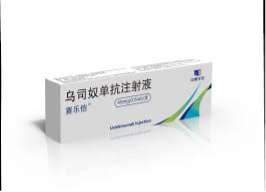 From May 21st to 22nd, 2026, the National Medical Products Administration (NMPA) issued a series of major drug approvals, with biosimilars of ustekinumab from three major domestic pharmaceutical companies—Huadong Medicine, Bio-Thera Solutions, and CSPC Pharmaceutical Group—receiving approval for marketing in quick succession , creating an unprecedented surge in approvals in the domestic autoimmune biologics field. Specifically, Huadong Medicine and Bio-Thera Solutions simultaneously obtained approval for Crohn's disease indications on May 21st, both for intravenous infusion and subcutaneous injection formulations; while CSPC Pharmaceutical Group's Enyike® officially received approval for plaque psoriasis indications on May 22nd.
This round of approvals completely ends the six-year monopoly of the original Johnson & Johnson Stardenafil®, significantly expands the range of autoimmune disease treatment options in China, and brings more affordable and higher-quality domestic treatment options to millions of patients with psoriasis and inflammatory bowel disease in China.
The urgent need of millions of patients: a huge gap in the treatment of autoimmune diseases
Crohn's disease is a chronic, disabling inflammatory bowel disease with complex causes and a protracted course that can affect the entire digestive tract. It easily leads to serious complications such as spasmodic abdominal pain, recurrent diarrhea, perianal fistulas, abdominal abscesses, and intestinal obstruction. Long-term, persistent illness also carries the risk of cancer, earning it the clinical name "green cancer," severely damaging patients' physical and mental health and quality of life.
In recent years, the incidence of Crohn's disease in China has been rising continuously, with a significant trend of younger onset. Publicly available clinical data shows that the annual incidence of Crohn's disease in urban areas of China is approximately 0.71 per 100,000, with the highest incidence concentrated in young adults aged 25-34 . These patients, who are in the prime of their working and life years, suffer from the disease year-round and face multiple pressures related to social life, employment, and other aspects of life, highlighting the urgent unmet clinical needs.
Traditional clinical treatments often rely on glucocorticoids and conventional immunosuppressants, which generally suffer from drawbacks such as significant side effects, low symptom relief rates, and a high recurrence rate. With the advancement of biologics technology, the treatment landscape for Crohn's disease is undergoing a revolutionary transformation. The "Chinese Guidelines for the Diagnosis and Treatment of Crohn's Disease (2023 Edition)" explicitly includes ustekinumab in the core treatment regimen for patients with moderate to severe active Crohn's disease, suitable for disease induction and long-term maintenance therapy, especially for patients with anal fistulas or those at high risk of postoperative recurrence. Clinical studies have confirmed that early intervention with ustekinumab within two years of diagnosis can significantly improve mucosal healing rates and reduce the risk of long-term recurrence .
Psoriasis: A prevalent chronic autoimmune disease that plagues millions of patients.
Plaque psoriasis is the most common chronic inflammatory autoimmune skin disease in clinical practice, with a large patient base in China, totaling approximately 6.5 million, of which nearly 30% are moderate to severe. This disease not only causes cosmetic damage such as skin lesions, itching, and scaling, but is also prone to systemic complications such as psoriatic arthritis and metabolic syndrome, seriously affecting patients' physical and mental health and daily life.
With its core advantages of long-acting, safe, and well-tolerated efficacy, ustekinumab has become the preferred first-line biologic for moderate to severe plaque psoriasis. Its long-acting dosing regimen, administered every 12 weeks, significantly simplifies the treatment process and improves long-term patient adherence. Previously, the domestic market was monopolized by the original manufacturer, Johnson & Johnson's Sterilo®. Although this drug has been included in the National Reimbursement Drug List, many patients still cannot receive standardized biologic therapy due to issues such as drug accessibility and financial burden.
Three-way battle: Domestically produced Ustekinin monoclonal antibody each displays its unique strengths
Ustekinumab is a fully human monoclonal antibody targeting the p40 subunit shared by IL-12 and IL-23. It can precisely block the signal transduction of these two core inflammatory factors, inhibiting the body's inflammatory cascade response at its source, and achieving highly effective anti-inflammatory and stable disease control. The three domestically produced products approved this time were all developed strictly according to biosimilar drug development standards, and are highly consistent with the original drug, Steno®, in terms of quality attributes, pharmacokinetics, clinical efficacy, and safety. At the same time, each product has distinct differentiated advantages, opening a new competitive landscape for domestic autoimmune drugs.
Huadong Medicine's Celexin®/Celenin®: China's First Ustekinumab Achieves Another Success
Developed jointly by Huadong Medicine and Quanxin Biotechnology, and exclusively commercialized by Huadong Medicine, Celexin® (subcutaneous injection)/Celexin® (intravenous infusion) are the first ustekinumab biosimilars to be successfully approved in China. The product pipeline is being developed systematically; in October 2024, it was approved for the indication of moderate to severe plaque psoriasis in adults, and in March 2025, the indication was expanded to include plaque psoriasis in children. The successful approval for Crohn's disease makes it the domestically produced ustekinumab formulation with the most comprehensive indication coverage in China .
In August 2020, the two parties reached a cooperation agreement for the development and commercialization of the product in mainland China. Leveraging Huadong Medicine's years of experience in academic promotion in the autoimmune field, its comprehensive nationwide sales network, and its mature patient lifecycle management system, the product has the core advantages of rapid clinical penetration and grassroots implementation, and has ample market growth potential.
Bio-Thera Solutions®/Xisali®: Internationally approved products approved globally.
Bio- Thera Solutions Aisali® (subcutaneous injection)/Xisali® (intravenous infusion) are benchmark products among domestically produced ustekinumab with strong international competitiveness. This product has successively obtained approvals from major global pharmaceutical markets: FDA approval in the US in May 2025, EMA approval in the EU in August 2025, and MHRA approval in the UK in February 2026. With this domestic approval, it officially becomes the world's first ustekinumab biosimilar to achieve simultaneous launch in China, the US, Europe, and the UK , demonstrating China's global R&D and manufacturing capabilities in biopharmaceuticals.
The product has a more comprehensive range of approved indications overseas, covering four major areas: moderate to severe plaque psoriasis, active psoriatic arthritis, moderate to severe active Crohn's disease, and moderate to severe active ulcerative colitis. This successful approval in China marks Bio-Thera's fifth drug launched in the country and further solidifies the company's leading position in the autoimmune disease sector among domestic manufacturers.
Shijiazhuang Pharmaceutical Group Enyike®: Backed by strong academic expertise, with internationally competitive quality standards.
Shijiazhuang Pharmaceutical Group's Enyike® was officially approved for marketing on May 22, 2026. The approved indications cover plaque psoriasis in adults and children and adolescents, precisely matching unmet clinical needs: for adult patients with moderate to severe plaque psoriasis who have insufficient response to systemic therapy such as cyclosporine and methotrexate or PUVA phototherapy, or who have contraindications or cannot tolerate it, as well as for children and adolescents aged 6 years and older with moderate to severe plaque psoriasis weighing 60-100 kg.
This product strictly adheres to domestic and international guidelines for biosimilar drug development, having completed comprehensive pharmaceutical, non-clinical comparative, and head-to-head clinical studies, fully validating its high degree of consistency with the original drug. Its core clinical efficacy and safety findings have been successfully published in the top dermatology journal, the *Journal of the American Academy of Dermatology*, gaining recognition from an internationally authoritative academic platform and fully endorsing the product's quality and clinical value.
The dual-dose formulation works synergistically to achieve precise treatment throughout the entire course of the disease.
The ustekinumab approved by Huadong Medicine and Bio-Thera Solutions this time both adopt a dual dosage form of "intravenous infusion + subcutaneous injection," precisely matching the clinical diagnosis and treatment needs throughout the entire course of Crohn's disease and filling the gap in dosage forms for domestically produced drugs.
Intravenous infusion formulation : It has a rapid onset of action and can quickly suppress the cytokine storm in patients with moderate to severe active disease. It is suitable for inducing remission in the acute phase of the disease and quickly controlling severe symptoms. Subcutaneous injection formulation : It is convenient to administer and simple to operate. Patients can administer the medication at home, which greatly improves the adherence to long-term maintenance therapy and meets the needs of patients for long-term chronic disease management.
The dual-dose combination provides full-cycle treatment coverage from rapid inflammation control in the acute phase to long-term maintenance in the stable phase, offering individualized treatment plans for patients with different disease stages and conditions, and completely filling the gap in the field of dual-dose treatment of Crohn's disease with domestically produced ustekinumab.
Industry Value: Accelerating domestic substitution and comprehensively improving drug accessibility
Industry experts analyzed that the simultaneous approval of ustekinumab by three leading domestic pharmaceutical companies is a milestone event in the development of domestic autoimmune biologics, with far-reaching significance for the industry.
First, it completely breaks the monopoly of the original drug. Since its launch in China in 2017, the original ustekinumab has long held a monopoly in the domestic market. The simultaneous entry of three domestically produced drugs will activate healthy competition in the market, effectively reduce overall treatment costs, and make high-quality biologics affordable and accessible to more patients with moderate to severe autoimmune diseases.
Second, it enriches the options for individualized clinical treatment. The three companies' products each have their own differentiated advantages in dosage form, indication coverage, academic positioning, and market channels, which can meet the diverse treatment needs of patients of different ages, disease stages, and conditions, and help to implement precision medicine in clinical practice.
Third, this demonstrates the core strength of domestically produced biopharmaceuticals. Ustekinumab's research and development, production process, and stringent quality control standards make it a high-barrier biosimilar. The simultaneous successful approval of three domestic pharmaceutical companies fully proves that China's biopharmaceutical research, production, and quality control systems have reached international advanced levels, and the process of domestic substitution in the autoimmune field is accelerating across the board.
Industry Thoughts and Discussions
In recent years, the domestic substitution of blockbuster biosimilars in the autoimmune field has continued to accelerate. From adalimumab and tocilizumab to ustekinumab, which has been approved in a cluster this time, domestic pharmaceutical companies have continuously broken through technical barriers and launched high-quality and highly accessible biosimilars, which have significantly reduced the treatment burden of domestic autoimmune patients and continuously optimized the diagnosis and treatment pattern of autoimmune diseases in China.
At the same time, there are still many unmet clinical needs in the domestic autoimmune drug market. Currently, domestically produced drugs are mainly biosimilars, while original innovative drugs with independent intellectual property rights are relatively scarce. Moving from "generic drug substitution" to "original innovation breakthroughs" remains the core long-term development direction for domestic autoimmune drug companies.
Regarding this momentous industry event of the simultaneous approval of three domestically produced ustekinumab products, we welcome pharmaceutical colleagues, industry researchers, and clinical practitioners to leave comments and discuss:
With Huadong Medicine, Bio-Thera Solutions, and CSPC Pharmaceutical Group competing in the same arena, who do you think will ultimately prevail in the ustekinumab market competition?
What profound impact will the simultaneous launch of two dosage forms have on clinical treatment practices?
What do you think will be the next blockbuster autoimmune drug to achieve full domestic substitution?
https://mp.weixin.qq.com/s/FktYIq-zFkZsfqWjd0gKYQ
By editor
Copyright©2026 Ddu. All rights reserved.
Read more on
- Five innovative drugs approved for marketing September 11, 2026
- Subsidiary’s novel coronavirus mRNA vaccine receives drug registration certificate September 11, 2026
- Lincomycin Hydrochloride Injection passes generic drug consistency evaluation September 11, 2026
- CSPC Pharmaceutical Group’s innovative chemical drug SYH2083 eye drops approved for clinical trials in China September 11, 2026
- Novel influenza virus mRNA vaccine approved for clinical trials September 11, 2026
your submission has already been received.
OK
Subscribe
Please enter a valid Email address!
Submit
The most relevant industry news & insight will be sent to you every two weeks.