
The Two Sides of RMC-6236
May 12, 2026
Source: drugdu
 170
170
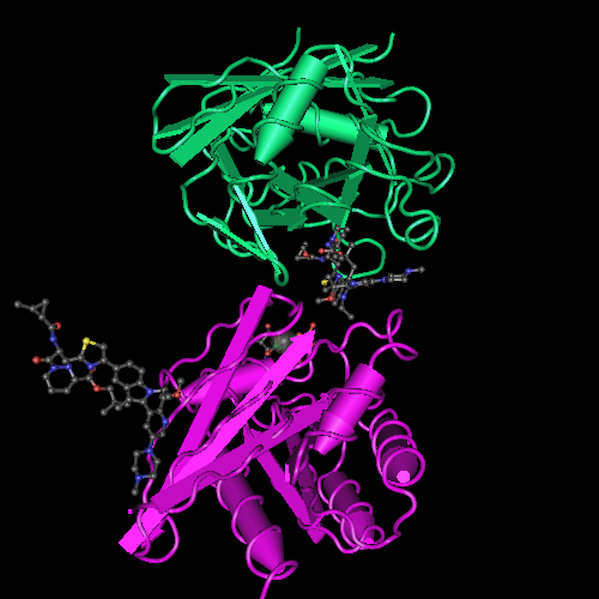
Following Revolution's announcement on April 13th of positive results from the Phase III clinical trial RASolute302 of its pan-RAS inhibitor RMC-6236 in previously treated metastatic pancreatic cancer patients, the drug has now announced the latest research progress in first-line treatment.
In terms of efficacy, RMC-6236 continues to surprise the market, demonstrating impressive remission rates whether used as a monotherapy or in combination therapy, and bringing new expectations to the industry.
However, the potential toxicity of RMC-6236 continues to emerge. In particular, in the RMC-GI-102 study of first-line combination chemotherapy, grade ≥3 adverse reactions accounted for as high as 73%.
Currently, the impact of this safety hazard on the subsequent R&D layout of RMC-6236 is still unclear, but it has pointed out a clear direction for differentiated breakthroughs for subsequent competitors in the same field.
01
The Two Sides of RMC-6236
RMC-6236 is a two-sided unit.
In terms of efficacy, it continues to make history and performs exceptionally well as a first-line treatment.
In monotherapy, RMC-6236 was used in 38 patients with systemic cancer who had not received systemic therapy, achieving an objective response rate (ORR) of 47% and a disease control rate of 92%. Although final survival data are not yet mature, the six-month survival rate is estimated to be 83%.
The combined GnP chemotherapy regimen further improved the objective response rate to 58%.
The above data is undoubtedly revolutionary. Currently, the mainstream first-line standard chemotherapy regimens have a response rate of only 23% to 43%, and a six-month progression-free survival rate of approximately 40% to 50%.
However, behind its excellent efficacy, safety is also a significant weakness. Past clinical data show that RMC-6236 has a relatively high incidence of grade 3 rash (grade 3 rash refers to papules and pustules covering more than 30% of the body surface area, accompanied by severe itching, pain and burning sensation, which seriously impairs the patient's ability to take care of themselves, and daily activities such as bathing, dressing, eating and toileting are significantly restricted).
This problem remains unavoidable in first-line treatment. In the monotherapy group, 38% (n=15) of patients experienced ≥ grade 3 treatment-related adverse events (TRAEs); rash, diarrhea, and stomatitis were common ≥ grade 3 adverse events with an incidence of over 10%.
Under combined chemotherapy regimens, toxic reactions are further amplified, with grade ≥3 TRAEs accounting for as high as 73%, and hematologic toxicity and gastrointestinal adverse reactions are very common.
Although the overall discontinuation rate is relatively well controlled, this safety issue remains a core concern for its future clinical application. Former Republican Senator Ben Sass recently spoke publicly about the drug's safety, stating that he experienced serious adverse reactions such as petechiae and blistering on his skin after using it.
Excessive toxic side effects may also be a significant "side effect" on the promotion of the drug itself.
02
Potential breakthrough point
The toxicity of RMC-6236 may be closely related to its development path.
RAS proteins comprise three family members: KRAS, HRAS, and NRAS. RMC-6236 targets RAS and indiscriminately inhibits KRAS, HRAS, and NRAS. Because of this, the drug interferes with healthy cells expressing HRAS and NRAS in normal tissues, leading to stronger toxic side effects.
In contrast, JAB-23E73 is a pan-KRAS inhibitor that has demonstrated superior safety potential in early clinical trials, with no dose-limiting toxicities or severe skin toxicities observed. During the dose escalation phase, the incidence of skin toxicity was only 10%, and all were grade 1 mild reactions.
Erasca, a US-listed pharmaceutical company, has developed ERAS-0015, a molecular gel drug, which is considered a potential game-changer in the field. Its effective dose is significantly lower than RMC-6236, indicating significantly stronger anti-tumor activity. Based on impressive early clinical data, Erasca has achieved a market capitalization of over $5 billion.
Erasca's diversified pipeline further validates this R&D logic. While developing potential BIC-grade RAS molecular adhesives, the company is also developing a pan-KRAS inhibitor, ERAS-4001. Phase I monotherapy data from the BOREALIS-1 trial is expected to be released in the second half of 2026, and the company plans to initiate monotherapy expansion cohort and combination therapy dose escalation cohort studies in 2027.
Of course, whether pan-KRAS inhibitors can achieve better safety still depends on superior molecular design. In the future, the competition surrounding safety will continue to be fierce.
03
Who would be better for me?
The holy grail of biomedical innovation always belongs to the pioneers, which explains the core logic behind Revolution's market value exceeding 100 billion.
Essentially, this is the capital market's ultimate bet on a super-large target: pan-(K)RAS inhibitors are the next generation of highly promising blockbuster track after PD-1, and Revolution is currently the fastest-growing company.
However, looking back at the history of the industry, in the great era of technological innovation, being "first" alone is often far from enough. The first-mover advantage of FIC (first in its class) can easily be quickly wiped out by subsequent BIC (best in its class) products. Such industry cases are common.
The third-generation EGFR inhibitor osimertinib replaced gefitinib, pushing targeted therapy for lung cancer to new heights; the third-generation ADC drug Enhertu, with its breakthrough efficacy, overshadowed second-generation HER2 ADC products; Legend Biotech's BCMA CAR-T chemiluminide olensola, as the world's second marketed product, has surpassed its predecessor Abecma with its extremely high response rate. Looking at global pharmaceutical companies, Eli Lilly's market capitalization has firmly established itself at a trillion-dollar scale, its core logic also relying on a strategy of iterating on numerous "me-better" drugs.
Currently, the RAS (Regenerative Pharmaceuticals) sector has attracted a large number of strong players. Domestically, there are leading companies that have been deeply involved in the small molecule field, such as Genuine Pharmaceuticals, Jacobio, and Heyu Pharmaceuticals, as well as AI pharmaceutical giants like Insil Intelligence entering the market from other sectors.
In the future, the debate surrounding me-better drugs targeting RAS will inevitably become increasingly fierce and full of interesting developments.
https://news.yaozh.com/archive/48015.html
By editor
Copyright©2026 Ddu. All rights reserved.
Read more on
- Five innovative drugs approved for marketing September 11, 2026
- Subsidiary’s novel coronavirus mRNA vaccine receives drug registration certificate September 11, 2026
- Lincomycin Hydrochloride Injection passes generic drug consistency evaluation September 11, 2026
- CSPC Pharmaceutical Group’s innovative chemical drug SYH2083 eye drops approved for clinical trials in China September 11, 2026
- Novel influenza virus mRNA vaccine approved for clinical trials September 11, 2026
your submission has already been received.
OK
Subscribe
Please enter a valid Email address!
Submit
The most relevant industry news & insight will be sent to you every two weeks.