
The world’s first biased GLP-1RA officially enters commercialization.
April 28, 2026
Source: drugdu
 222
222

Today, the world's first approved cAMP-biased GLP-1 receptor agonist, enoglutide injection (Xianweiying® ) , was simultaneously issued as the first batch of prescriptions nationwide at Peking University People's Hospital and Zhongshan Hospital affiliated with Fudan University, marking the official entry of this innovative weight management therapy into the clinical application stage in China.
Currently, there are two routes for the innovative development of GLP-1 receptor agonists. The traditional route uses GLP-1 as the core target, combined with other targets such as GIP and GCG. The biased signaling mechanism of enoglutin originates from the Nobel Prize-winning research on the structure and function of G protein-coupled receptors (GPCRs). The clinical use of enoglutin reflects a shift in weight management clinical practice from simply focusing on the rate of weight loss to a comprehensive consideration of tolerability, sustainability, and the overall patient experience.
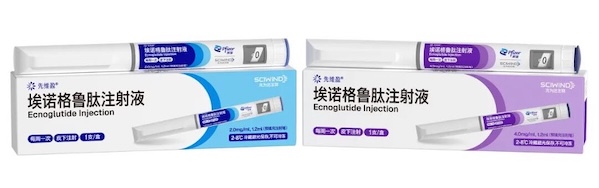 Addressing the Challenges of Long-Term Weight Management
In recent years, the proportion of overweight and obese people in China has continued to rise, and it is estimated that by 2030, the combined prevalence of overweight and obesity in adults will reach 65.3%<sup> 1</sup> . Many patients are seeking an effective and durable therapy with fewer adverse reactions, hoping to integrate it into their daily lives, facilitate healthy long-term weight loss, and improve obesity-related metabolic health. Although existing GLP-1RA drugs have filled some unmet medical needs in clinical weight loss treatment, gastrointestinal adverse reactions and weight loss plateaus remain key challenges affecting long-term adherence and ultimate efficacy for many patients.
Professor Ji Linong, Director of the Department of Endocrinology at Peking University People's Hospital, issued one of the first prescriptions for enoglutide in China.
At Peking University People's Hospital, Professor Ji Linong, the principal investigator of the enoglutide weight loss indication study and director of the Department of Endocrinology, issued the first prescription for enoglutide in China. Professor Ji pointed out, "Although many weight loss drugs are currently used for weight management, poor drug tolerance is a major reason why many patients cannot adhere to long-term medication. In the Phase III clinical trial of enoglutide, only a small percentage of patients withdrew from the study due to intolerance while achieving effective weight loss. This may be related to the biased mechanism of action of enoglutide. Our current research is further validating this pharmacological characteristic of enoglutide."
Additional benefits to improved metabolic health
On the same day, Professor Li Xiaoying, director of the Obesity and Fatty Liver Diagnosis and Treatment Center of Zhongshan Hospital Affiliated to Fudan University, also completed the first local prescription for enoglutide.
Professor Li Xiaoying, Director of the Obesity and Fatty Liver Treatment Center at Zhongshan Hospital Affiliated to Fudan University, issued one of the first prescriptions for enoglutide in China.
Professor Li Xiaoying stated, "Obesity is by no means an isolated disease; it is closely related to metabolic diseases such as type 2 diabetes, fatty liver, and hyperuricemia. Current clinical treatment is shifting from simply focusing on 'weight loss' to a broader improvement in 'overall metabolic health.' Clinical studies have shown that enoglulide not only demonstrates benefits in improving blood pressure, blood lipids, and uric acid in addition to weight loss. Clinically significant reductions in liver fat content were also observed in subjects with baseline fatty liver."
Accelerating the translation of innovative findings into clinical practice
Enoglulide was officially approved in China on March 6, 2026, for long-term weight management in overweight/obese adults, based on diet control and increased physical activity. Its approval is based on the SLIMMER study—the largest Phase III clinical trial of weight management conducted to date in the Chinese population.
Results from the SLIMMER study showed that at 48 weeks of treatment, subjects experienced a 15.4% decrease in average weight from baseline, with 92.8% achieving a weight loss exceeding 5%. Only 0.6% of subjects discontinued treatment due to gastrointestinal adverse events. Patients experienced sustained weight loss throughout the treatment period without a significant plateau. The study also observed a significant reduction in waist circumference; patients in the enogludine 2.4 mg group experienced a mean reduction of 12.8 cm in waist circumference, and subjects with baseline fatty liver experienced a mean reduction of 53.1% in liver fat content. Furthermore, uric acid levels decreased by a mean of 54.3 μmol/ L .
Following Beijing and Shanghai, Senviwin® is being deployed in clinical use in many other parts of China, helping a wider range of Chinese patients access evidence-based weight loss treatment.
References:
1. National Technical Guidelines for Comprehensive Management of Obesity at the Grassroots Level (2025)
2 Ji L, et al. Lancet Diabetes Endocrinol. 2025 Sep;13(9):777-789
https://bydrug.pharmcube.com/news/detail/b5d6bd983ec359659aacb1fdd5b9ce4b
By editor
Copyright©2026 Ddu. All rights reserved.
Read more on
- CPHI Milan 2026 Recap | What Did Drugdu.com Bring Back from Milan? October 9, 2026
- Novo Nordisk and Nanexa Ink Up to €1.165B Long-Acting Delivery Deal for Obesity and Diabetes September 29, 2026
- siRNA Biotech ADARx Raises $446M in 2026’s Third-Largest Biotech IPO September 29, 2026
- Merck and Eisai’s Welireg Plus Lenvima Approved by FDA for Previously Treated Advanced Kidney Cancer September 29, 2026
- Mirum and Incyte’s Atebrioz Wins FDA Approval for Rare Bone Disorder FOP September 29, 2026
your submission has already been received.
OK
Subscribe
Please enter a valid Email address!
Submit
The most relevant industry news & insight will be sent to you every two weeks.