
A market worth hundreds of billions! Where is the next trump card in the cosmetic injection industry?
April 28, 2026
Source: drugdu
 246
246
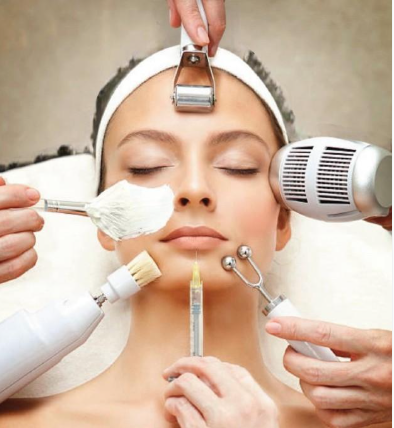 Driven by compliance reforms and stricter regulations, the medical aesthetics device industry is poised for a landmark transformation, with the overall market experiencing a dual surge driven by both consumer upgrades and technological advancements. The market size for injectable medical aesthetics products is projected to grow from 67 billion yuan in 2023 to 147 billion yuan in 2027, maintaining a high compound annual growth rate. However, within this multi-billion yuan market, the four main materials exhibit distinct competitive landscapes.
This report, compiled by Yaozhi Medical Device Data based on data from multiple sources, systematically describes the size, growth rate, and structural evolution of the medical aesthetic injection product market, the competitive landscape of the four major materials, demand changes, and behavioral analysis. It aims to provide industry participants with data insights and trend analysis to assist in strategic decision-making and resource optimization.
01
Product Overview
Injectable cosmetic products primarily achieve minimally invasive cosmetic effects through injection and are the core growth engine of the minimally invasive cosmetic market. According to the classification of the National Medical Products Administration, most of these products belong to Class III medical devices, which are subject to strict regulation .
02
Scale, Growth Rate and Structural Evolution
1
China's Injectable Aesthetic Medicine Market Size and Forecast
Starting at 25.7 billion yuan in 2018, the market size jumped to 67 billion yuan in 2023, representing a compound annual growth rate of 21.1% over the five years. Notably, even against the backdrop of macroeconomic pressure, the medical aesthetic injection market has demonstrated strong growth resilience. By 2027, this market size is projected to further expand to 147 billion yuan , more than doubling from its 2023 level.
Behind this growth curve is the superposition of three driving forces: first, consumption upgrading has made the demand for beauty more commonplace; second, the process of compliance has accelerated the transformation of the informal market; and third, the continuous iteration of new materials and technologies has expanded the applicable population.
2
Evolution of the structure of the light medical aesthetics market
The number of users in China's light medical aesthetics market continues to grow, reaching 23.54 million in 2023 and is expected to reach 31.05 million by 2025. From 2021 to 2025, the size of China's medical aesthetics market will jump from 227.4 billion yuan to 364 billion yuan , with light medical aesthetics accounting for 53.3%.
The growth rate of users of minimally invasive cosmetic procedures is significantly faster than the overall consumer population, indicating a rapid increase in market penetration and a continued rise in consumer acceptance of non-surgical cosmetic procedures. In four years, the total size of the cosmetic surgery market has grown by over 60% , maintaining an annualized growth rate in double digits, making it a high-growth sector. Minimally invasive cosmetic procedures are growing faster than surgical cosmetic procedures, and their market share has exceeded half, becoming the main driver of growth in the cosmetic surgery industry.
3
Regional market structure
The demand for cosmetic medical services is showing a significant regional diffusion trend , gradually extending and penetrating from traditional first-tier core consumption centers such as Shanghai and Beijing to emerging first- and second-tier cities such as Chengdu, Chongqing, and Hangzhou. These emerging cities not only have relatively lower living costs and housing pressures, but also maintain a considerable level of average disposable income for their residents. This combination of economic environment and consumption power is increasingly becoming an important new driving force and active growth pole for the continued growth of the entire cosmetic medical service market.
03
Competitive Landscape of the Four Major Materials
Technical map of injectable products
First, there's hyaluronic acid . As a mature market segment, leading companies include Bloomage Biotech, Haohai Biotech, Imeik, and Allergan's Juvederm. It provides physical filler with significant and immediate results. However, this market is extremely competitive, and leading companies face considerable pressure on their performance.
Subsequently, the botulinum toxin market shifted from a "two-horse race" to an "eight-way battle." As of early 2026, seven compliant products had been approved in China, with a clear price range: Botox and Gelex were positioned in the high-end market (3,800-4,500 yuan), Letibao was in the mid-range price range (about 2,680 yuan), and Hengli targeted the lower-tier market (about 1,000 yuan).
The recycled materials sector has experienced rapid growth in recent years, with a flurry of new product approvals, including poly-L-lactic acid and polycaprolactone. In January 2026, Yizhen Biotechnology obtained the world's first "Youthful Face Injection" for temporal region indications, filling a gap in the field of precision anti-aging. In the collagen field, domestic brands are gradually emerging. As of March 2026, 17 Class III medical device collagen implants have been approved in China. Jinbo Biotechnology and Giant Biotechnology are leaders in recombinant collagen technology, while Aibairui, relying on Bairen Medical, has achieved a clinical improvement rate of 84.23% for its collagen injection.
Botulinum toxin – A Duopoly and Recombinant Technology
International brands Botox and Gelex hold a 60% market share in the botulinum toxin market, while domestic brands Hengli and Letibao account for approximately 38%. Natural botulinum toxin has wide applications but carries the risk of impurities; recombinant botulinum toxin boasts high purity and customizability, and is expected to penetrate the medical aesthetics market in the future, although natural products will likely dominate in the short term. In the long term, both may coexist, and technological advancements and cost optimization will determine whether recombinant botulinum toxin can disrupt the market.
Recycled materials – explosive growth
The variety of regenerative materials in the medical aesthetics field is quite extensive. In the past two years, the market focus has been mainly on two major categories: polylactic acid (PLA) and polycaprolactone (PCL). A series of regenerative injections, represented by "baby face injections" and "youth injections," have added a richer variety to the medical aesthetics market and brought about a higher growth rate, making it a "must-win" area for major manufacturers entering the regenerative field.
Secondly, hydroxyapatite (CaHA), a naturally occurring material in the human body, is widely used in bone repair. Its relatively firm support is expected to drive it to gain a significant market share in future filler applications such as rhinoplasty and chin augmentation.
Collagen – The Rise of Domestic Brands
Collagen, a naturally occurring component of the human body, is of great significance in the field of medical aesthetics, much like hyaluronic acid. Currently, the market for Class II collagen injection devices is highly competitive; however, due to limitations in end-user technology, the market for Class III injection devices remains relatively untapped. With the increase in the number of Class III device approvals by 2025, competition in the collagen injection market will gradually intensify, and the market landscape is expected to undergo significant changes. Due to immature end-user technology and unresolved cost challenges, collagen injections have a relatively low penetration rate in the medical aesthetics field compared to markets like hyaluronic acid. However, given its natural properties and compatibility with the human body, it may occupy a significant market share in the mesotherapy sector until technological breakthroughs are achieved.
04
Demand Changes and Behavioral Analysis
1
Basic profile of cosmetic surgery consumers
The average age of consumers is around 35. This age group has more stable economic conditions and higher requirements for personal image management. Notably, over 72% of high-end consumers are over 30 years old. This group has mature and stable consumption concepts, strong purchasing power, and pays more attention to the quality, safety, and effectiveness of cosmetic procedures. The male market is emerging as a new blue ocean, contributing 53.65% of market growth in 2025.
2
Changes in consumer aesthetics and behavior
Allergan Aesthetics' "Global Hyaluronic Acid Application Future Trends Report" released at the summit shows that 78% of medical aesthetics seekers highly agree with the view that "people pursue more natural medical aesthetic results," and 91% of Generation Z and young millennial consumers believe that "beauty that is more natural" is of paramount importance.
In the medical aesthetics market, some consumers concentrate their annual spending on specific procedures. More than half of these consumers spend between 10,000 and 50,000 yuan annually. This spending range covers basic skincare, minimally invasive procedures, and moderately complex cosmetic surgeries, demonstrating the diverse and multifaceted nature of the medical aesthetics market and its ability to meet the needs of consumers with varying budgets.
05
Trend Outlook
1
From "Certificate-Based Benefits" to "In-Depth Technological Development"
Consumables and equipment, as the upstream foundation of the light medical aesthetics industry chain, involve the research and development and manufacturing of injectable fillers, energy devices, and biomaterials. This is a core link in the industry characterized by high barriers to entry and high profit margins. In 2025, a total of 59 Class III injectable medical devices were approved in China, indicating a significant acceleration in product approval. However, the competitive landscape has not become more diversified as a result. On the contrary, given the high registration threshold and long clinical validation cycle, the market continues to concentrate on leading companies with strong R&D and compliance capabilities.
In 2025, the industry ushered in a window of opportunity for intensive product approvals, with injectable products such as hyaluronic acid and collagen successively obtaining Class III medical device registration certificates, injecting new vitality into the market.
The new materials matrix continues to expand.
The approval of novel materials such as agarose, hydroxyapatite, and deoxycholic acid marks the industry's entry into a stage of diversified composition . Meanwhile, the rise of regenerative materials such as poly-L-lactic acid, polycaprolactone, and recombinant humanized collagen signifies a paradigm shift from "filling" to "tissue regeneration."
Restructuring of industrial chain interests
The focus of industry competition is showing three major shifts:
Firstly, the focus has shifted from "license-driven" to "product + scenario-driven ," giving companies that can develop sophisticated solutions based on different ages, skin types, and anti-aging stages a greater competitive advantage.
Secondly, the shift from "single-unit sales" to "treatment course and repeat purchase management" requires integrating the safety and effectiveness of the product with the doctor's skills, post-operative management, and visualization of results to form verifiable results.
Third, the shift from "information asymmetry" to "transparent and comparable" means that consumers can clearly compare the overall value of different brands and institutions, which will lead to more open, transparent, and reasonable pricing.
4
Compliance Deep Waters and Market Purification
China has become the world's second-largest medical aesthetics market; however, compared with other major developed countries in the medical aesthetics industry, China's penetration rate is relatively low. Currently, the penetration rate of China's medical aesthetics market is only 4.5%.
In June 2025, the National Healthcare Security Administration released the "Guidelines for the Establishment of Price Items for Cosmetic and Plastic Surgery Medical Services" for the first time, which standardized and unified the naming of projects such as IPL skin rejuvenation and Thermage, aiming to guide medical institutions to set reasonable prices and create a more transparent market environment.
https://news.yaozh.com/archive/47909.html
By editor
Copyright©2026 Ddu. All rights reserved.
Read more on
- CPHI Milan 2026 Recap | What Did Drugdu.com Bring Back from Milan? October 9, 2026
- Novo Nordisk and Nanexa Ink Up to €1.165B Long-Acting Delivery Deal for Obesity and Diabetes September 29, 2026
- siRNA Biotech ADARx Raises $446M in 2026’s Third-Largest Biotech IPO September 29, 2026
- Merck and Eisai’s Welireg Plus Lenvima Approved by FDA for Previously Treated Advanced Kidney Cancer September 29, 2026
- Mirum and Incyte’s Atebrioz Wins FDA Approval for Rare Bone Disorder FOP September 29, 2026
your submission has already been received.
OK
Subscribe
Please enter a valid Email address!
Submit
The most relevant industry news & insight will be sent to you every two weeks.