
India’s Generic Giant Secures Semaglutide Nod; Local GLP-1 Market Hits $1.2 Billion
January 26, 2026
Source: drugdu
 220
220
As the March 2026 patent cliff approaches, the fiercest battle in the global GLP-1 market is quietly taking shape in India. Over the past three years, few sectors in the global pharmaceutical industry have sustained such wealth myths as GLP-1 weight-loss and diabetes drugs; from Europe and the U.S. to Asia, semaglutide has rapidly evolved from a prescription medicine into a social issue, while beneath this wave India—known as the “world’s pharmacy”—is brewing a systemic shock powerful enough to rewrite the pricing structure. According to the latest court developments, with Novo Nordisk’s core patents entering their final countdown, major Indian generic drugmakers are fully in place, and a multi-billion-dollar battle for dominance in the GLP-1 market is waiting only for the starting gun.
All attention is focused on a clear date: March 20, 2026, which is when a key semaglutide patent expires in India and is also seen as the starting point of a structural shift in the country’s GLP-1 market. Currently, a division bench of an Indian court is hearing a major lawsuit related to semaglutide, and this ruling is widely viewed as an industry bellwether whose outcome will directly determine whether Novo Nordisk can continue to maintain its de facto market monopoly before the patent expires. The impact of this decision is not limited to a single case, as multiple Indian pharmaceutical companies including Natco have already completed preparations in terms of technology, production capacity, and regulatory filings, and are waiting only for the final green light from the judiciary and patent authorities.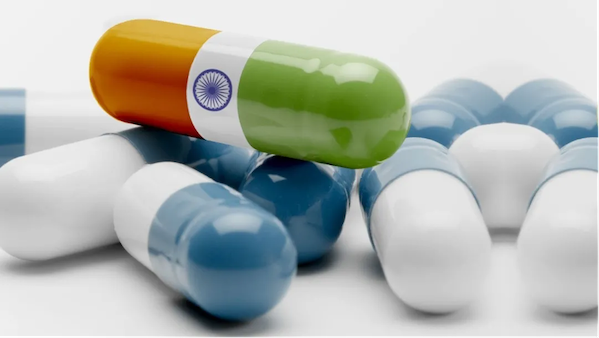 Picture 1: from the Wechat Public Account “The GLP-1 Weight Loss Bible”
Although more than a year remains until the official patent expiration, the pace of advancement among Indian pharmaceutical companies has clearly accelerated. According to multiple sources, Sun Pharma, Dr. Reddy’s Laboratories, and Alkem Laboratories have taken the lead in obtaining relevant approvals from India’s drug regulatory authority to market semaglutide formulations in the country. This means that for these companies, major hurdles spanning R&D, process validation, and regulatory compliance have largely been cleared; the only remaining constraint is the still-valid patent document itself. From an industry perspective, this amounts to a state of near-readiness for launch, with commercial scaling expected to happen within a very short timeframe once the legal barrier is removed.
The urgency of the generic drugmakers stems from the explosive expansion currently underway in India’s GLP-1 market. Data platform Pharmarack shows that the size of India’s GLP-1 segment has grown from approximately 1.86 billion rupees in November 2022 to over 10 billion rupees by November 2025, representing a more than fivefold increase in just three years. More importantly, this growth is widely believed to be far from reaching its ceiling. India has one of the world’s largest diabetic populations, alongside a worsening obesity crisis, yet high prices of originator drugs have long limited market penetration. Once the pricing structure loosens, the elasticity of demand is expected to be significantly higher than in Western markets.
As the patent countdown enters its final phase, originator companies are not sitting idly by. Eli Lilly’s tirzepatide (Mounjaro) has already taken a leading position in India’s GLP-1 market, continuing to gain volume based on its multi-target mechanism and superior clinical data. Meanwhile, Novo Nordisk is attempting to extend its influence through proactive price cuts and brand expansion. Recently, Novo Nordisk officially launched Ozempic in India, further introducing semaglutide into the type 2 diabetes treatment market—a move seen as crucial to maximizing brand value before the patent expires.
At its core, this is a battle of time and speed. On one side, originator companies are using legal means, price adjustments, and product line expansions to build moats during the final window of patent protection. On the other side, the Indian generic drug contingent, led by Sun Pharma, already holds approvals, production capacity, and distribution channels, waiting only for the final gate to open. The court is expected to issue its final ruling before the patent expires. Regardless of the outcome, 2026 is highly likely to be a pivotal year when the pricing system for GLP-1 drugs fractures. For Indian patients, this could mean the end of the era of prolonged high prices for weight-loss and diabetes medications, while for the global market, the shockwaves from this battle are likely to extend well beyond India’s borders.
By editor
Copyright©2026 Ddu. All rights reserved.
Read more on
- The snoring of 1 billion people can finally be cured! The FDA has accepted the marketing application for a new oral drug for obstructive sleep apnea. September 3, 2026
- Biosimilar Export Accelerates! Jianyou’s Adalimumab Receives FDA Approval for Additional Manufacturing Site | Overseas Expansion News September 3, 2026
- Beyond Glycemic Control! Lilly’s Tirzepatide Receives FDA Approval for Cardiovascular Risk Reduction | Approval Alert September 3, 2026
- First New Therapy in Nearly 30 Years! FDA Approves Besremi for Essential Thrombocythemia | Approval Alert September 3, 2026
- Filling Domestic Gap! Hengrui’s First Long-Acting Insulin Ruihengying® Launches Online on Sept 1 | Industry News September 3, 2026
your submission has already been received.
OK
Subscribe
Please enter a valid Email address!
Submit
The most relevant industry news & insight will be sent to you every two weeks.