
Novel Vaccine Strategy Offers Protection Against Deadly Filovirus Infections
December 23, 2025
Source: drugdu
 190
190
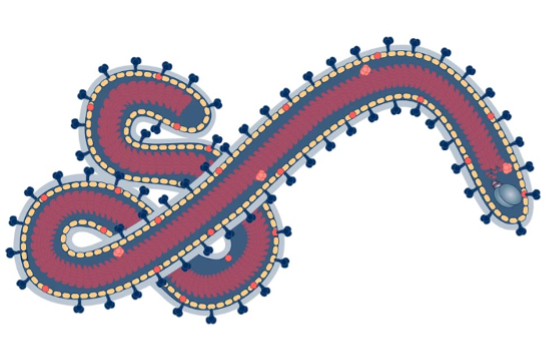
A team from the Scripps Research Institute, a top U.S. biomedical research institution, has transformed nanoparticles into viral "display boxes," developing a novel vaccine strategy to protect against multiple deadly filovirus infections. In their latest study published in Nature Communications, the team reported that this new vaccine displays filovirus surface proteins on engineered self-assembling protein nanoparticles, enabling the immune system to more effectively recognize and respond to the virus. Experiments showed that it can induce a potent antibody response against multiple viruses, offering a new pathway for developing broader and more effective protective strategies.
The filovirus family includes several highly pathogenic viruses, such as Ebola virus, Sudan virus, Bundibugyo virus, and Marburg virus. Although two Ebola vaccines have been approved, there is currently no vaccine capable of providing broad protection against the entire filovirus family. A key reason for their lethality is the structural instability of their surface proteins, which not only makes it difficult for the human immune system to recognize them but also poses challenges for vaccine and therapeutic development.
Over the past decade, the research team has focused on applying physics-based methods for protein design, aiming to establish a universal vaccine design blueprint for each major virus family to enable rapid responses during new viral outbreaks. This time, they used a "structure-based rational design" approach to meticulously study the viral surface glycoproteins and created stabilized, structurally regular versions. These glycoproteins are critical for viral entry into host cells and serve as primary targets for the immune system. The team assembled them onto the surface of virus-like protein nanoparticles, forming particles that mimic viral structures—essentially creating viral "display boxes" that effectively stimulate immune responses.
Experiments confirmed that these nanoparticles can induce broad neutralizing antibody responses in mice. By further modifying glycosylation sites, the team successfully "displayed" conserved regions on the viral surface, laying the foundation for developing broader or even universal filovirus vaccines.
Currently, the team is extending this strategy to other high-risk pathogens such as Lassa virus and Nipah virus and is working to overcome the viral glycan barrier, enabling the immune system to more effectively attack key viral sites. Team members noted that even stabilizing antigens in an ideal state addresses only about 60% of the challenge. The dense glycan layer on the surfaces of many viruses remains a major obstacle. Breaking through this "invisibility cloak" is the next critical focus of their research.
reference:https://finance.eastmoney.com/a/202512223597695645.html
Copyright©2026 Ddu. All rights reserved.
Read more on
- Novo Nordisk and Nanexa Ink Up to €1.165B Long-Acting Delivery Deal for Obesity and Diabetes September 29, 2026
- siRNA Biotech ADARx Raises $446M in 2026’s Third-Largest Biotech IPO September 29, 2026
- Merck and Eisai’s Welireg Plus Lenvima Approved by FDA for Previously Treated Advanced Kidney Cancer September 29, 2026
- Mirum and Incyte’s Atebrioz Wins FDA Approval for Rare Bone Disorder FOP September 29, 2026
- J&J in Talks to Sell DePuy Synthes to Apollo September 29, 2026
your submission has already been received.
OK
Subscribe
Please enter a valid Email address!
Submit
The most relevant industry news & insight will be sent to you every two weeks.