
Eding Medicines’ NexGard® showcased 11 Chinese clinical studies at APCN 2025, solidifying its position as a cornerstone of first-line treatment for IgA nephropathy
December 12, 2025
Source: drugdu
 232
232
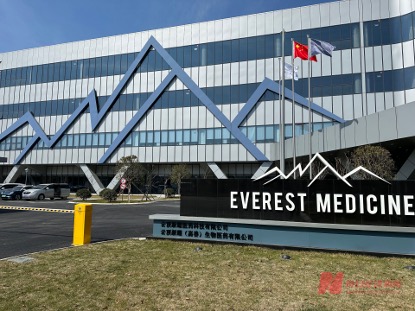 At the 23rd Asia Pacific Nephrology Congress (APCN 2025) recently, Everest Medicines' core product, NEFECON® (budesonide enteric-coated capsules), showcased 11 of the latest clinical research data from several top hospitals in China, providing more evidence-based medical support for the treatment of IgA nephropathy.
IgA nephropathy is a prevalent chronic kidney disease in Asia, with approximately 5 million patients in China and over 120,000 new diagnoses annually. This disease is characterized by high incidence and high progression rates, highlighting the urgent need for precise clinical treatment. Following the inclusion of the world's first etiological treatment drug, Nefucon®, in my country's national medical insurance program, clinicians have gradually shifted their focus from improving proteinuria to protecting kidney function as treatment duration accumulates, aiming to provide important insights for the long-term management of IgA nephropathy patients.
The numerous studies presented at this conference, from different clinical scenarios and long-term treatment perspectives, further enriched the evidence on the efficacy and safety of Nefucon®, solidified its cornerstone status in first-line treatment of IgA nephropathy, and provided important references for clinical application.
Validating the value of etiological treatment in multiple scenarios
In clinical practice, some patients with IgA nephropathy do not respond well to or tolerate traditional treatments and urgently need more effective treatment options. The three combination therapy studies presented at this conference focus on the combination therapy strategy of Nexcom®, providing new etiological treatment options for different clinical scenarios.
A study conducted by the First Affiliated Hospital of Xi'an Jiaotong University on patients with IgA nephropathy who still progressed after optimized supportive care showed that the results confirmed the importance of full-course etiological treatment for protecting renal function. Although supportive care can improve proteinuria, its effect on protecting renal function is limited. It is recommended to combine etiological treatment with supportive care in accordance with guidelines to achieve more ideal disease control.
A case study conducted at the First Affiliated Hospital of Xinjiang Medical University focused on patients with IgA nephropathy who were unresponsive to or intolerant of various conventional treatments. In this study, for patients intolerant to systemic glucocorticoids, the combination of Nefokine® and fenelrenone improved eGFR and reduced proteinuria. Furthermore, during the 9-month treatment period with Nefokine®, no typical adverse events (such as weight gain, edema, poor glycemic/blood pressure control, gastrointestinal discomfort, etc.) were reported, suggesting that Nefokine®'s unique formulation process can reduce the risk of systemic drug exposure while achieving clinical efficacy, providing a safe and effective renal function protection option for patients intolerant to conventional treatments.
A study conducted by the First Affiliated Hospital of Nanchang University explored the efficacy of combined treatment with nifedipine® and hydroxychloroquine. This study provides a new approach to immunotherapy for IgA nephropathy, suggesting that long-term combined use of nifedipine® and hydroxychloroquine can synergistically reduce proteinuria and improve renal function, with good safety profiles, offering more treatment options for IgA nephropathy patients with different baseline renal function levels.
The long-term benefits of treatment have been validated.
To address the uncertainty regarding the efficacy and safety of extended treatment with Nefon® for more than 9 months, Kiang Wu Hospital in Macau conducted a retrospective real-world study. This study included 12 patients with IgA nephropathy who received Nefon® 16 mg/day for 12 months and matched them with 36 patients in a control group who received conventional treatment. The two groups were comparable in terms of baseline age, sex, serum creatinine (Scr), eGFR, and proteinuria levels.
The results showed that the Nexcom® group exhibited significant advantages in proteinuria control, renal function protection, and tolerability. Proteinuria in the Nexcom® group decreased from 1016 mg/d to 114 mg/d, while in the control group it decreased from 1074 mg to 291 mg. The decrease in proteinuria in the Nexcom® group was significantly greater than that in the control group, and the final proteinuria level was significantly lower in the Nexcom® group. Regarding renal function, the annual change slope of eGFR in the Nexcom® group was 5.4 ml/min/1.73 m²/year, showing an upward trend; while in the control group it was -3.4 ml/min/1.73 m²/year, showing a downward trend. In terms of tolerability, no serious infections occurred in the Nexcom® group during treatment, and its tolerability was superior to that of traditional immunosuppressive therapy in the control group.
This study not only provides empirical evidence for the value of etiological treatment in protecting renal function in patients with IgA nephropathy, but also supplements the evidence of Chinese patients receiving budesonide enteric-coated capsules for up to 12 months. It confirms that long-term treatment can further enhance proteinuria control, stabilize and improve renal function, and has a controllable safety profile, supporting the extension of the treatment period to more than 9 months to obtain more durable renal protection benefits.
Clinical value continues to be released
Industry experts believe that the numerous studies presented at APCN 2025 not only validated the core value of Nefucon® in "etiological treatment" but also enriched the clinical evidence for its long-term treatment. This provides new treatment ideas for IgA nephropathy patients in different clinical scenarios and offers evidence-based medical support for the clinical strategy of "etiological treatment, early treatment, and long-term treatment," which is of positive significance for the standardized management of IgA nephropathy.
With its clear efficacy, manageable safety and abundant clinical evidence, Nexcom® has been recommended by both the "2025 KDIGO Clinical Practice Guidelines for the Management of IgA Nephropathy and IgA Vasculitis" and the "Chinese Clinical Practice Guidelines for IgA Nephropathy and IgA Vasculitis in Adults (2025)," making it the only drug for the etiological treatment of IgA nephropathy that has received dual recognition from international and domestic guidelines.
The continuous improvement of clinical evidence has laid a solid foundation for the commercialization of Nexcom®, while the implementation of medical insurance policies has further accelerated its market penetration. As a newly added drug in the National Medical Insurance Catalog in 2024, the medical insurance payment policy for Nexcom® has been implemented since January 1, 2025, effectively releasing clinical demand.
Data shows that the product's cumulative sales revenue from January to September 2025 was nearly 1 billion yuan. Everest Medicines has raised its full-year sales guidance to 1.2-1.4 billion yuan, making it one of the fastest-growing innovative drugs for chronic diseases in recent years. Multiple securities firms predict that the product's sales revenue is expected to reach 2.4-2.6 billion yuan in 2026, with peak sales potentially reaching 5 billion yuan.
https://news.yaozh.com/archive/46454.html
By editor
Copyright©2026 Ddu. All rights reserved.
Read more on
- Novo Nordisk and Nanexa Ink Up to €1.165B Long-Acting Delivery Deal for Obesity and Diabetes September 29, 2026
- siRNA Biotech ADARx Raises $446M in 2026’s Third-Largest Biotech IPO September 29, 2026
- Merck and Eisai’s Welireg Plus Lenvima Approved by FDA for Previously Treated Advanced Kidney Cancer September 29, 2026
- Mirum and Incyte’s Atebrioz Wins FDA Approval for Rare Bone Disorder FOP September 29, 2026
- J&J in Talks to Sell DePuy Synthes to Apollo September 29, 2026
your submission has already been received.
OK
Subscribe
Please enter a valid Email address!
Submit
The most relevant industry news & insight will be sent to you every two weeks.