
More than 3,000 cases confirmed! No specific medicine! Are we ready for Chikungunya virus?
July 25, 2025
Source: drugdu
 306
306
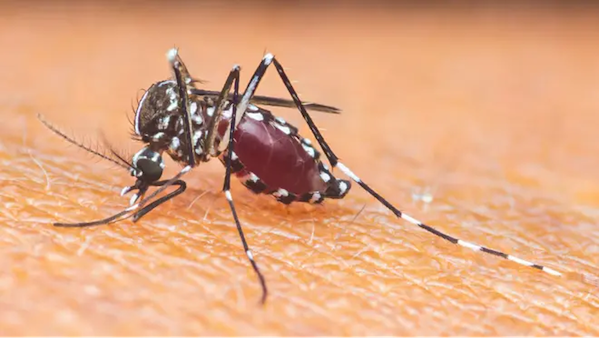 Recently, Diana Alvarez, head of the WHO's arbovirus team, said that the transmission of Chikungunya virus has been found in 119 countries and regions, about 5.5 million people are at risk of this mosquito-borne virus, and a large-scale epidemic may occur.
Confirmed cases have appeared in China. Since July, Guangdong has reported cases of Chikungunya virus infection. As of July 22, the number of infected cases has exceeded 3,000, and this number is still rising. Chikungunya virus, a once ignored "hidden threat", is now spreading at an alarming rate in some parts of China, posing a challenge to public health security.
Faced with this sudden outbreak, people can't help but feel anxious and uneasy: What exactly is the Chikungunya virus? What is the progress of vaccines and special medicines?
What is Chikungunya virus?
The name of Chikungunya virus (CHIKV) comes from the Makonde language in Tanzania, Africa, which means "bent into a ball", vividly describing the painful state of patients curled up due to joint pain.
The virus was first discovered in Tanzania in 1952, where it caused a local outbreak that did not attract widespread global attention due to its relatively limited spread. However, over time, the spread of the chikungunya virus has gradually expanded, with more and more countries and regions reporting cases of infection, from Africa to Asia, the Americas, and Europe.
Chikungunya virus belongs to the genus Alphavirus and is a single-stranded positive-strand RNA virus. It has a diameter of about 70 nanometers, a complex internal structure, and is covered with a variety of proteins on the surface. These proteins not only determine the morphology of the virus, but are also closely related to the virus's ability to infect and immunogenicity. After the virus enters the human body through mosquito bites, it will rapidly replicate in human cells and trigger a series of immune responses. Symptoms after infection usually appear within 2-12 days, with an average incubation period of 3-7 days. The patient will initially have a sudden high fever, accompanied by severe headaches, muscle aches, and severe joint pain.
Joint pain is one of the most characteristic symptoms of the Chikungunya virus. Patients often describe it as "like being burned by flames". The pain can last for weeks or even months, seriously affecting daily life. In addition, some patients also experience symptoms such as rash, nausea, and vomiting, which bring great pain to patients.
Although the mortality rate of Chikungunya virus is relatively low, its rapid transmission and wide range of infection make it a public health threat that cannot be ignored.
The spread of the virus mainly depends on mosquito bites, and Aedes albopictus and Aedes aegypti are its main transmission vectors. These two mosquitoes are widely distributed in southern China, especially in summer, when they have strong reproductive capacity and a wide range of activities. After a mosquito bites a person infected with the virus, the virus will reproduce in the mosquito's body, and when the mosquito bites someone else again, the virus will be spread. In addition, the chikungunya virus may also be transmitted from mother to child and through blood, further increasing the difficulty of prevention and control.
Chikungunya virus is spreading around the world. Since 2005, there have been several large-scale outbreaks in the Indian Ocean region, Southeast Asia and the Americas, infecting millions of people. In 2014, the first large-scale outbreak occurred in the Americas, and it quickly spread to the United States, Brazil and other countries, resulting in a large number of patients being hospitalized. In 2017, there were also a number of imported cases in Europe, which aroused great concern from public health departments. Today, China has not been spared, with multiple cases reported, and the prevention and control situation is severe.
There are 2 vaccines and no specific medicine yet
Faced with the rampant spread of the Chikungunya virus, the research and development of vaccines and special medicines has become the top priority for researchers around the world.
In terms of vaccines, the FDA has approved two vaccines in recent years, namely Ixchiq and Vimkunya.
In November 2023, the U.S. FDA approved Ixchiq, a live attenuated vaccine developed by Valneva. Subsequently, the vaccine was approved by Health Canada in June 2024 and by the European Commission in July 2024. Ixchiq uses a South African strain of the virus from East Africa, Central Africa, and uses attenuated technology to induce an immune response in the human body without causing disease.
The clinical trial results of Ixchiq show that an immune response is produced within 7 to 14 days after vaccination, and the immune effect can last for 2 years. This single-dose vaccine is suitable for people aged 18 and above. Short-term joint pain and fever may occur after vaccination, but they are usually mild. Ixchiq's attenuated technology enables it to achieve a good balance between immune effect and safety, providing an option for the global fight against Chikungunya fever.
In February this year, the FDA approved Vimkunya (Chikungunya Vaccine, Recombinant) injection, the first FDA-approved single-dose Chikungunya vaccine for people aged 12 years and above that uses virus-like particle (VLP) technology. This vaccine was developed by Bavarian Nordic. VLP technology can mimic the structure of the virus but does not contain viral genetic material, so it cannot cause infection.
Studies have shown that Vimkunya can produce an immune response within 7 to 14 days after vaccination, and the immune effect can last for 2 years. This single-dose vaccine is suitable for people aged 12 and above, and it has almost no adverse reactions after vaccination and will not cause complications such as arthritis. In addition, Vimkunya is easy to store and transport, and is suitable for use in tropical and subtropical areas.
Although the success of the two vaccines has brought hope for the prevention of Chikungunya fever, the development of specific drugs to treat Chikungunya virus infection still faces many challenges.
At present, there is no specific medicine for the treatment of Chikungunya virus infection, and it mainly relies on symptomatic supportive therapy, such as antipyretic analgesics, painkillers and physical therapy, etc. Although these methods can relieve the patient's symptoms to a certain extent, they cannot fundamentally eliminate the virus in the body.
Researchers around the world are actively exploring a variety of potential treatment options. Ribavirin, as a broad-spectrum antiviral drug, has shown the effect of reducing viral load and alleviating joint inflammation in animal experiments. However, the balance between its effective dose and side effects in humans still needs further study. In addition, Abidol, as a broad-spectrum antiviral drug, has shown an inhibitory effect on CHIKV in in vitro experiments, but its mechanism of action is still unclear.
IVD companies are ready to take off
In China , many companies, relying on their technological accumulation in the field of in vitro diagnostics, have quickly launched Chikungunya virus testing kits, which not only provided strong support for epidemic prevention and control, but also attracted market attention.
China's testing field, Daan Gene has responded quickly in the research and development and production of Chikungunya virus detection kits with its deep technical accumulation and rich product lines. Its nucleic acid detection kits use advanced detection technology and can quickly and accurately detect Chikungunya virus. In 2025, Daan Gene's annual export volume of Chikungunya virus nucleic acid detection kits will be about 3 million copies, mainly concentrated in the Southeast Asian market. As the epidemic spreads, the demand for testing has increased significantly, which has not only driven the sales of its related testing reagents to increase, but also further enhanced its influence in the international market.
As a listed company in the field of RNA virus diagnosis, Rendu Biotech has successfully developed a chikungunya fever nucleic acid detection kit based on its advantages in detection technology. The kit is based on real-time fluorescence constant temperature amplification detection technology (SAT method) and can perform qualitative detection of chikungunya virus in human serum, plasma and whole blood samples. This technology not only improves the sensitivity and accuracy of detection, but also shortens the detection time, providing strong support for epidemic prevention and control.
Wondfo Biotech is a leading manufacturer of infectious disease testing products in China , and its product line covers a variety of infectious disease testing reagents. In the context of the outbreak of the Chikungunya virus, Wondfo Biotech quickly launched corresponding testing kits, covering a variety of pathogens such as the Chikungunya virus. Its testing kits use advanced rapid testing technology and can provide accurate test results in a short time.
Conclusion
In the era of globalization, the spread of Chikungunya virus is no longer limited to a certain region, but has become a global public health challenge.
Although the Chikungunya virus is terrible, ordinary people can effectively reduce the risk of infection by taking the right preventive measures and a positive attitude. Maintaining personal hygiene, paying attention to epidemic dynamics, and supporting public health measures can not only protect the health of yourself and your family, but also contribute to global public health.
https://news.yaozh.com/archive/45828.html
By editor
Copyright©2026 Ddu. All rights reserved.
Read more on
- What Are Buyers Looking For, and What Are Suppliers Focused On? September 23, 2026
- Novartis acquires Sironax’s blood-brain barrier delivery platform for $125 million September 17, 2026
- IASO Bio’s in vivo CAR-T IASO208 receives FDA clinical trial clearance September 17, 2026
- NMPA accepts marketing registration application for Velsipity domestic manufacturing transfer September 17, 2026
- Ziprasidone mesylate from SSY Group has been approved for registration as an active pharmaceutical ingredient. September 17, 2026
your submission has already been received.
OK
Subscribe
Please enter a valid Email address!
Submit
The most relevant industry news & insight will be sent to you every two weeks.


